The Japanese yen remains under pressure against the U.S. dollar, keeping intervention risk firmly on the radar of forex traders.
As of September 22, 2026, USD/JPY is trading around 157.7, after the yen weakened for a third consecutive session. The currency has retreated from a seven-month high reached earlier in September as investors question whether the Bank of Japan can tighten monetary policy quickly enough to narrow Japan’s interest-rate gap with the United States and other major economies.
The latest yen forecast therefore hinges on three major forces: the pace of future Bank of Japan rate hikes, U.S. interest-rate expectations, and the possibility that Japanese authorities intervene again if yen weakness becomes excessive.
USD/JPY Near 158 Keeps Intervention Risk in Focus
USD/JPY is currently below the psychologically important 160 level, but intervention concerns have not disappeared.
The yen traded around 157.70 per dollar on September 22, following a 0.38% decline to 157.48 in the previous session. Japanese markets were closed for a holiday, reducing liquidity and adding to trader caution.
The market became particularly alert after Japan reportedly conducted rate checks following the BOJ’s latest policy decision. Rate checks involve authorities contacting market participants to ask about current exchange rates and are closely watched because they can precede direct intervention.
However, traders should avoid treating 160 as an automatic intervention trigger. Former Japanese currency officials have emphasized that authorities generally focus on the speed, volatility and disorderliness of currency moves, rather than defending one exact exchange rate.
Japan Has Already Intervened to Support the Yen
Intervention risk is more than theoretical in 2026.
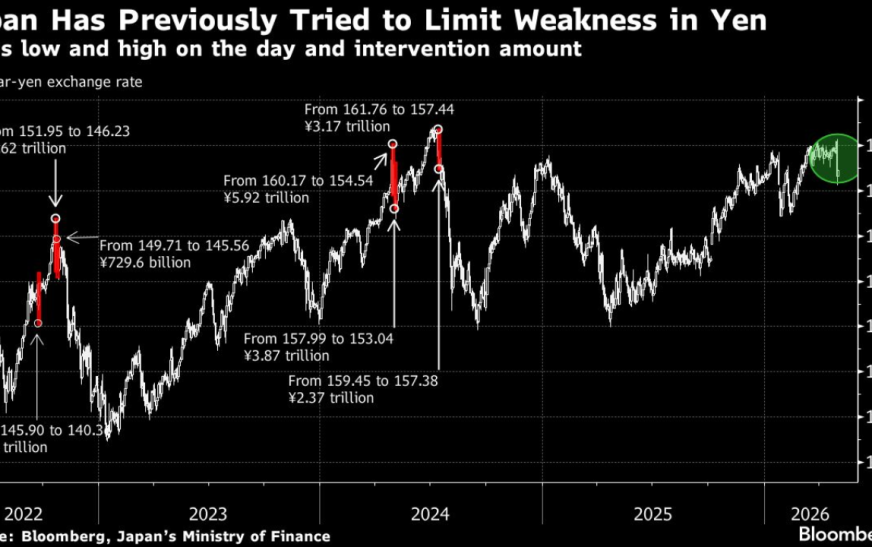
Japan stepped into the foreign-exchange market in April as the yen weakened sharply, and intervention concerns returned as USD/JPY moved back toward 160.
More significantly, Japan and the United States conducted coordinated yen-buying intervention at the end of July after USD/JPY approached a roughly 40-year low near 164. Japanese officials have subsequently reiterated their commitment to maintaining orderly currency markets.
Official Japanese Ministry of Finance figures show ¥15.3993 trillion in foreign-exchange intervention operations between July 30 and August 26, 2026.
That history matters for the current yen forecast. Traders now know that authorities have demonstrated both the willingness and capacity to intervene when currency moves are judged excessive.
Bank of Japan Raises Rates to 1.25%
The monetary-policy picture has also changed significantly.
On September 18, the Bank of Japan raised its benchmark interest rate by 25 basis points to 1.25%, its highest level in 31 years. Governor Kazuo Ueda also signaled that additional tightening remains possible.
Normally, higher Japanese interest rates should support the yen because they reduce the yield disadvantage relative to currencies such as the U.S. dollar.
But the immediate market reaction illustrates the challenge facing the BOJ.
Despite the rate increase, the yen subsequently weakened. Two dissenting policymakers favored a more cautious approach, while investors remained uncertain about how quickly additional increases could follow.
Markets were pricing roughly a 30% probability of another BOJ increase to 1.5% in October as of September 22.
For the yen, therefore, the question is no longer simply whether the BOJ will raise rates. The market is increasingly focused on how fast and how far Japanese rates can rise.
Fed Policy Remains a Major USD/JPY Driver
The other side of USD/JPY is equally important.
The U.S. dollar continues to benefit from expectations that Federal Reserve policy could remain restrictive. On September 22, the dollar index was around 100.52, while markets were pricing further potential U.S. tightening.
This creates a difficult environment for the yen.
Even when the BOJ raises rates, USD/JPY can remain elevated if U.S. yields stay comparatively attractive. The interest-rate differential between Japan and the United States therefore remains one of the most important variables for the pair.
A shift toward faster BOJ tightening could support the yen. Conversely, expectations for higher U.S. rates combined with cautious Japanese tightening could keep USD/JPY under upward pressure.
Yen Forecast: Key USD/JPY Levels to Watch
The 160 level remains an important psychological and policy-sensitive zone, but traders should also monitor the broader range rather than focusing on a single number.
160–162: A return toward this area could intensify speculation about another Japanese intervention. Earlier in 2026, moves through 160 generated increasingly strong warnings and intervention concerns.
157–158: This is the immediate trading area as of September 22. Price action here may show whether the latest yen weakness develops into another test of 160 or stabilizes following the BOJ rate increase.
152–153: The yen strengthened below 153 earlier in September, reaching its strongest level in approximately seven months as traders anticipated faster BOJ tightening and signs of Japanese investor repatriation.
These should be viewed as market reference zones rather than guaranteed support, resistance or intervention levels.
Why 160 Still Matters for the Yen
USD/JPY at 160 has become psychologically important because it has repeatedly coincided with heightened intervention concerns.
Earlier this year, the yen’s slide toward and beyond 160 prompted increasingly intense scrutiny from Japanese authorities. The 160 area became widely regarded by market participants as an unofficial threshold around which intervention risk could increase.
But subsequent comments from former officials underline an important distinction: Tokyo does not necessarily defend a fixed exchange rate.
Japan and the United States have formally stated that intervention should be aimed at combating excess volatility and disorderly currency movements, rather than targeting exchange rates for competitive purposes.
That means a rapid move from 157 toward 160 could potentially attract more official attention than a slow, orderly depreciation over a longer period.
What Could Strengthen the Yen?
Several developments could provide support for the Japanese currency.
Faster-than-expected BOJ tightening would reduce Japan’s interest-rate disadvantage. Softer U.S. inflation or weaker U.S. economic data could also lower expectations for Federal Reserve tightening and reduce support for the dollar.
Direct Japanese intervention represents another potential catalyst. Previous interventions have demonstrated that official action can generate sharp short-term moves in USD/JPY, although intervention alone does not necessarily change the longer-term fundamental trend.
A sustained yen recovery would therefore probably depend on a combination of monetary-policy convergence, lower U.S. yields and reduced pressure from global risk factors.
What Could Push USD/JPY Back Toward 160?
The main upside risk for USD/JPY is a renewed widening of expected U.S.-Japan rate differentials.
If the Federal Reserve continues tightening while markets conclude that the BOJ will move only gradually, investors may once again favor dollar positions against the yen.
Persistent inflation and elevated energy prices are another complication for Japan. Higher import costs can weigh on the economy while simultaneously increasing domestic inflation pressure.
In that environment, USD/JPY could again approach the 160 zone, bringing intervention speculation back to the forefront.
Yen Forecast: What Traders Should Watch Next
For the remainder of 2026, four indicators deserve particular attention: USD/JPY price action around 158–160, comments and rate checks from Japanese authorities, BOJ guidance on additional rate increases, and Federal Reserve policy expectations.
The latest price action shows why focusing only on the 160 level is insufficient. Japan has already intervened in 2026, the BOJ has raised rates to 1.25%, and yet the yen remains vulnerable because global interest-rate differentials continue to favor the dollar.
The most important question for the yen forecast is therefore whether Japanese monetary tightening and intervention risk can outweigh persistent dollar support.
For ongoing coverage of currency moves and central bank decisions, traders can follow Finprozone’s latest market news as the yen, dollar and other major currencies react to policy developments.
FAQ
What is the yen forecast for 2026?
As of September 22, USD/JPY is trading around 157.7. The outlook remains highly sensitive to Bank of Japan rate policy, Federal Reserve expectations and the possibility of further Japanese currency intervention.
Is Japan likely to intervene if USD/JPY reaches 160?
There is no officially confirmed exchange-rate trigger. The 160 area has repeatedly attracted intervention speculation, but Japanese authorities emphasize excessive volatility and disorderly market movements rather than a specific USD/JPY level.
What is the Bank of Japan interest rate?
The BOJ raised its benchmark rate to 1.25% on September 18, 2026, the highest level in 31 years.
Why is the yen still weak after the BOJ rate hike?
Investors remain concerned that Japanese rates may rise more slowly than rates elsewhere. The Federal Reserve and other central banks have also tightened policy, maintaining relatively wide yield differentials that can favor the dollar over the yen.
What levels should USD/JPY traders watch?
The 157–158 area is the immediate zone, while 160–162 could bring intervention speculation back into sharper focus. On the downside, 152–153 is notable because the yen reached a seven-month high around that area earlier in September.
These are reference zones, not guaranteed technical levels.
What should forex traders watch next?
Traders should monitor USD/JPY around 158–160, Japanese intervention warnings and rate checks, future BOJ rate decisions, U.S. yields and Federal Reserve policy expectations. These factors are likely to remain the main catalysts for the yen outlook through the remainder of 2026.