Indian rupee weakens near a one-month low
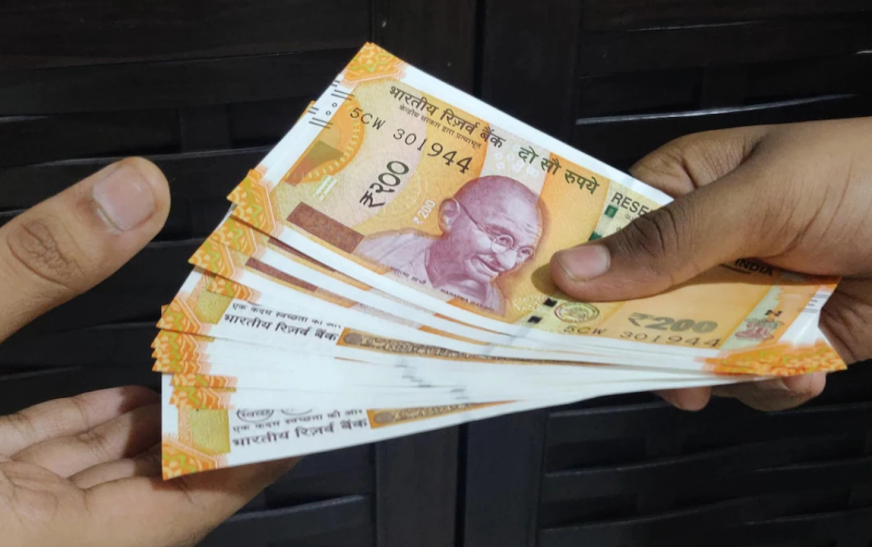
The Indian rupee weakened to nearly a one-month low on Tuesday as rising oil prices, importer hedging and broader pressure across Asian currencies weighed on sentiment. The move brought the rupee closer to the psychologically important 95 per dollar level, raising fresh concerns about how long the currency can withstand global energy-market pressure.
The rupee touched an intraday low of 94.5750 per dollar, its weakest level since March 30, before closing at 94.54, down 0.4% on the day. The decline reflected a mix of domestic and external pressures, including higher crude oil prices, stronger dollar demand from importers and caution across regional markets.
According to the original Moneycontrol report via TradingView, the rupee’s losses were partly contained by dollar sales from state-run banks, which traders said were most likely acting on behalf of the Reserve Bank of India.
That detail matters because it suggests policymakers may be trying to slow the pace of currency weakness rather than allow a disorderly move. The Indian rupee has already fallen significantly since the start of the Iran war, and oil-sensitive currencies remain vulnerable while crude prices stay elevated.
Why oil prices are pressuring the Indian rupee
Oil is the central driver behind the latest pressure on the Indian rupee. India is one of the world’s largest oil importers, which means higher crude prices directly affect its import bill, trade balance and currency demand.
When oil prices rise, Indian importers need more dollars to pay for crude shipments. That increases demand for the U.S. dollar in the local foreign exchange market. If dollar demand rises faster than supply, the rupee tends to weaken.
Brent crude oil futures climbed above $110 per barrel as U.S.-Iran peace talks remained uncertain. The Middle East conflict has disrupted energy supplies, increased inflation concerns and raised risk premiums across oil markets. For India, that creates a direct macroeconomic challenge.
Higher oil prices can affect the Indian rupee through several channels:
They increase India’s import bill.
They worsen the terms of trade.
They add pressure to inflation.
They raise demand for dollars from oil companies and importers.
They reduce investor confidence in oil-sensitive emerging-market currencies.
This is why forex traders are watching crude oil closely. The rupee’s next move may depend as much on Brent prices as on domestic economic data.
Importer hedging adds more pressure
Another major factor behind the rupee’s weakness is sustained hedging by local importers. When importers expect the currency to weaken further, they often buy dollars in advance to protect themselves from future exchange-rate losses.
This is a rational business decision, but it can also add pressure to the currency. If many importers rush to hedge at the same time, dollar demand rises and the rupee can weaken further. That weakness may then encourage even more hedging, creating a feedback loop.
The rupee’s move toward 95 per dollar likely increased this behavior. Round levels often matter in currency markets because they become psychological reference points for traders, corporates and policymakers. If businesses believe the rupee may break through 95, they may accelerate dollar purchases to avoid worse future rates.
This is one reason currency moves can become self-reinforcing. Fear of depreciation can create more hedging, and more hedging can add to depreciation pressure.
For investors following broader market reactions across currencies, commodities and equities, Finprozone’s latest market news offers global coverage across key categories.
Reserve Bank of India may be smoothing volatility
The rupee’s losses were limited by dollar sales from state-run banks, according to traders cited in the report. These sales were most likely conducted on behalf of the Reserve Bank of India.
Central banks often intervene in currency markets to reduce excessive volatility. The goal is usually not to defend a precise level forever, but to prevent disorderly moves that could damage confidence or create panic.
In India’s case, the RBI has historically used its foreign exchange reserves to manage rupee volatility. When the rupee weakens sharply, the central bank may sell dollars to increase dollar supply and slow the currency’s decline.
This strategy can be effective in the short term, especially when markets become one-sided. However, intervention cannot fully offset sustained external pressure if oil prices continue rising and importer dollar demand remains strong.
The key question is whether the RBI is trying to defend the area near 95 or simply smooth the pace of movement. Traders will watch price action around this level closely. A controlled drift is very different from a sharp break.
Asian currencies weaken as oil-sensitive FX suffers
The Indian rupee was not alone. Asian currencies came under pressure across the board on Tuesday, with oil-sensitive currencies especially affected.
This broader weakness reflects the same macro concern: higher energy prices hurt countries that import oil. When crude rises, oil-importing economies face weaker trade balances and potentially higher inflation. Their currencies can come under pressure as investors reassess risk.
MSCI’s gauge of Asian stocks outside Japan also fell 0.7%, showing that the pressure was not limited to foreign exchange markets. Equity investors were also cautious as oil prices, geopolitical risk and central bank decisions shaped sentiment.
Goldman Sachs analysts noted that India, Indonesia and the Philippines run current account deficits, making their currencies more sensitive to deterioration in the terms of trade. This is important because countries with current account deficits rely more heavily on capital flows to finance external gaps.
When global conditions become more stressful, deficit currencies can weaken faster. Investors may demand higher compensation to hold them, while importers increase dollar demand.
Current account deficits increase vulnerability
India’s current account position is one reason the rupee is sensitive to oil shocks. A current account deficit means the country imports more goods, services and capital income than it exports. Higher oil prices can widen that deficit because energy imports become more expensive.
This matters for the Indian rupee because a wider current account deficit increases the need for foreign currency. If capital inflows remain strong, the deficit can be financed more comfortably. But if global risk appetite weakens, financing becomes harder.
That is why oil-price shocks can create pressure beyond the fuel market. They can affect currency stability, inflation expectations, monetary policy and investor sentiment.
Goldman Sachs analysts suggested that this vulnerability may require greater use of foreign exchange reserves, either separately or together with tighter monetary policy, to manage pressure. That comment reflects the policy trade-off facing emerging-market central banks.
They can use reserves to smooth currency moves. They can raise interest rates to support the currency. Or they can combine both tools. But each option has costs.
Rupee underperforms the yuan since the Iran war began
The report highlighted a sharp contrast between the Indian rupee and the Chinese yuan. Since the Iran war started, the rupee has fallen 3.5%, while the Chinese yuan has risen 0.3%.
This divergence shows how differently currencies respond to the same global shock. India’s heavy dependence on imported oil makes the rupee more vulnerable when crude prices surge. China also imports energy, but its currency dynamics are shaped by different policy tools, trade balances and market structures.
For traders, this comparison matters because it shows that not all Asian currencies are reacting equally. Oil sensitivity, current account position, central bank policy and capital-flow dynamics all influence performance.
The rupee’s underperformance also increases focus on the RBI. If the currency continues falling while regional peers hold up better, markets may expect stronger intervention or policy messaging.
However, policymakers must be careful. Over-defending a currency can drain reserves, while allowing too much weakness can worsen inflation and corporate hedging pressure.
Dollar strength adds another layer
The U.S. dollar was slightly stronger against a basket of peers on Tuesday. Even modest dollar strength can add pressure to emerging-market currencies when local fundamentals are already strained.
A stronger dollar makes dollar-denominated imports more expensive and can reduce appetite for emerging-market assets. For the Indian rupee, dollar strength combined with high oil prices creates a difficult mix.
Currency traders are also focused on several major central bank decisions, including in the euro zone, the UK and Canada. These policy decisions can influence the dollar indirectly by shaping global rate expectations and risk sentiment.
Earlier in the day, the Bank of Japan left rates unchanged but delivered a hawkish split among policymakers, pointing to a possible rate hike in June. That added to the complex global backdrop. When major central banks shift tone, currency markets can become more volatile.
For the rupee, this means the pressure is not only domestic. It is part of a larger global forex adjustment driven by oil, rates and geopolitical uncertainty.
Why the 95 per dollar level matters
The rupee’s approach toward 95 per dollar is important because round levels often carry psychological weight. Corporates, traders and policymakers tend to watch them closely.
If the rupee moves closer to 95, importers may hedge more aggressively. Exporters may delay dollar sales, hoping for better conversion rates. Traders may test whether the RBI is willing to intervene more forcefully.
This can make the level more important than fundamentals alone would suggest. It becomes a market reference point.
A clean break above 95 could increase pressure unless the RBI steps in with stronger dollar sales or messaging. On the other hand, if the rupee stabilizes below 95, it may calm importer demand and reduce near-term panic.
The market will likely watch daily closes, not just intraday moves. A brief spike toward 95 may be less meaningful if the rupee recovers. A sustained close beyond that area could signal deeper weakness.
What traders should watch next
Forex traders should watch five key signals.
The first is Brent crude oil. If oil stays above $110 or climbs further, pressure on the Indian rupee may continue. If oil falls, the rupee could stabilize.
The second is importer hedging. Persistent corporate dollar demand can keep the currency under pressure even if global conditions improve slightly.
The third is RBI intervention. State-run bank dollar sales will remain an important signal of how aggressively policymakers want to manage depreciation.
The fourth is USD/INR behavior around the 95 level. A break above that level could shift sentiment.
The fifth is global central bank policy. If the dollar strengthens further because of rate expectations, emerging-market currencies may remain under pressure.
For traders who want to compare currency levels, commodity moves and market signals, Finprozone’s market tools and trading resources can help track cross-market developments.
Conclusion
The Indian rupee fell near a one-month low on Tuesday as rising oil prices, importer hedging and broad Asian currency weakness pressured the exchange rate. The rupee touched 94.5750 per dollar, its weakest level since March 30, before closing at 94.54, down 0.4% on the day.
The pressure reflects India’s exposure to higher crude oil prices. Brent crude climbed above $110 per barrel as U.S.-Iran peace talks remained uncertain, increasing concerns over energy supplies and inflation. Since India imports a large share of its oil, higher crude prices raise dollar demand and pressure the rupee.
The currency’s losses were limited by dollar sales from state-run banks, likely on behalf of the Reserve Bank of India. That suggests policymakers may be trying to smooth volatility as the rupee approaches the psychologically important 95 per dollar level.
The broader outlook remains sensitive. If oil prices stay high, importer hedging continues and the dollar strengthens, the Indian rupee may remain under pressure. If crude prices ease or the RBI steps up support, the currency could stabilize.
FAQ
Why did the Indian rupee fall near a one-month low?
The Indian rupee fell because rising oil prices increased dollar demand from importers, while local companies hedged against further currency weakness. Broader pressure across Asian currencies and cautious market sentiment also weighed on the rupee.
Why do oil prices affect the Indian rupee?
Oil prices affect the Indian rupee because India imports a large share of its crude oil. When oil prices rise, importers need more dollars to pay for shipments, increasing dollar demand and pressuring the rupee exchange rate.
Did the Reserve Bank of India intervene?
Traders said dollar sales from state-run banks helped limit the rupee’s losses. These sales were most likely conducted on behalf of the Reserve Bank of India, suggesting policymakers may be trying to smooth currency volatility.
Why is 95 per dollar important for the rupee?
The 95 per dollar level is psychologically important because traders, importers and policymakers often watch round numbers closely. A move near or above that level could increase hedging demand and test the RBI’s willingness to manage rupee weakness.
What should forex traders watch next?
Forex traders should watch Brent crude prices, importer hedging, RBI dollar sales, global dollar strength and USD/INR moves near 95. These factors will help determine whether the rupee stabilizes or faces more pressure in the coming sessions.