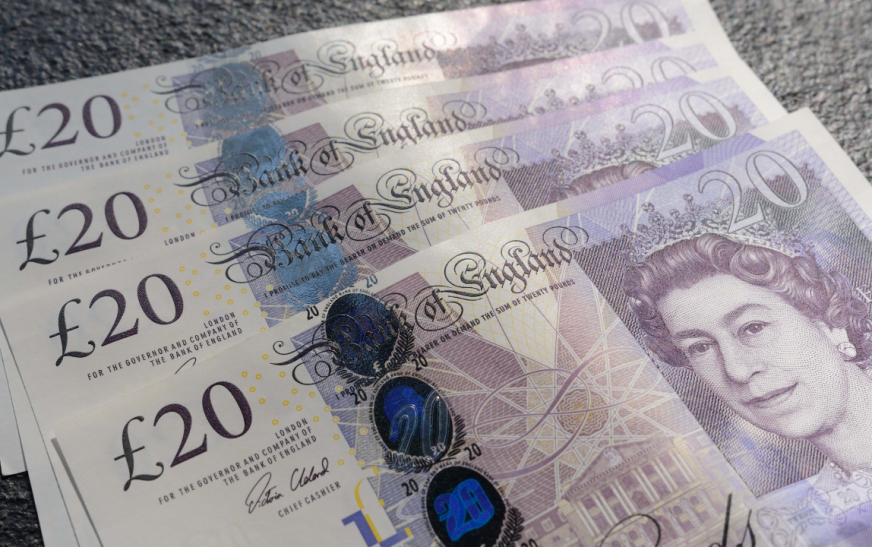
The pound forecast weakened as sterling came under pressure from a combination of fading Bank of England rate support and renewed UK political uncertainty. The British currency was on track for its worst monthly performance against the U.S. dollar since July 2025, reflecting investor concern over lower interest-rate expectations, softer inflation pressure from falling oil prices, and uncertainty around Britain’s next prime minister.
According to the original Invezz report published through TradingView, sterling was trading at $1.3161 on Thursday, down 0.1% on the day and close to its weakest level since November. The pound has fallen 2.2% in June so far, marking its steepest monthly decline since July 2025, when it dropped 3.8%.
The pressure reflects a shift in two of the pound’s most important drivers. First, lower oil prices have reduced fears of a fresh inflation spike in Britain, weakening expectations that the Bank of England will need to raise rates aggressively. Second, the resignation of Prime Minister Keir Starmer has reopened questions about fiscal leadership, government stability, and investor confidence in the UK policy outlook.
Pound Weakens as Political Risk Returns
Sterling’s decline is not only a currency-market reaction to interest rates. It is also a political-risk trade. The resignation of Keir Starmer has created another leadership transition in a country that has already faced repeated political turnover since the Brexit referendum.
The timing is symbolically important. The week also marked the 10th anniversary of the Brexit vote, a reminder of the long period of political and economic adjustment that has followed Britain’s decision to leave the European Union. The Invezz report noted that Britain is now set to have its seventh prime minister in the decade since the Brexit vote.
Currency markets dislike uncertainty, especially when it affects fiscal policy and economic leadership. Investors now need to assess who will become prime minister, whether the new leadership will preserve fiscal discipline, and whether the Treasury will remain under Finance Minister Rachel Reeves.
For the pound forecast, political clarity is now a major variable. Sterling may struggle if investors believe a leadership change could lead to looser spending, weaker fiscal credibility, or policy instability.
Starmer’s Resignation Clouds the UK Outlook
Starmer resigned on Monday after a sharp decline in his popularity. His departure puts the UK into another political transition and shifts market attention toward the next government leadership structure.
Former Greater Manchester Mayor Andy Burnham, who entered Parliament this week after winning a local election, is seen as the frontrunner to replace Starmer. Investors are now focused on whether Burnham would keep Rachel Reeves in place as finance minister.
That question matters because the Treasury is central to market confidence. If investors believe the next government will maintain fiscal rules and a predictable economic framework, sterling may stabilize. If they fear a shift toward higher spending or less disciplined fiscal management, the pound could weaken further.
Leadership changes do not automatically hurt a currency. A new prime minister can sometimes improve confidence if markets expect stronger governance. However, in the current context, the pound is already under pressure from weaker rate support. Political uncertainty therefore adds another negative layer.
Lower Oil Prices Reduce Inflation Pressure
Oil prices have fallen after the suspension of hostilities between the United States and Iran allowed energy products to move again through the Strait of Hormuz. This has reduced fears of a new inflation spike in Britain.
For UK households and businesses, lower oil prices can be positive. They may reduce fuel costs, transport expenses, and broader energy-related inflation pressure. Over time, this can help ease the cost-of-living burden and reduce pressure on consumer budgets.
For the pound, however, the impact is more complicated. Lower inflation pressure can reduce the need for Bank of England rate hikes. If traders believe the BoE has less reason to tighten policy, sterling loses one of its potential supports.
Higher interest rates can make a currency more attractive by increasing returns on assets denominated in that currency. When rate-hike expectations fade, that yield support weakens. This is exactly what is now weighing on the pound.
For broader coverage of forex markets, inflation trends, and central-bank expectations, readers can follow Finprozone latest market news as UK policy risk continues shaping sterling.
Bank of England Rate Support Fades
Markets now expect only one Bank of England rate rise this year, according to the Invezz report. That reduced tightening outlook has removed a potential pillar of support for the pound.
The BoE had been under pressure to control inflation, especially when energy prices were elevated. But with oil prices falling and inflation concerns softening, traders are scaling back expectations for more aggressive rate increases.
This matters because currency markets are heavily driven by relative interest rates. If the BoE is expected to raise rates less aggressively while other central banks remain hawkish or while the U.S. dollar retains yield support, sterling can lose ground.
The pound’s June decline shows that investors are reassessing whether UK rates can provide enough support. If inflation continues easing, the BoE may have less reason to tighten. That could keep GBP/USD under pressure unless political risk fades or the U.S. dollar weakens.
Sterling Faces Pressure From Both Sides
The pound is being pressured by both monetary and political forces. On the monetary side, lower oil prices reduce inflation fears and weaken the argument for stronger BoE tightening. On the political side, Starmer’s resignation creates uncertainty about leadership, fiscal policy, and investor confidence.
This combination is difficult for sterling. A currency can often withstand one negative factor if another support remains strong. For example, political risk may be offset by high interest-rate expectations. Or lower rate support may be offset by strong political stability. In the current setup, both supports are weaker.
That explains why sterling has fallen 2.2% in June and is on track for its worst month against the dollar since July 2025. The move is not just a short-term reaction. It reflects a broader repricing of the UK outlook.
The next phase depends on whether markets receive reassuring signals from the leadership process and whether the BoE maintains enough inflation concern to keep rate expectations alive.
GBP/USD Near Weakest Level Since November
Sterling traded at $1.3161, close to its weakest level since November. That level is important because it shows the pound has broken down from recent trading strength and is approaching a more vulnerable technical area.
For GBP/USD traders, the key question is whether the pair can stabilize above the $1.31 region. If buyers defend that area, the pound may consolidate while markets wait for more clarity on UK leadership and BoE policy. If GBP/USD breaks lower, momentum traders may target deeper support levels.
The June decline also matters because monthly performance can influence positioning. A steep monthly drop may encourage short-term profit-taking, but it can also attract trend-following sellers if the fundamental story remains negative.
A recovery would likely require either a softer U.S. dollar, stronger UK rate expectations, or a politically reassuring leadership transition. Without one of those catalysts, sterling may remain under pressure.
Andy Burnham Becomes a Market Focus
Andy Burnham’s potential rise to prime minister is now central to the pound forecast. Markets are less concerned with political personalities themselves and more concerned with policy direction. Investors want to know whether Burnham would preserve fiscal credibility, keep Rachel Reeves as finance minister, and maintain confidence in UK government finances.
If Burnham signals continuity and respect for fiscal rules, sterling could stabilize. If markets suspect a more expansionary spending agenda, the pound could weaken and gilt yields could become volatile.
The Treasury question is especially important. Finance ministers can act as anchors for market confidence if they are seen as disciplined and predictable. Removing or replacing Reeves could increase uncertainty unless the replacement is viewed as equally credible.
For now, the market does not yet have enough clarity. That uncertainty is one reason the pound remains under pressure.
Brexit Anniversary Adds Symbolic Weight
The 10th anniversary of the Brexit referendum adds a symbolic backdrop to the latest sterling weakness. Brexit has shaped the UK’s trade, investment, labor-market, and political environment for a decade. Another leadership change at this moment reinforces investor concern that the UK still faces political instability.
The anniversary itself is not a direct market catalyst, but it matters psychologically. Investors remember periods when political uncertainty caused sharp moves in sterling, especially during Brexit negotiations and leadership changes.
The pound is now being evaluated through that historical lens. Markets want evidence that the next phase of UK leadership will be stable, fiscally credible, and capable of supporting growth without reigniting inflation or bond-market stress.
That is why political messaging in the coming days may matter as much as economic data.
Oil Drop Helps Inflation but Hurts Rate Expectations
The fall in oil prices creates a mixed outcome for the UK economy and sterling. For consumers, lower oil is positive because it reduces energy costs and may ease inflation pressure. For the BoE, lower oil reduces the urgency to raise rates. For the pound, that can be negative because lower rate expectations reduce yield support.
This is a classic currency-market trade-off. What helps households does not always help the currency. If inflation falls because energy prices decline, the BoE may become less hawkish. That can lower expected returns on sterling assets.
However, if lower oil improves real incomes and supports economic activity, the pound could benefit later through stronger growth. The near-term problem is that markets are currently focused more on rate support than growth relief.
This means lower oil may remain a short-term headwind for sterling even if it becomes a medium-term positive for the UK economy.
What Could Stabilize the Pound
The pound could stabilize if three conditions improve. First, the leadership transition needs to reduce uncertainty. Clear support for fiscal rules, continuity at the Treasury, and calm political messaging would help.
Second, UK data needs to avoid confirming a sharp slowdown. If growth, employment, or wage data weaken significantly, markets may further reduce BoE tightening expectations.
Third, the U.S. dollar needs to stop strengthening. GBP/USD is not only about sterling. If the dollar remains supported by U.S. rate expectations, the pound may struggle even if UK politics stabilizes.
Sterling may also receive support if inflation proves more persistent than expected and forces markets to price a more hawkish BoE path. But that would be a complicated positive because persistent inflation can also damage growth and consumer confidence.
What Traders Should Watch Next
The first signal is GBP/USD near $1.3161. A move below this area could confirm deeper pressure, while stabilization may indicate that sellers are losing momentum.
The second signal is the UK leadership race. Markets will watch whether Andy Burnham becomes prime minister and whether Rachel Reeves remains finance minister.
The third signal is Bank of England pricing. If markets continue expecting only one rate rise this year, sterling may lack yield support.
The fourth signal is oil prices. Further declines could reduce inflation fears and weigh on BoE hike expectations, while renewed oil strength could revive inflation concerns.
The fifth signal is UK fiscal messaging. Any commitment to fiscal rules may calm investors, while uncertainty over spending could weaken the pound.
FAQ
Why is the pound under pressure?
The pound is under pressure because markets expect fewer Bank of England rate hikes after lower oil prices eased inflation concerns. Political uncertainty after Keir Starmer’s resignation has added another layer of pressure on sterling.
How much has sterling fallen in June?
Sterling has fallen 2.2% against the U.S. dollar so far in June. That puts the pound on track for its steepest monthly decline since July 2025, when it dropped 3.8%.
Why does UK leadership uncertainty affect the pound?
Leadership uncertainty affects the pound because investors care about fiscal policy, government stability, and confidence in the UK economic outlook. Markets are watching whether Andy Burnham replaces Starmer and whether Rachel Reeves remains finance minister.
Can the pound recover?
The pound can recover if the leadership transition reassures investors, the Bank of England sounds more hawkish, UK data improves, or the U.S. dollar weakens. However, sterling may remain under pressure if political uncertainty persists and rate-hike expectations continue fading.