The Fed Beige Book showed that energy-driven inflation remains a key pressure point for U.S. businesses and consumers, reinforcing concerns that the Iran conflict is complicating the Federal Reserve’s path toward price stability. The latest survey arrived before the June 17 Fed meeting and gave policymakers a regional view of how firms are dealing with higher costs, cautious demand, strained margins, and uncertain economic conditions.
According to the original Dow Jones Newswires report published through TradingView, U.S. businesses faced another month of energy-driven price increases in May as the Iran conflict entered its third month. Higher energy prices have worsened consumers’ inflation expectations and pushed consumer sentiment to record lows since the conflict began in late February.
The report matters because inflation is not only a headline economic issue. It affects household budgets, corporate profit margins, hiring decisions, loan demand, consumer confidence, and Federal Reserve policy. The Beige Book’s message was not one of outright economic collapse, but rather one of caution, pressure, and uneven resilience.
Energy Costs Remain the Main Inflation Pressure
Energy costs were the central inflation concern in the latest Fed Beige Book. Higher fuel and energy prices tied to the Iran conflict continued feeding through the economy, affecting businesses that rely on transportation, production, logistics, and consumer-facing services.
The impact is important because energy prices can spread across multiple layers of the economy. When fuel costs rise, trucking firms, manufacturers, retailers, farmers, and service providers may all face higher expenses. Some businesses can pass those costs to customers. Others must absorb them to protect demand. The Beige Book suggested that many firms are caught between these two choices.
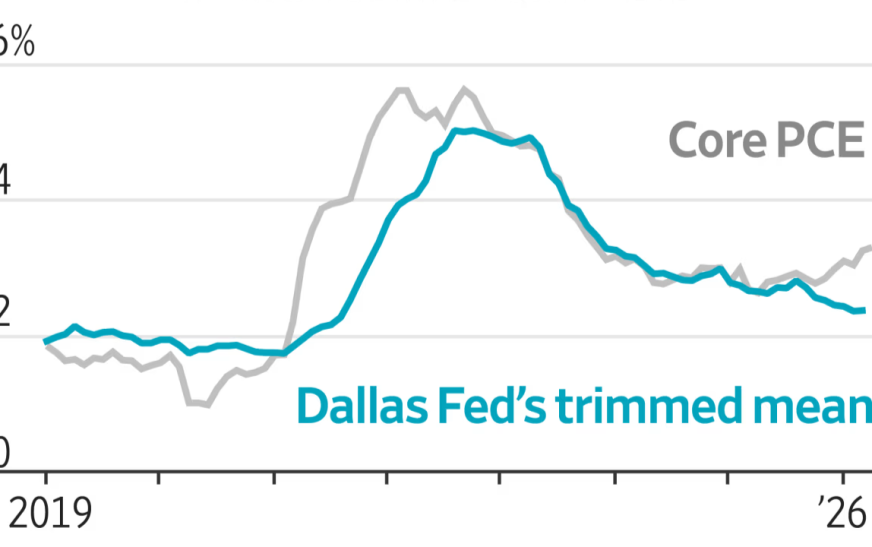
Most Federal Reserve districts reported higher inflation in May compared with the previous report. That points to broad pressure rather than a narrow sector-specific issue. While inflation may begin with energy, it can quickly affect input costs, delivery expenses, inventory decisions, and consumer prices.
For the Federal Reserve, this creates a policy challenge. If energy-driven inflation remains persistent, officials may be less willing to ease monetary policy. Yet if higher costs also weaken consumer spending and business confidence, keeping rates elevated could increase pressure on growth-sensitive parts of the economy.
Margin Compression Becomes a Corporate Risk
One of the clearest business concerns in the Beige Book was margin pressure. Non-labor input costs rose faster than selling prices, meaning many firms were not fully passing higher costs to customers. That creates margin compression, where revenues may hold up but profitability weakens because expenses rise more quickly.
Margin compression matters for investors because corporate earnings depend not only on sales growth, but also on how much profit companies can retain from each dollar of revenue. If input costs rise faster than selling prices, earnings expectations may come under pressure, especially for companies with limited pricing power.
The report showed that businesses were using several strategies to manage inflation. These included supply-chain optimization, product adjustments, reduced offerings, and temporarily absorbing higher costs to protect customer demand. Each strategy has trade-offs. Reducing offerings can preserve efficiency but may limit sales. Absorbing costs can protect customer relationships but weakens profit margins. Product adjustments can help defend margins but may affect customer perception.
Transportation provided a clear example. A respondent from a ports and transportation firm said that higher spot rates were not enough to offset fuel costs, keeping margins very slim for trucking firms. The respondent also noted a shift toward short-haul rail to and from ports, even though rail is usually more costly than trucking. That shows how energy inflation can change operating decisions, not just financial results.
Consumer Spending Splits Along Income Lines
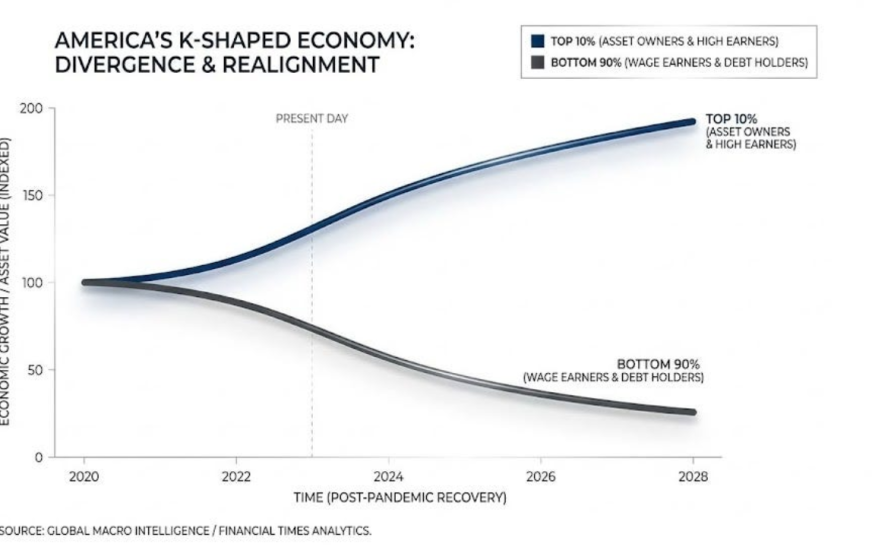
The Beige Book also reinforced the idea of a K-shaped economy. Higher-income households remained resilient and continued supporting demand for premium goods and services. Lower-income consumers, however, faced greater financial strain, while middle-income households were described as trying to stretch their budgets further before spending.
This split matters because consumer spending is not uniform. Higher-income households often have more savings, stronger balance sheets, and greater flexibility to absorb price increases. Lower-income households are more exposed to energy, food, rent, and debt costs because those expenses take up a larger share of income.
The Atlanta Fed noted strong demand for premium goods and services from higher-income consumers, including what one contact described as “unapologetic luxury.” That phrase highlights a major economic divide. Some consumers are still spending freely, while others are cutting back, delaying purchases, or struggling with debt.
The report also noted rising residential mortgage, consumer, and agricultural loan delinquencies in several districts. This is an important signal for banks, retailers, lenders, and policymakers. Rising delinquencies can indicate that household stress is spreading beyond sentiment and into actual payment behavior.
For investors, the income split has sector implications. Premium brands and higher-end services may remain resilient, while businesses exposed to lower-income consumers may face weaker demand, more price sensitivity, and higher credit risk.
Labor Market Stays in a Low-Hire, Low-Fire Pattern
The Beige Book described the labor market as a low-hire, low-fire environment. Across eleven districts, employment showed little to no change, while only one district reported modest growth. This indicates that companies are not rushing to lay off workers, but they are also hesitant to expand payrolls.
A low-hire, low-fire labor market is consistent with economic uncertainty. Employers may want to retain existing workers because replacing them can be costly, especially in skilled roles. At the same time, uncertainty around demand, inflation, financing costs, and geopolitical risk may make firms reluctant to hire aggressively.
For the Federal Reserve, this type of labor market is complicated. Stable employment can support consumer spending, but slower hiring may signal that businesses are becoming more cautious. If the labor market weakens too much, the Fed may face greater pressure to support growth. If inflation remains elevated, however, policy flexibility may stay limited.
Manufacturing was a bright spot. Several districts reported that manufacturing hiring was the strongest area of labor demand, supported by the build-out of data centers for artificial intelligence. This shows that AI infrastructure remains an important source of investment and job creation, even as other sectors slow hiring.
The Minneapolis Fed noted that individuals with skills in construction, manufacturing, or health care were more likely to be hired. That suggests demand remains stronger for practical, infrastructure-linked, and essential-service skills.
For broader coverage of economic indicators, employment trends, and market reactions, investors can follow Finprozone latest market news as new data shape expectations for Federal Reserve policy.
AI Disruption Shows Up in Professional Services
The Beige Book also pointed to mixed demand in professional services, partly due to technological and operational changes. In the Boston Fed district, staffing contacts reported weaker demand for entry-level workers, possibly because of AI disruption.
This is a notable signal because AI is affecting the economy in two different ways. On one side, AI infrastructure is supporting manufacturing hiring through data center construction and related investment. On the other side, AI may be reducing demand for certain entry-level professional services roles.
That split could become increasingly important for the labor market. AI-related capital spending may support construction, power, manufacturing, chips, and infrastructure. But software automation and operational efficiency tools may reduce demand for some white-collar roles, especially at the lower end of the experience ladder.
For investors, this creates a more complex labor-market picture. AI is not simply “good” or “bad” for employment. It may create demand in one sector while reducing demand in another. The Beige Book’s regional anecdotes give policymakers early signs of how this transition is affecting businesses in practical terms.
Business Outlook Remains Highly Uncertain
The Beige Book reported that business outlooks for the next six months showed little change in anticipated growth. However, the tone remained highly uncertain. Producers were reluctant to materially expand activity, and signs of weakening consumer spending weighed on sentiment.
Uncertainty can become self-reinforcing. If businesses are unsure about demand, costs, rates, and geopolitical risk, they may delay investment. If they delay investment, growth can slow. If growth slows, consumers may become more cautious. This feedback loop can weaken economic momentum even without a sudden shock.
Small businesses appear especially cautious. The Chicago Fed reported that small business intermediaries saw greater uncertainty among clients, who were increasingly reluctant to take on debt to start or grow their businesses. This is significant because small businesses are often more sensitive to financing costs and demand shifts than larger companies.
If small firms pull back from borrowing, hiring, and expansion, the effect can spread into local labor markets and regional economies. It can also reduce the economy’s capacity for new business formation and productivity growth.
What the Fed Beige Book Means for the June Meeting
The June 17 Fed meeting now carries added importance because policymakers must weigh persistent inflation pressure against signs of economic strain. The Beige Book gives officials anecdotal evidence that energy costs are feeding inflation, margins are under pressure, consumers are becoming more divided by income, and hiring remains cautious.
The report does not offer a single clean signal. It does not suggest that the economy is overheating across the board. It also does not suggest that inflation pressure has disappeared. Instead, it points to a difficult mix: higher costs, uneven demand, weak sentiment, cautious hiring, and uncertainty tied to geopolitical risk.
For markets, this could support a more cautious Fed tone. If officials believe energy-driven inflation is still feeding through to businesses and consumers, they may be hesitant to signal easier policy too soon. But if consumer strain and business caution deepen, the Fed may need to acknowledge rising downside risks to growth.
The key will be whether upcoming data confirms the Beige Book’s anecdotal message. Inflation readings, employment data, retail sales, consumer sentiment, and credit conditions will all matter as investors assess the central bank’s next steps.
Market Implications for Investors and Traders
The Beige Book has several market implications. For bonds, persistent energy-driven inflation may keep yields elevated if investors believe the Fed will stay cautious. For stocks, margin pressure can affect earnings expectations, especially in sectors with limited pricing power. For consumer companies, the income split matters because higher-income demand may remain strong while lower-income spending weakens.
For commodities, the Iran conflict remains central because energy prices are feeding directly into inflation expectations. Any easing in energy prices could reduce pressure on businesses and consumers. Any further spike could make the Fed’s job harder.
For the U.S. dollar, rate expectations remain important. If inflation pressure keeps the Fed restrictive, the dollar may find support. If growth concerns increase and markets price in eventual policy easing, the dollar could become more sensitive to incoming data.
For investors, the main takeaway is that the economy remains uneven. Strong AI-linked manufacturing investment and resilient high-income spending coexist with low-income consumer strain, cautious small businesses, and rising delinquencies in some areas.
FAQ
What did the Fed Beige Book say about inflation?
The Fed Beige Book showed that most districts reported higher inflation in May compared with the previous report. Energy costs tied to the Iran conflict continued feeding price pressure, while non-labor input costs rose faster than selling prices, creating margin pressure for many businesses.
Why are energy costs important for Federal Reserve policy?
Energy costs affect inflation expectations, business expenses, transportation costs, and consumer budgets. If energy-driven inflation remains persistent, the Fed may be cautious about easing policy. Traders can follow the economic calendar for upcoming market events to track inflation and employment releases before Fed decisions.
What does a low-hire, low-fire labor market mean?
A low-hire, low-fire labor market means companies are not aggressively laying off workers, but they are also reluctant to add staff. This usually reflects uncertainty. Employers may want to preserve existing teams while avoiding expansion until demand, costs, and policy conditions become clearer.
How does the Beige Book affect investors?
The Beige Book helps investors understand regional business conditions before major Fed decisions. Its latest message suggests margin pressure, cautious hiring, uneven consumer spending, and persistent energy inflation. These factors can influence bond yields, equity valuations, sector performance, and expectations for Federal Reserve policy.