Pound forecast stays cautious as sterling holds near $1.35
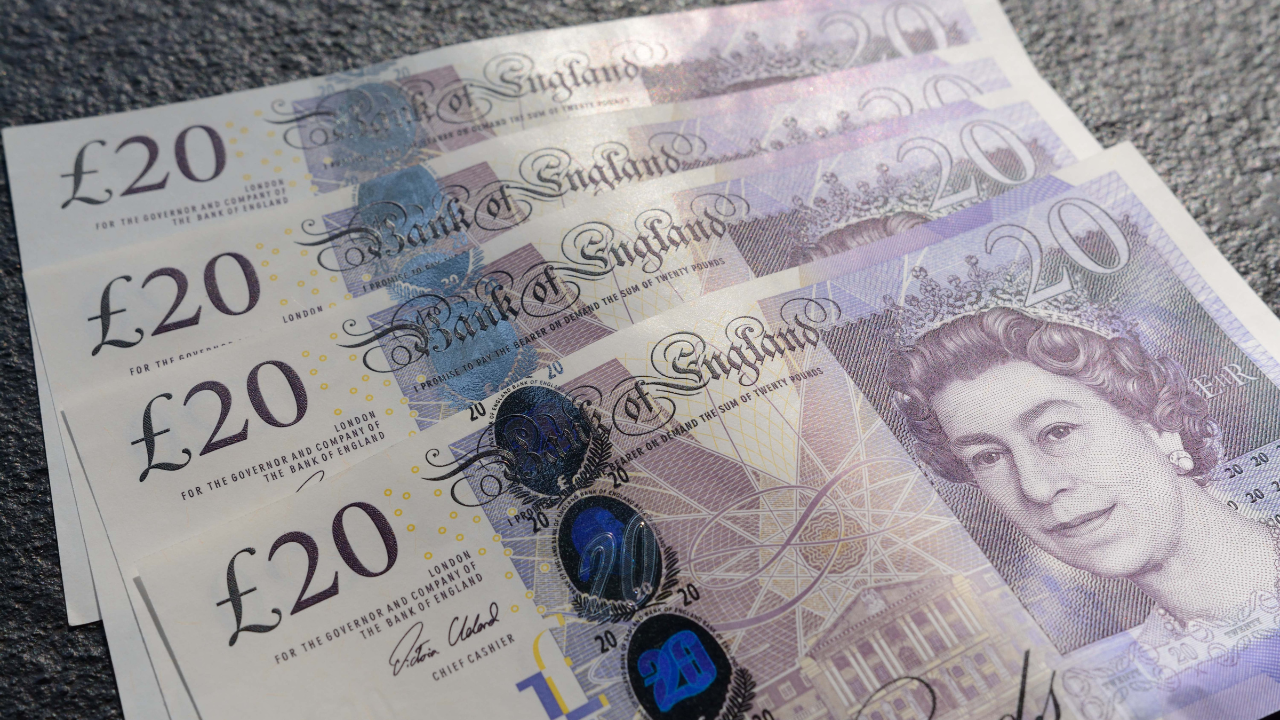
The British pound held near $1.35 as traders balanced geopolitical risk, domestic political uncertainty and the upcoming Bank of England policy decision. The latest pound forecast remains cautiously stable, but the currency is operating in a market environment where global headlines can quickly shift risk appetite.
According to the original Trading Economics report via TradingView, sterling remained steady as the U.S.-Iran impasse continued and political pressure in the UK added another layer of caution. The pound’s resilience suggests that traders are not rushing to exit the currency, but they are also not aggressively pushing it higher.
The forex market is currently dealing with several overlapping forces. The stalled U.S.-Iran talks are keeping investors alert to oil-price and inflation risks. In the UK, Prime Minister Keir Starmer faces political scrutiny ahead of a vote linked to his assurances to Parliament over the appointment of Peter Mandelson as U.S. ambassador. At the same time, markets are preparing for the Bank of England’s interest-rate decision, with policymakers widely expected to keep rates unchanged at 3.75%.
For now, GBP/USD is holding its ground. But the next move will likely depend on whether geopolitical tensions ease, whether UK politics creates fresh uncertainty and how firmly the Bank of England communicates its policy stance.
Why the pound is holding steady
Sterling’s ability to remain near $1.35 suggests that markets are not yet pricing a major deterioration in the UK outlook. The pound has been supported by expectations that the Bank of England will keep interest rates steady, maintaining a relatively firm yield backdrop compared with currencies where rate cuts are more clearly expected.
However, the pound’s stability should not be confused with strong bullish momentum. Holding steady means the currency is resisting pressure, not necessarily building a new uptrend. Traders appear to be waiting for confirmation from key events rather than making aggressive directional bets.
The Bank of England decision is especially important. A hold at 3.75% is widely expected, but the vote split and policy statement could influence the next phase of the pound forecast. If policymakers sound concerned about inflation risks linked to the Middle East crisis, sterling may find some support. If they emphasize economic weakness and keep the door open to cuts later, GBP/USD could face pressure.
This is a market where tone matters. The decision itself may be priced in, but the message around future policy is not fully settled.
US-Iran talks remain a key risk for forex markets
The stalled U.S.-Iran talks are central to the broader market mood. Tensions intensified after a U.S. official said President Donald Trump was dissatisfied with Iran’s latest proposal. The proposal reportedly sought to delay nuclear-program negotiations until the ongoing conflict and shipping disputes are resolved.
That matters for the pound because geopolitical stress affects currencies through several channels. First, it can push investors toward safer assets such as the U.S. dollar. Second, it can raise oil prices, increasing inflation pressure. Third, it can complicate central bank decisions by creating uncertainty around growth and prices.
The UK is not directly at the center of the conflict, but it is exposed to the global economic consequences. Higher energy prices can affect household bills, business costs and inflation expectations. If oil prices remain elevated because peace talks stall, the Bank of England may have less flexibility to ease policy later.
This is one reason sterling has not moved sharply lower. Markets may be assuming that sticky inflation risks could keep UK rates higher for longer. But the same risk can also hurt growth, creating a more complicated backdrop for the currency.
The Bank of England decision is the main domestic event
Investors are focused on the Bank of England’s policy decision on Thursday. The central bank is widely expected to hold interest rates at 3.75% amid the Middle East crisis. Analysts anticipate a near-unanimous or strong majority vote to maintain the current stance.
A steady decision would not surprise markets. The real focus will be on the vote split, the policy statement and any guidance about future moves. If the Monetary Policy Committee shows strong agreement, it may reinforce the idea that the BoE wants to wait for more clarity before changing rates.
For the pound forecast, that could be stabilizing. A clear hold backed by strong majority support may reduce uncertainty and prevent aggressive repricing. However, if the statement sounds more cautious about growth or hints at possible future easing, sterling could lose some support.
Central banks are currently navigating a difficult environment. Inflation risks have not fully disappeared, especially with energy prices affected by geopolitical tension. At the same time, high interest rates can weigh on households, credit conditions and business investment.
The Bank of England’s challenge is to avoid cutting too early while also avoiding unnecessary pressure on the UK economy.
For broader market developments across forex, commodities and global macro stories, readers can follow Finprozone latest market news.
Political pressure in the UK adds another layer
Domestic politics is also part of the current sterling setup. Prime Minister Keir Starmer faces a pivotal vote over whether to investigate his assurances to Parliament regarding the appointment of Peter Mandelson as U.S. ambassador.
Starmer’s allies reportedly remain confident of securing the vote, but the controversy still matters because it could overshadow next week’s local elections. Political uncertainty does not always move currencies immediately, but it can affect investor confidence if it becomes prolonged or damages the government’s authority.
For the pound, the issue is less about one appointment and more about political stability. Currency markets prefer predictable policy environments. If political controversy becomes a distraction from economic management, investors may become more cautious.
That said, the current political pressure has not yet triggered a major sterling sell-off. This suggests traders are watching the situation but do not yet view it as a serious threat to the broader UK outlook.
The bigger short-term driver remains the Bank of England. Still, political headlines can add volatility, especially if they coincide with global risk-off sentiment.
GBP/USD remains sensitive to dollar moves
The pound’s performance near $1.35 also depends heavily on the U.S. dollar. GBP/USD is not only a sterling story. It is also a dollar story.
If stalled U.S.-Iran talks push investors toward safe-haven demand, the dollar could strengthen. That would make it harder for the pound to rise, even if UK-specific factors remain stable. On the other hand, if markets become more confident that tensions will ease, risk appetite may improve and the dollar could soften.
The Federal Reserve’s policy outlook also matters. If U.S. rates remain high or U.S. policymakers sound cautious about inflation, the dollar may stay supported. If markets start pricing easier U.S. policy, sterling may benefit.
This is why GBP/USD can move even when UK news is limited. The pair reflects the relative outlook between two economies and two central banks. The pound may be steady, but dollar strength or weakness can still determine the direction of the exchange rate.
For traders, this means the pound forecast should include both UK and U.S. factors. Looking only at the Bank of England is not enough.
Energy prices complicate the outlook
The Middle East crisis matters because energy prices remain a major inflation channel. If oil and gas prices stay elevated, the UK could face renewed price pressure. That would complicate the Bank of England’s ability to shift toward easier policy.
Higher energy costs can affect the economy in several ways. They can raise household expenses, reduce disposable income, increase business costs and feed into transport prices. If companies pass those costs on to consumers, inflation can become more persistent.
For the pound, this creates a mixed effect. Higher inflation risk may support sterling if traders believe the BoE will keep rates higher for longer. But if higher energy costs damage growth, the pound may eventually weaken.
This is the classic central bank dilemma. A currency can initially benefit from expectations of higher rates, but if those higher rates are linked to a negative supply shock, the benefit may not last.
That is why markets are watching U.S.-Iran talks so closely. A diplomatic breakthrough could reduce oil risk and improve sentiment. A deeper deadlock could increase pressure on both inflation and growth.
Why the $1.35 level matters
The pound holding near $1.35 is technically and psychologically important. Round levels often attract trader attention because they become reference points for positioning, options activity and short-term sentiment.
If GBP/USD remains above $1.35, traders may see sterling as relatively resilient. If it breaks below that level decisively, the tone could shift more cautious, especially if the move is supported by stronger dollar demand or dovish Bank of England commentary.
A move above nearby resistance would likely require either a weaker dollar, a hawkish BoE tone or improved UK political sentiment. Without one of those catalysts, the pound may continue to trade in a narrow range.
This is why the current setup looks like a waiting phase. The market has important information ahead, but not enough confirmation yet to choose a strong direction.
What traders should watch next
Forex traders should watch three main catalysts.
The first is the Bank of England decision. A hold is expected, but the vote split and policy language will matter. A strong majority for holding rates could stabilize sterling, while dovish wording could pressure the pound.
The second is the U.S.-Iran negotiation track. Any sign of progress could improve risk appetite and reduce oil-price pressure. Any further deterioration could support the dollar and weigh on risk-sensitive currencies.
The third is UK political risk. If the vote around Starmer’s assurances passes without major disruption, markets may look through the issue. If the controversy deepens before local elections, sterling could face additional uncertainty.
Traders should also watch GBP/USD technical levels around $1.35. A sustained hold could keep the short-term outlook neutral to constructive. A clear break lower may shift attention to downside support zones.
The pound forecast remains balanced, not bullish
The current pound forecast is best described as balanced. Sterling is not collapsing under pressure, but it is also not showing strong upside momentum. The market is waiting for clearer signals.
The bullish case depends on the Bank of England maintaining a firm policy stance, UK political risk staying contained and global risk sentiment improving. The bearish case depends on dollar strength, deeper geopolitical stress, weaker UK confidence or dovish BoE guidance.
This creates a narrow path for sterling. The pound can remain supported if the BoE avoids sounding too soft and if global tensions do not worsen. But a sharp rally may require more positive catalysts.
For now, the pound’s steadiness is a sign of resilience. Whether that resilience turns into a stronger move depends on the next set of policy and geopolitical developments.
Conclusion
The pound held near $1.35 as traders weighed stalled U.S.-Iran talks, UK political pressure and the upcoming Bank of England rate decision. The latest pound forecast remains cautious because sterling is stable, but not yet strongly bullish.
The Bank of England is widely expected to hold interest rates at 3.75%, with analysts anticipating a near-unanimous or strong majority vote. The decision itself may not surprise markets, but the statement and vote split could shape expectations for future policy.
Geopolitical risk remains a major external factor. The U.S.-Iran impasse has kept energy-market concerns alive, which could influence inflation and central bank thinking. At the same time, UK political uncertainty around Prime Minister Keir Starmer adds a domestic layer of caution before local elections.
For now, GBP/USD remains steady, but the currency is exposed to several moving parts. Traders should watch the BoE decision, U.S.-Iran headlines, energy prices and the dollar’s direction before assuming the pound will break meaningfully higher or lower.
FAQ
Why is the pound steady near $1.35?
The pound is steady near $1.35 because traders are waiting for clearer signals from the Bank of England, U.S.-Iran talks and UK political developments. Markets expect the BoE to hold rates, which has helped keep sterling relatively stable for now.
What is the Bank of England expected to do?
The Bank of England is widely expected to hold interest rates at 3.75%. Analysts anticipate a strong majority or near-unanimous vote to keep policy unchanged as officials assess inflation risks, energy prices and the wider economic impact of the Middle East crisis.
How do U.S.-Iran talks affect the pound?
U.S.-Iran talks affect the pound through global risk sentiment, oil prices and inflation expectations. If talks stall further, energy prices may stay elevated and the dollar could gain safe-haven support, making it harder for sterling to rise.
Could UK politics weaken sterling?
UK political pressure could weigh on sterling if it creates broader uncertainty or distracts from economic policy. For now, the controversy around Prime Minister Keir Starmer has not caused a major currency move, but traders are watching developments before local elections.
What should forex traders watch next?
Forex traders should watch the Bank of England decision, GBP/USD movement around $1.35, U.S.-Iran headlines and energy prices. To compare currency signals and market setups, they can use Finprozone’s market tools and trading resources.