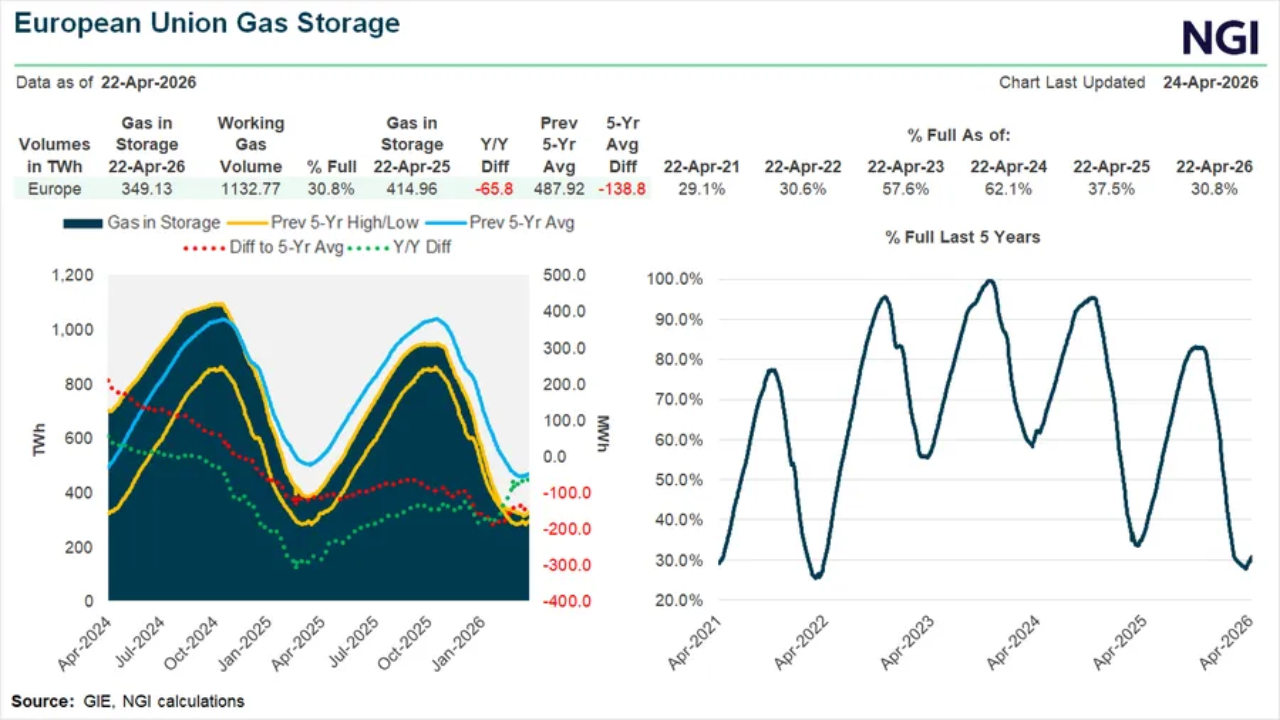
The natural gas price forecast improved after U.S. natural gas futures posted moderate gains, supported by a smaller-than-expected storage injection in the latest government inventory report. According to the original Dow Jones Newswires Market Talk report published through TradingView, underground natural gas inventories increased by 63 billion cubic feet, or Bcf, while Nymex natural gas settled 1.4% higher at $2.769 per million British thermal units.
The storage build was smaller than the market expected, helping futures recover as traders reassessed the supply balance. The report also noted that the surplus over the five-year average narrowed to 139 Bcf from 153 Bcf the previous week. That reduction does not mean the gas market has become tight, but it does suggest that excess inventories are moving in the right direction.
Natural gas is still facing a mixed setup. A below-estimate injection is supportive, especially when storage levels remain one of the market’s main concerns. However, near-term weather forecasts are expected to allow healthy storage additions through the rest of May and into June. That means the bullish reaction may be limited unless future inventory reports continue to show smaller builds.
Why the EIA Storage Report Matters
The EIA storage report is one of the most important weekly data releases for U.S. natural gas traders. It shows how much gas has been added to or withdrawn from underground storage. During the injection season, which usually runs through the warmer months, inventories typically rise as demand for heating falls and supply is stored for future winter use.
A larger-than-expected storage build usually pressures prices because it suggests supply is comfortable or demand is weak. A smaller-than-expected build usually supports prices because it points to stronger demand, weaker supply, or both.
In this case, inventories rose by 63 Bcf. The market had expected a larger build, so futures moved higher after the data. More importantly, the surplus versus the five-year average narrowed. That matters because natural gas prices have been dealing with the pressure of excess supply. When the surplus shrinks, traders may become less bearish.
Still, the total inventory picture remains comfortable. A surplus of 139 Bcf over the five-year average means the market is not facing immediate scarcity. The positive signal is that the surplus is declining, not that storage is already tight.
Late-Season Heating Demand Helped Support Prices
The smaller storage build was likely influenced by lingering late-season heating demand in the Midwest and East, according to Blake Owen of Pinebrook Energy Advisors cited in the source report. This is an important detail because weather remains one of the most powerful drivers of natural gas demand.
When temperatures are cooler than normal in key population regions, households and businesses use more gas for heating. Even late in the season, that can reduce the amount of gas available for storage injection. In this case, lingering heating demand appears to have kept consumption firmer than expected.
That helped futures because it challenged the idea that storage would build quickly and easily throughout spring. If demand remains stronger than expected, inventories may not rebuild as fast as bearish traders anticipate.
However, late-season heating demand is usually temporary. Once temperatures normalize or turn warmer, heating demand fades. The market then shifts attention to power-sector demand, especially as summer cooling needs rise. That is why traders will be careful about overreacting to one supportive storage report.
Why the Storage Surplus Still Matters
The decline in the storage surplus from 153 Bcf to 139 Bcf over the five-year average is constructive, but it does not remove the broader inventory issue. Natural gas prices are highly sensitive to how much supply is already in storage heading into summer.
When inventories are above normal, the market has a cushion. That cushion can limit price rallies because traders know there is enough stored gas to meet future demand unless weather becomes extreme or production falls sharply.
A surplus can also reduce urgency among buyers. Utilities and other market participants may feel less pressure to secure supply quickly if storage is comfortable. That can keep prices capped, especially during periods of mild weather.
For a more durable bullish natural gas price forecast, the market would likely need to see repeated below-estimate builds, stronger power-sector demand, lower production, or hotter summer forecasts. One smaller build helps sentiment. A series of smaller builds would change the market conversation more meaningfully.
Nymex Natural Gas Holds Below $3
Nymex natural gas settling at $2.769/mmBtu shows that the market remains below the psychologically important $3 level. That is important because $3 often acts as a reference point for traders, producers, and analysts.
Below $3, the market may still be viewed as relatively soft, especially if inventories are above normal. A move above $3 could improve sentiment and suggest that traders are beginning to price tighter summer conditions or reduced supply pressure.
However, futures need more than one supportive data point to sustain a move higher. The market will want confirmation from upcoming storage reports and weather models. If future injections are large, prices could struggle to hold gains. If injections continue to disappoint expectations, the path toward higher levels may become more credible.
For now, the short-term setup is cautiously constructive, but not aggressively bullish. Prices responded positively to the storage miss, yet the broader market still expects healthy additions in the coming weeks.
Weather Forecasts Could Limit the Rally
The source report noted that near-term temperature forecasts still point to healthy storage additions through the rest of May and into June. That is the main limiting factor for the natural gas price forecast.
Weather drives natural gas demand through heating and cooling. During shoulder seasons, when temperatures are mild, demand can weaken because homes and businesses need less heating and less air conditioning. This can allow more gas to move into storage.
If forecasts remain mild, storage injections may grow again, potentially rebuilding the surplus. That would make it harder for prices to extend gains. On the other hand, if forecasts turn hotter and cooling demand rises earlier than expected, power-sector gas demand could increase and support prices.
This is why natural gas traders follow weather models closely. A change in forecast temperature patterns can move prices quickly, sometimes even more than broader macro data.
For broader energy-market updates, futures coverage, and commodity trends, Finprozone latest market news helps traders follow market-moving developments across natural gas, oil, metals, currencies, and equities.
Power Demand Becomes the Next Major Driver
As the market moves deeper into May and June, attention will shift from heating demand to cooling demand. Natural gas is heavily used in U.S. power generation, especially during hot weather when electricity demand rises because of air-conditioning use.
If early summer temperatures are hotter than normal, gas-fired power plants may consume more fuel. That could reduce storage injections and support futures. If temperatures remain mild, power demand may not be strong enough to offset comfortable supply.
This transition is important because natural gas can move sharply when summer heat arrives earlier or stronger than expected. Traders will watch forecasts for Texas, the Southeast, the Midwest, and the East Coast because these regions can significantly affect power burn.
A strong cooling season could help absorb excess gas supply. A mild early summer could keep the market well supplied and limit price rallies.
Production Trends Also Need Attention
Storage data reflects both demand and supply. If inventories are building more slowly than expected, it may be because demand is stronger, production is lower, or imports and exports are shifting. In the current market, production trends remain essential.
High U.S. gas production has been one reason inventories have stayed comfortable. If producers maintain strong output, storage could continue building even if demand improves modestly. If production slows, the market may tighten more quickly.
Producers may adjust activity depending on price levels. When natural gas prices are low, some companies reduce drilling, delay completions, or shift capital to oil-focused production. Over time, that can reduce supply growth. However, production responses are not always immediate.
Liquefied natural gas exports also matter. Strong LNG feedgas demand can pull more supply away from domestic storage, supporting prices. Any disruption at export facilities can have the opposite effect by leaving more gas in the domestic market.
What Traders Should Watch Next
The first factor to watch is the next EIA storage report. If another below-estimate build appears, the market may begin to take the shrinking surplus more seriously. If the next build is large, the recent rally could fade.
The second factor is weather. Late-season heating demand helped this report, but future price action will depend more on cooling demand and summer temperature expectations.
The third factor is the storage surplus. The decline from 153 Bcf to 139 Bcf is supportive, but traders need to see whether the surplus continues shrinking or begins expanding again.
The fourth factor is production. If supply remains high, the market may struggle to sustain a rally. If output softens, prices could receive stronger support.
The fifth factor is the $3 price level. A move above $3 would likely attract more attention and could signal a shift in market sentiment. Failure to approach that level may suggest the rally remains limited.
Market Takeaway: A Supportive Report, but Not a Full Trend Change
The latest natural gas price forecast is modestly stronger after the smaller-than-expected EIA storage build. Futures rose because the market saw evidence that inventories are not building as quickly as expected. The shrinking surplus over the five-year average also helped sentiment.
However, the broader outlook remains balanced. Storage is still above normal, and forecasts suggest healthy injections may continue through the rest of May and into June. That means natural gas bulls need more confirmation before calling for a sustained upside move.
For now, the market has a supportive short-term signal but not a complete bullish reversal. The next few storage reports will determine whether this was a temporary weather-driven surprise or the beginning of a more meaningful inventory tightening trend.
FAQ
Why did U.S. natural gas futures rise?
U.S. natural gas futures rose because the EIA reported a smaller-than-expected storage injection of 63 Bcf. The data suggested demand was stronger or supply was less burdensome than expected, helping prices settle higher at $2.769/mmBtu.
What does a storage injection mean in natural gas?
A storage injection means natural gas was added to underground inventories. During spring and summer, injections are normal as supply is stored for future winter demand. Smaller injections can support prices, while larger builds often pressure the market.
Why is the five-year average important?
The five-year average gives traders a benchmark for whether storage is tight or comfortable compared with normal seasonal levels. In this report, the surplus over the five-year average narrowed to 139 Bcf from 153 Bcf, which was supportive for prices.
Can natural gas prices keep rising from here?
Natural gas prices can keep rising if future storage builds remain below expectations, production weakens, or summer cooling demand increases. However, forecasts still point to healthy storage additions, so the market needs more confirmation before a stronger rally develops.
How should traders follow the natural gas price forecast?
Traders should monitor EIA storage reports, weather forecasts, production trends, LNG export demand, and the $3/mmBtu level. For scheduled reports and key market events, use the economic calendar for upcoming market events to plan around major catalysts.