Natural gas futures trade sideways in early action
Natural gas futures were little changed in early trade as the market balanced modest late-season heating demand in northern U.S. regions against limited cooling demand in the south. The result was a quiet but important session for energy traders watching whether demand conditions can prevent larger inventory builds heading into May.
According to the original Dow Jones Newswires report via TradingView, Nymex natural gas for May delivery was down 0.5% at $2.537 per mmBtu ahead of contract expiry. The market was described as trading sideways, with no strong directional push from weather or demand signals.
That kind of muted price action is common when traders do not have a clear weather-driven catalyst. Natural gas is one of the most weather-sensitive energy futures markets. When temperatures are extreme, demand can rise quickly. When weather is mild, prices often struggle to find momentum because consumption is neither hot enough for strong cooling demand nor cold enough for heavy heating demand.
For now, the market appears caught in exactly that middle ground. Northern regions still have some late-season heating needs, while southern regions are not yet producing strong air-conditioning demand. This keeps national demand in a light-to-moderate range, limiting both bullish and bearish conviction.
Why weather remains the main price driver
Weather is the most important short-term driver for natural gas futures because it directly influences residential and commercial consumption. During winter, cold weather increases heating demand. During summer, hot weather increases electricity demand for air conditioning, which can lift gas-fired power generation.
The current period sits between those two seasonal demand peaks. That makes price action more complicated. Spring shoulder-season trading often produces choppy or sideways markets because demand is not yet strong enough in either direction.
NatGasWeather.com said the trend has recently favored the colder camp, which means late-season heating demand is gaining some momentum. However, the forecaster still described national demand as light to moderate. That is enough to slow inventory builds, but not necessarily enough to ignite a major rally.
This is the key point for traders. Natural gas futures are not collapsing because demand is not entirely weak. But they are also not breaking higher because demand is not strong enough to create a supply squeeze.
Until weather patterns become more extreme, the market may remain rangebound.
Inventory build expectations shape market sentiment
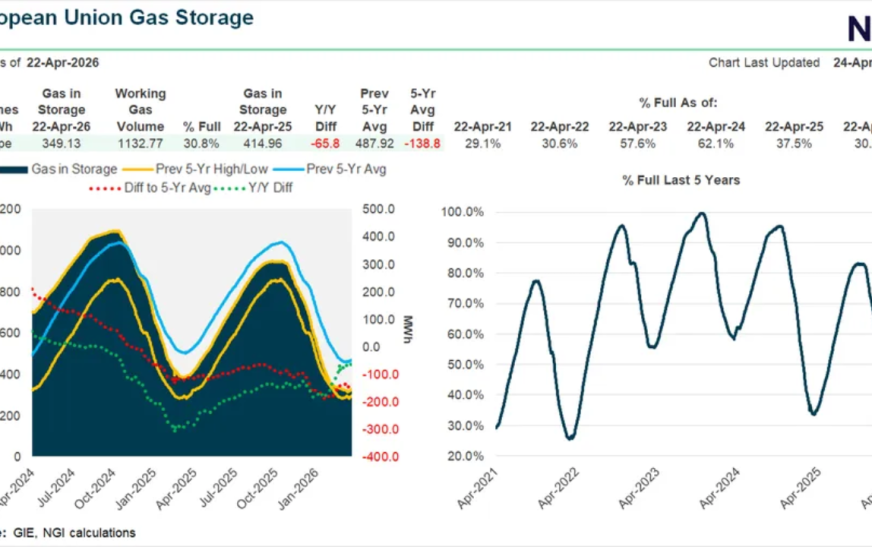
Natural gas inventory data is another major factor behind the current setup. NatGasWeather.com noted that current demand conditions are likely to prevent weekly inventory builds from reaching or exceeding 100 Bcf through the second week of May.
That matters because storage builds are closely watched by traders. During the warmer months, natural gas inventories usually rise as production exceeds consumption. Large weekly builds can pressure prices because they suggest supply is comfortable. Smaller builds can support prices because they suggest demand is absorbing more supply than expected.
If weekly builds stay below 100 Bcf, the market may avoid some of the deeper bearish pressure that would come from very loose storage conditions. However, smaller builds alone may not be enough to create a strong bullish move unless they are paired with hotter weather forecasts, lower production or stronger LNG export demand.
For broader updates across futures, commodities and global financial markets, readers can follow Finprozone latest market news.
Why the market is not reacting strongly
The sideways action in natural gas futures reflects a lack of decisive information. Traders are not seeing a strong reason to push prices much higher or lower.
On the bullish side, colder northern weather is adding some late-season heating demand. That can reduce the pace of storage injections and keep inventories from building too quickly. If this colder pattern lasts longer than expected, it could lend support to prices.
On the bearish side, cooling demand remains limited. Without strong demand from southern regions, the national consumption picture is still not tight. Mild weather means less power-sector demand, which can reduce the urgency to buy futures.
The market also needs to consider supply. If production remains stable and demand is only moderate, price rallies may face resistance. Natural gas markets can quickly turn bearish if storage begins building faster than expected.
This is why traders are waiting. The current data does not justify aggressive positioning in either direction.
Contract expiry adds another layer of caution
The May Nymex natural gas contract was approaching expiry, which can influence trading behavior. As a futures contract nears expiration, traders often roll positions into later contracts or reduce exposure. This can lead to quieter trade or short-term volatility depending on positioning.
Contract expiry can sometimes distort price action because moves may reflect technical flows rather than a major change in fundamentals. Traders may be closing positions, adjusting hedges or shifting exposure to the next active month.
For that reason, the small decline in May natural gas futures should be interpreted carefully. A 0.5% move lower near expiry does not necessarily signal a strong bearish shift. It may simply reflect cautious positioning as traders wait for clearer weather and storage signals.
The more important question is whether the next active contract responds differently once expiry pressure fades. If later contracts remain steady, it suggests the market is still balanced. If they weaken, traders may be pricing softer demand. If they rise, the market may be reacting to tighter inventory expectations.
Late-season heating demand supports the market
Late-season heating demand is currently one of the few supportive factors for natural gas futures. Northern markets are still seeing some colder conditions, keeping demand from falling too quickly.
This matters because the market is transitioning out of winter. If heating demand disappears too quickly before cooling demand begins, inventories can build rapidly. That kind of seasonal gap often pressures natural gas prices.
A colder trend in northern regions helps reduce that risk. It keeps some consumption alive and prevents the market from becoming too loose too quickly.
However, late-season heating demand usually has a limited shelf life. As the calendar moves deeper into May, the market will shift focus toward cooling demand. That means any current support from cold weather may fade unless it is replaced by hotter forecasts in the south or stronger power-sector consumption.
This is why traders should not overstate the bullish impact. The colder trend helps, but it does not automatically create a sustained rally.
Cooling demand remains limited
The bearish side of the setup is weak cooling demand in the south. Cooling demand becomes important when temperatures rise enough to increase air-conditioning use. That typically boosts electricity demand and can raise natural gas consumption from power plants.
At the moment, cooling load appears limited. That keeps national demand from moving into a stronger bullish zone. Without heat-driven power demand, natural gas consumption may remain moderate.
This is a normal seasonal issue. The market often becomes more sensitive to cooling demand as summer approaches. If forecasts begin showing hotter-than-normal conditions, natural gas futures could react quickly.
For now, though, the lack of meaningful cooling demand is capping upside. Traders need evidence that southern demand is strengthening before they can justify a more bullish view.
The $2.50 area remains important for traders
Nymex natural gas trading near $2.537 per mmBtu puts the market close to a psychologically important area around $2.50. Round levels often matter in futures markets because they attract technical attention from traders and hedgers.
If prices hold above this zone, it may suggest that demand and inventory expectations are providing enough support. If futures break clearly below it, bearish traders may look for further downside.
However, natural gas price levels should not be viewed in isolation. Weather forecasts, storage data and production trends matter more than the exact price point. A move below $2.50 during mild weather may not be surprising. A move above resistance would likely need stronger demand confirmation.
For now, the market’s sideways behavior near this level suggests that traders are waiting for a clearer catalyst.
What could push natural gas futures higher?
Several factors could support natural gas futures in the coming sessions.
The first would be colder-than-expected weather in northern markets. If heating demand stays stronger for longer, inventory builds may remain smaller than expected.
The second would be an early rise in cooling demand. If southern temperatures climb and power-sector consumption increases, traders may begin pricing stronger summer demand.
The third would be lower production. If supply declines while demand remains moderate, the market could tighten.
The fourth would be stronger LNG export flows. U.S. liquefied natural gas exports are an important source of demand. If export activity remains strong, it can help absorb domestic supply.
The fifth would be storage builds coming in below expectations. If weekly reports repeatedly show smaller injections, sentiment could improve.
What could pressure natural gas futures lower?
Natural gas futures could weaken if weather remains mild across most of the country. Mild temperatures reduce both heating and cooling demand, creating the weakest seasonal setup for gas consumption.
Large storage builds would also pressure the market. If injections begin approaching or exceeding 100 Bcf despite current expectations, traders may conclude that supply is looser than believed.
Strong production could add to downside pressure. Natural gas prices often struggle when output remains high and demand is only moderate.
Weak LNG flows would also be bearish. If export demand softens, more supply stays in the domestic market, increasing pressure on inventories.
Finally, technical selling near contract expiry or after a break below key support could add short-term volatility.
How traders should read this market
The current natural gas futures setup is balanced rather than strongly bullish or bearish. Demand is not weak enough to trigger a major sell-off, but it is not strong enough to drive a convincing rally.
Late-season heating demand is helping limit the pace of storage builds. Limited cooling demand is preventing stronger upside. This creates a narrow trading environment where weather forecast changes can matter more than usual.
Traders should avoid assuming that sideways price action means the market is inactive. Natural gas can move quickly once forecasts shift. A mild outlook can turn hot, cold patterns can extend, and storage expectations can change rapidly.
For traders who want to compare energy futures, technical levels and broader commodity signals, Finprozone’s market tools and trading resources can help track market conditions.
Conclusion
Natural gas futures were little changed in early trade as the market remained caught between late-season heating demand in northern regions and limited cooling demand in the south. Nymex natural gas for May delivery slipped 0.5% to $2.537 per mmBtu ahead of contract expiry.
The main issue is demand balance. Colder northern trends are providing some support, but national demand remains only light to moderate. That may prevent weekly inventory builds from reaching or exceeding 100 Bcf through the second week of May, according to NatGasWeather.com, but it is not enough to create a strong bullish breakout.
For now, natural gas futures remain rangebound. Traders are watching weather forecasts, storage build expectations, contract expiry flows and signs of stronger cooling demand. Until one of those factors changes meaningfully, the market may continue trading sideways.
FAQ
Why are natural gas futures trading sideways?
Natural gas futures are trading sideways because demand signals are mixed. Northern markets still show some late-season heating demand, while southern cooling demand remains limited. This creates a balanced setup without a strong bullish or bearish catalyst.
What price did Nymex natural gas trade near?
Nymex natural gas for May delivery traded near $2.537 per mmBtu, down 0.5% ahead of contract expiry. The small move reflected cautious positioning rather than a major shift in fundamentals.
Why do inventory builds matter for natural gas?
Inventory builds matter because they show how much supply is being added to storage. Large builds can pressure prices by signaling loose supply, while smaller builds can support prices if demand is absorbing more gas than expected.
How does weather affect natural gas futures?
Weather affects natural gas futures by changing heating and cooling demand. Cold weather raises heating use, while hot weather increases power demand for air conditioning. Mild weather usually limits consumption and can keep prices rangebound.
What should natural gas traders watch next?
Natural gas traders should watch weather forecasts, weekly storage reports, production levels, LNG flows and cooling demand trends. These factors will determine whether prices stay rangebound or begin a stronger move in either direction.