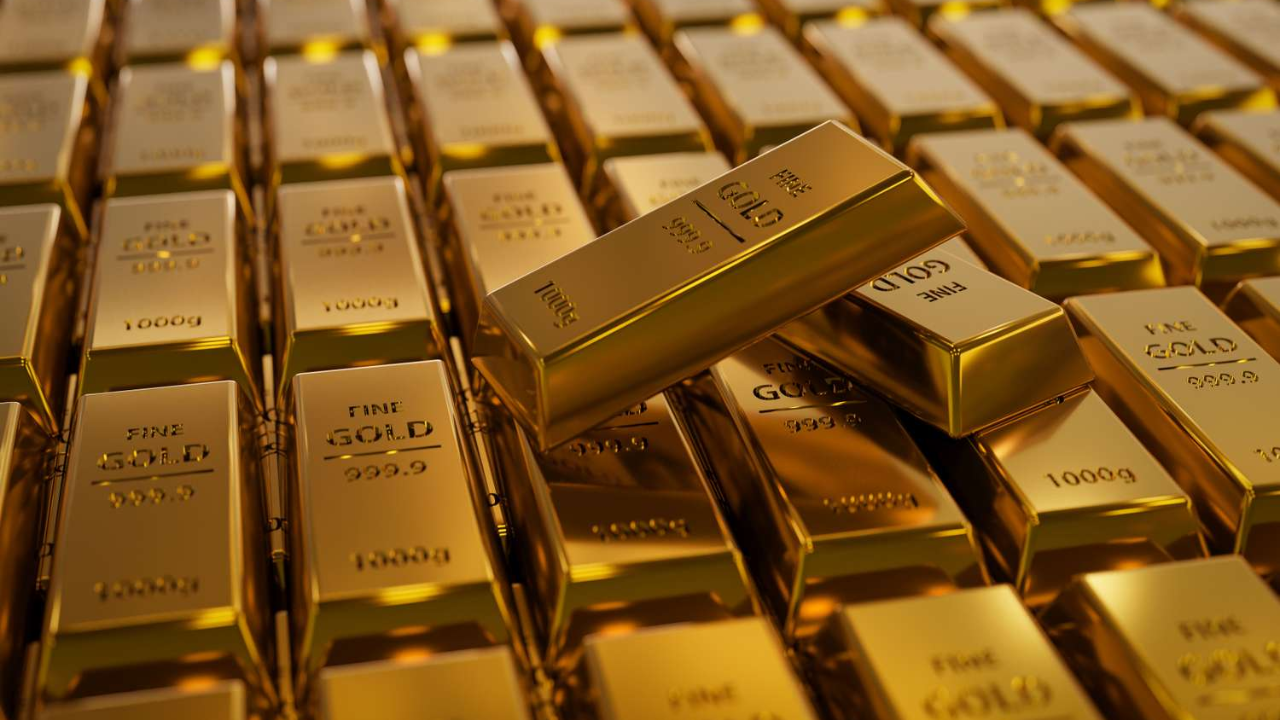
Gold fell sharply on Tuesday as investors moved away from precious metals ahead of key U.S. inflation data and priced in a higher chance of another Federal Reserve rate hike this year. The latest gold price forecast has turned more cautious, with bullion pressured by risk-off selling, rising rate expectations, weaker equity markets, and uncertainty over how the May inflation data may shape monetary policy.
According to the original Reuters report published through TradingView, spot gold fell 1.5% to $4,264.70 per ounce as of 1:45 p.m. ET after dropping more than 2% earlier in the session. Bullion reached its lowest level since March 23, while U.S. gold futures for August delivery settled 1.8% lower at $4,286.40.
The move shows that gold remains highly sensitive to the rate outlook. Although gold is often viewed as an inflation hedge, it can struggle when inflation raises the probability of tighter policy. Higher interest rates increase the opportunity cost of holding bullion because gold does not generate yield. That makes this week’s U.S. CPI and PPI data central to the next phase of the market.
Gold Drops to More Than Two-Month Low
The decline pushed gold to its weakest level in more than two months, marking a notable technical and sentiment shift. A move below recent support can force traders to reassess whether the metal is still consolidating within a broader trend or entering a deeper correction.
The pressure was not limited to gold. The broader precious-metals complex also weakened, with silver, platinum, and palladium falling. This suggests that traders were reducing exposure across metals rather than reacting to a gold-specific event alone.
Bob Haberkorn, senior market strategist at RJO Futures, said traders were nervous and that markets had moved into a risk-off mode. His view is important because gold does not always rise during risk-off sessions. When investors sell assets broadly, they may liquidate gold positions to raise cash, reduce leverage, or protect against further volatility.
That is what makes the current gold price forecast difficult. Gold can benefit from fear when safe-haven demand dominates. But it can fall during market stress when the main concern is tighter monetary policy, higher real yields, or broad liquidation across risk assets.
Fed Rate-Hike Fears Drive the Selloff
The strongest pressure on gold came from rising expectations of a U.S. rate hike later this year. Traders were pricing in about a 68% chance of a Federal Reserve rate hike in December, according to the CME FedWatch tool cited in the source.
That probability matters because gold’s valuation is deeply tied to interest-rate expectations. When markets believe rates may rise, Treasury yields can become more attractive relative to gold. Investors may prefer assets that provide income, especially if inflation data suggests the Fed cannot ease policy.
Last week’s strong jobs numbers already shifted attention toward tighter policy risk. Strong labor data can suggest that the economy remains resilient enough to absorb higher rates. If inflation also comes in hot, the Fed may have less reason to stay patient.
Gold and silver may remain under pressure until traders receive clearer guidance from the Fed, as Haberkorn noted. That makes the upcoming inflation releases more than routine economic data. They are potential catalysts for a reassessment of the entire precious-metals trade.
U.S. CPI Data Becomes the Main Catalyst
The May U.S. Consumer Price Index report is due Wednesday, followed by the Producer Price Index reading on Thursday. These releases will give traders more information on whether inflation pressure is cooling, stabilizing, or accelerating again.
For gold, the CPI reaction may be direct. If inflation surprises to the upside, the market may increase expectations for a Fed rate hike, pushing gold lower. If inflation comes in softer than expected, rate-hike fears may ease, giving bullion a chance to recover from the recent selloff.
Commerzbank warned that if May inflation data surprises to the upside, gold is likely to fall further. The bank also noted that this could increase the potential for recovery later in the year if the Fed ultimately does not raise rates as expected. That view captures the two-stage risk facing traders: near-term pressure from inflation fears, but possible later support if policy expectations reverse.
For investors tracking macro releases, metals, and central-bank expectations, Finprozone latest market news provides continued coverage of how inflation data affects major asset classes.
Why Higher Rates Pressure Gold
Gold’s relationship with inflation is often misunderstood. Inflation can support gold if investors fear currency debasement, financial instability, or declining purchasing power. But when inflation leads to higher interest rates, gold can lose appeal because it pays no interest.
The key issue is the opportunity cost of holding bullion. If cash, bonds, or other income-producing assets offer higher returns, some investors may rotate away from gold. This is especially true when the Fed appears committed to keeping inflation under control through tighter policy.
Higher rates can also support the U.S. dollar. Since gold is priced in dollars, a stronger dollar can make bullion more expensive for buyers using other currencies. That can weaken demand and add another layer of pressure.
This is why the gold price forecast depends heavily on the CPI data. The number itself matters, but the market’s interpretation matters even more. Traders will ask whether inflation is strong enough to force a rate hike, whether the Fed may stay restrictive for longer, and whether real yields are likely to move higher.
Risk-Off Selling Hits Equities and Metals
Gold’s decline came as equity markets also weakened. The S&P 500 and Nasdaq fell to more than one-month lows on Tuesday. This broad pressure suggests that investors were reducing risk across several asset classes.
Normally, a stock-market decline can support gold if investors seek safety. But this time, the reason for the selloff appears tied to rate fears and macro uncertainty. In that environment, gold can fall alongside equities because both are being affected by tighter financial conditions.
Risk-off selling can also create liquidity pressure. Investors who need to cover losses or reduce exposure may sell liquid assets, including gold and silver. That can temporarily override gold’s safe-haven role.
This kind of cross-asset weakness is important for traders. A gold decline during an equity selloff does not necessarily mean gold has lost its long-term defensive role. It may mean that short-term positioning, leverage, and rate expectations are dominating safe-haven demand.
Oil Falls After Iran and Israel Halt Strikes
The Reuters source also noted that oil prices fell after Iran and Israel said they had halted attacks on each other following an appeal from U.S. President Donald Trump. Lower oil prices can reduce some inflation pressure, but the market remains focused on whether broader inflation data confirms relief.
Oil is important for gold because elevated crude prices can fuel inflation and keep interest rates higher for longer. If energy prices fall and inflation expectations ease, gold may eventually benefit from lower yields. However, if inflation remains strong despite lower oil, the Fed may still face pressure to tighten policy.
The current setup is therefore mixed. Lower oil removes one inflationary pressure, but traders are waiting for CPI confirmation. Until then, gold remains vulnerable to rate-hike expectations.
The Iran-Israel halt in strikes may also reduce some geopolitical safe-haven demand. If investors see less immediate conflict risk, they may reduce gold exposure. That could be another reason bullion struggled despite broader market stress.
Silver and Platinum Drop Sharply
Silver fell 4.3% to $65.23 per ounce, while platinum dropped 2.1% to $1,717.30. Palladium lost 1.3% to $1,220.92. The size of silver’s decline was especially notable, showing that pressure extended beyond gold.
Silver often trades with both precious-metal and industrial-metal characteristics. It can benefit from monetary uncertainty, but it is also sensitive to growth expectations and risk appetite. When markets fear tighter policy and weaker demand, silver can fall harder than gold.
Platinum also has industrial demand exposure, which can make it vulnerable during risk-off sessions. The broader decline across metals suggests investors were not simply rotating within the precious-metals space. They were reducing exposure.
For the gold price forecast, this broader metals weakness is a warning sign. A durable gold recovery would likely look stronger if silver and platinum also stabilize. If the entire complex remains under pressure, gold may struggle to build momentum.
India Tariff Issue Adds Market Complexity
The source also noted that India’s sharp increase in gold import tariffs is fueling a resurgence in smuggling that could exceed 100 metric tons this year. This detail matters because India is a major gold market, and changes in import costs can affect official demand channels, grey-market activity, and local pricing.
Higher tariffs can make legal imports more expensive, creating incentives for smuggling when grey-market margins widen. That can disrupt normal supply channels and complicate how official import data reflects real demand.
For global gold traders, this issue may not be the primary short-term driver compared with U.S. rates and inflation data. However, it is relevant to physical-market analysis. If official imports weaken because more metal enters through unofficial channels, headline demand data may become harder to interpret.
The broader point is that gold is influenced by both macro and physical-market factors. Fed policy may dominate short-term price action, but tariffs, consumer demand, central-bank buying, and regional premiums can shape the underlying market.
Key Levels and Signals to Watch
The first signal is whether spot gold can stabilize after falling to $4,264.70. A quick recovery would suggest buyers still view the decline as an opportunity. Continued weakness would indicate that rate fears are overwhelming support.
The second signal is Wednesday’s CPI data. A hotter-than-expected reading could increase the probability of a December Fed hike and pressure gold further. A softer reading could reduce rate fears and trigger short covering.
The third signal is Thursday’s PPI release. Producer prices can provide insight into pipeline inflation and business cost pressure. If both CPI and PPI point higher, gold may face additional selling.
The fourth signal is Federal Reserve communication. Traders need clearer guidance on whether policymakers see another hike as likely. Until that guidance improves, gold may remain volatile.
The fifth signal is the broader metals complex. Silver, platinum, and palladium weakness may confirm risk-off pressure. Stabilization across metals would support a more balanced outlook.
FAQ
Why did gold fall before the U.S. CPI report?
Gold fell because traders grew more concerned that strong inflation data could increase the chance of another Federal Reserve rate hike this year. Higher interest rates make non-yielding assets like gold less attractive, especially when investors can earn more from cash or bonds.
What CPI result would be bullish for gold?
A softer-than-expected CPI reading would likely be more supportive for gold because it could reduce rate-hike expectations and pressure on bond yields. Traders can follow the economic calendar for upcoming market events to track CPI, PPI, and Fed-related releases.
Why did gold fall even though markets were risk-off?
Gold can fall during risk-off sessions when the main concern is tighter monetary policy or liquidity pressure. Investors may sell gold to reduce exposure, cover losses, or react to higher rate expectations. In this case, Fed rate-hike fears outweighed safe-haven demand.
What should traders watch next for the gold price forecast?
Traders should monitor spot gold near recent lows, Wednesday’s CPI report, Thursday’s PPI data, Fed rate-hike probabilities, the U.S. dollar, Treasury yields, and silver’s reaction. A recovery needs evidence that inflation pressure is easing or that the Fed is unlikely to hike again.