Brazil inflation rises, but stays below expectations
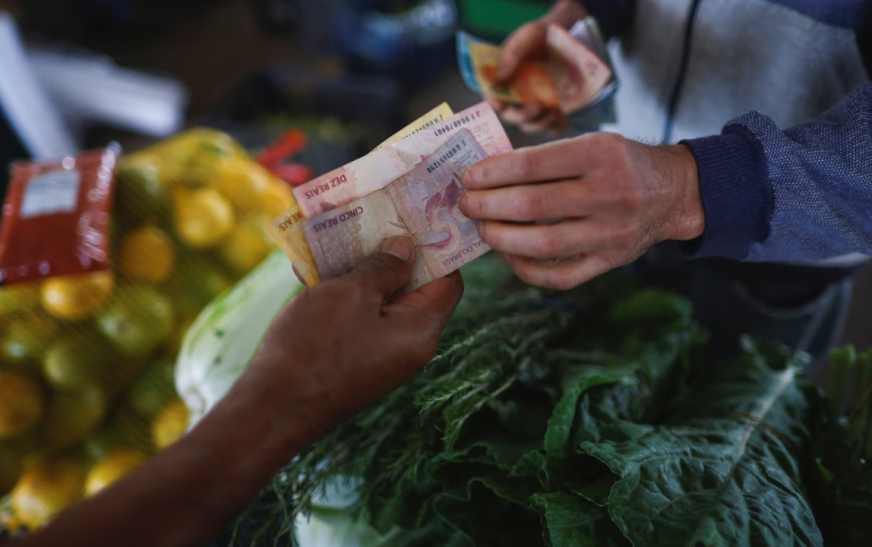
Brazil inflation accelerated in early April, but the increase came in below market expectations, giving investors another reason to expect the country’s central bank to continue cutting interest rates this week. The latest reading of the IPCA-15 index, Brazil’s mid-month inflation gauge, showed annual inflation at 4.37%, according to official data from statistics agency IBGE.
That was higher than the 3.90% recorded a month earlier, showing that price pressure has not disappeared. However, the result was still below the 4.49% forecast by economists in a Reuters poll. That softer-than-expected figure matters because Brazil’s central bank is preparing for its next policy decision, and markets widely expect another interest rate cut.
The data creates a mixed but generally supportive picture for monetary easing. On one side, inflation is still above the central bank’s official target. On the other side, the latest reading suggests price pressures may not be as strong as feared, even with higher food, beverage and fuel costs affecting consumers.
According to the original Reuters report on Brazil’s mid-April consumer prices via TradingView, the softer inflation reading reinforced expectations that policymakers will deliver another rate cut at their upcoming meeting.
Why the IPCA-15 index matters
The IPCA-15 index is closely watched because it provides an early signal of Brazil’s inflation trend before the full monthly inflation report. Economists, investors and policymakers use it to understand whether consumer prices are rising faster or slower than expected.
In the month to mid-April, consumer prices rose 0.89%. That was the steepest monthly increase for the IPCA-15 index since February 2025, but it still came in below the 1.0% increase expected by economists in the Reuters poll.
This is why the result is not purely positive or negative. A monthly increase of 0.89% is still significant. It shows that Brazilian consumers continue to face rising costs in important categories. But the fact that the number came in below expectations reduces the immediate pressure on the central bank.
Markets often react not only to whether inflation is high or low, but to whether it comes in above or below forecasts. In this case, the data was less severe than expected. That supports the argument that Brazil inflation is still manageable enough for policymakers to continue with a cautious easing cycle.
For broader coverage of global markets and economic developments, readers can follow Finprozone’s latest market news.
Food, beverages and transport drive the monthly increase
The latest inflation increase was mainly driven by higher food, beverage and transportation prices. These categories are especially important because they affect consumers directly and frequently.
Food inflation is one of the most sensitive parts of any inflation report. When food prices rise, households feel the impact immediately. This is especially true for lower-income consumers, who spend a larger share of their income on essential goods. Even when broader inflation is easing, higher food prices can keep consumer frustration high.
Transportation is another major pressure point. Fuel costs can influence personal travel, public transportation, freight, delivery services and broader logistics costs. When fuel becomes more expensive, the impact can spread through the economy. Businesses may face higher costs, and some of those costs can eventually reach consumers.
IBGE said fuel costs jumped as global oil prices rose because of the Middle East conflict. That external factor complicates Brazil’s inflation outlook. The central bank can influence domestic demand and credit conditions, but it cannot directly control global crude oil prices.
This distinction is important. If inflation is being pushed mainly by fuel and food, policymakers may be more willing to look through part of the increase, especially if underlying price pressures remain contained. However, if those pressures spread into services, wages and broader consumer categories, the central bank may need to become more cautious.
Brazil’s central bank is expected to cut rates again
Brazil’s central bank is widely expected to cut its benchmark interest rate by 25 basis points to 14.50% on Wednesday. That would continue the easing cycle launched last month as policymakers attempt to balance inflation risks with a sluggish economy.
A 25-basis-point cut would be cautious rather than aggressive. Brazil inflation remains above the central bank’s target, and the latest annual IPCA-15 reading is still close to the upper end of the tolerance band. Policymakers therefore have room to ease, but not enough room to sound relaxed.
The central bank targets inflation at 3%, with a tolerance band of plus or minus 1.5 percentage points. This means the upper limit of the target range is 4.5%. With annual IPCA-15 inflation at 4.37%, the latest reading remains below the ceiling, but only narrowly.
That narrow margin explains why the expected cut is modest. The central bank can justify easing because the data undershot forecasts, but it still needs to preserve credibility. If inflation moves above the tolerance band, investors may begin questioning whether rate cuts are coming too early.
Very high real interest rates support easing
One of the main arguments for another Brazil interest rate cut is the country’s high level of real interest rates. Real interest rates adjust nominal rates for inflation. Even after a cut to 14.50%, Brazil’s benchmark rate would remain very high compared with current inflation.
That means monetary policy would still be restrictive. A small rate cut would not represent a loose or aggressive stimulus position. Instead, it would reduce some pressure while keeping financial conditions tight enough to help contain inflation.
Capital Economics senior emerging markets economist Kimberley Sperrfechter said easing underlying price pressures and very high real interest rates should give the central bank room to deliver another 25-basis-point cut.
That view reflects the current market logic. Brazil inflation has not returned to target, but the central bank may still have enough space to ease gradually because policy remains tight. The economy also needs some relief after a period of high borrowing costs.
High interest rates can slow consumption, credit growth, investment and business expansion. If inflation data continues to undershoot expectations, policymakers may feel more comfortable reducing rates step by step.
Fuel prices create the biggest external risk
Fuel prices are one of the most important risks in the current Brazil inflation outlook. The Middle East conflict has pushed global oil prices higher, and that has already affected transportation costs in Brazil.
This matters because fuel inflation can spread quickly. Higher fuel costs can raise freight prices, food distribution costs, business expenses and household transport bills. If the shock is short-lived, the central bank may treat it as temporary. If it lasts longer, it can become more dangerous.
The key issue is whether fuel-driven inflation remains limited or begins to affect broader price expectations. If consumers and businesses start expecting higher prices across the economy, inflation can become more persistent.
For now, the IPCA-15 reading suggests that inflation pressures are not as strong as feared. But the central bank will need to watch oil prices closely. A continued rise in crude prices could reduce the room for future rate cuts.
This is why global energy prices matter even for a domestic policy decision. Brazil’s central bank is making decisions based on local inflation data, but that data is being influenced by global oil-market shocks.
A sluggish economy gives policymakers another reason to move
The central bank is not only looking at inflation. It is also looking at economic momentum. Brazil’s economy has been described as sluggish, and high interest rates can add pressure by making credit more expensive for companies and households.
When borrowing costs are high, consumers may delay purchases, businesses may postpone investment and financial conditions may remain tight. A gradual easing cycle can help reduce that pressure without abandoning inflation discipline.
This is why the latest data is useful for policymakers. It gives them a reason to continue cutting rates while still arguing that they are acting carefully. Inflation rose, but less than expected. That is exactly the kind of result that supports a cautious 25-basis-point move.
The risk is that the central bank cuts too quickly and inflation expectations become unstable. The opposite risk is that it keeps rates too high for too long and weakens the economy unnecessarily. The latest Brazil inflation report gives policymakers enough room to choose a middle path.
What the market will watch in the central bank statement
The rate decision itself is important, but the central bank’s statement may matter even more. Investors will look for clues about the next steps in the easing cycle.
If policymakers sound confident that underlying inflation is easing, markets may price in additional rate cuts. If they emphasize risks from food, fuel and external shocks, investors may become more cautious about the pace of future easing.
The central bank will likely try to keep flexibility. It may cut rates while avoiding any strong commitment to future moves. That would allow policymakers to respond to upcoming inflation data, oil prices and currency movements.
The Brazilian real will also matter. A weaker currency can increase imported inflation, especially in goods, fuel and other traded products. A stable or stronger real would make it easier for the central bank to continue easing.
Investors should therefore watch not only the interest rate number, but also the tone, wording and risk assessment in the policy statement.
Why this matters for investors
The Brazil inflation report matters across several asset classes. For bond investors, softer inflation strengthens the case for lower rates, which can support fixed-income prices. For equity investors, lower rates can improve sentiment by reducing financing costs and supporting economic activity.
For currency traders, the picture is more balanced. Rate cuts can reduce the yield appeal of the Brazilian real, but if inflation remains controlled and investor confidence improves, the currency may remain supported.
For companies, lower interest rates can gradually ease borrowing costs. Consumer sectors may benefit if credit becomes less restrictive. Banks, retailers, real estate companies and domestic cyclical stocks may all react to the direction of monetary policy.
However, investors should remain cautious. Inflation is still near the upper end of the target range, and fuel prices remain a key risk. A single softer-than-expected reading does not guarantee a long easing cycle.
Conclusion
Brazil inflation rose in early April, but less than economists expected. Annual inflation measured by the IPCA-15 index reached 4.37%, up from 3.90% a month earlier but below the 4.49% forecast in a Reuters poll. Monthly inflation increased 0.89%, also below the expected 1.0% rise.
The data reinforces expectations that Brazil’s central bank will cut its benchmark interest rate by 25 basis points to 14.50% this week. Food, beverage and transportation prices remain sources of pressure, while fuel costs have increased because of higher global oil prices linked to the Middle East conflict.
Still, the softer-than-expected result suggests that underlying inflation pressures may be easing. Very high real interest rates also give policymakers room to continue a cautious easing cycle.
The next test will be the central bank’s policy statement. If officials sound comfortable with the inflation outlook, markets may expect further cuts. If they focus on fuel, food and currency risks, the easing path could remain limited.
Brazil inflation is not yet fully under control, but the latest data gives the central bank enough space to move carefully.
FAQ
What is Brazil inflation according to the latest IPCA-15 data?
Brazil inflation measured by the IPCA-15 index reached 4.37% in early April. That was higher than the previous month’s 3.90%, but below the 4.49% forecast in a Reuters poll, supporting expectations for another interest rate cut.
Why did Brazil inflation rise in mid-April?
Brazil inflation rose mainly because of higher food, beverage and transportation prices. Fuel costs also increased as global oil prices climbed due to the Middle East conflict, adding pressure to transport costs, household budgets and broader consumer prices.
Will Brazil’s central bank cut interest rates?
Markets widely expect Brazil’s central bank to cut its benchmark interest rate by 25 basis points to 14.50%. The softer-than-expected IPCA-15 reading supports that view, although policymakers may remain cautious because inflation is still close to the upper target range.
What is Brazil’s inflation target?
Brazil’s central bank targets inflation at 3%, with a tolerance band of plus or minus 1.5 percentage points. That places the upper limit at 4.5%. The latest IPCA-15 reading of 4.37% remains below that ceiling, but only narrowly.
What should readers watch after this Brazil inflation report?
Readers should watch Brazil’s rate decision, the next IPCA release, oil prices and the Brazilian real. To track upcoming inflation reports and policy meetings, they can use Finprozone’s economic calendar for upcoming market events.