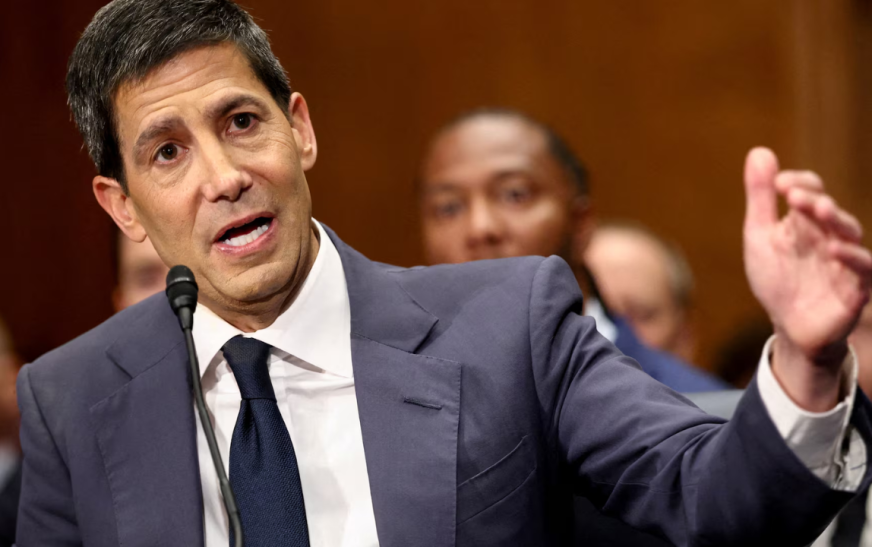
The market outlook is entering a new phase as Kevin Warsh prepares to become the next chair of the Federal Reserve, taking over at a time when inflation pressures are rising again and investors are questioning whether interest rate cuts are still realistic. According to the original Invezz report published through TradingView, President Donald Trump is expected to swear in Warsh during a White House ceremony on Friday, May 22, after his confirmation by the U.S. Senate earlier this month.
Warsh will succeed Jerome Powell, whose official term expired last week but who continued serving temporarily until the transition could be completed. The Senate confirmed Warsh in a 54-45 vote, reportedly the narrowest confirmation margin ever recorded for a Federal Reserve chair. That narrow vote adds political weight to a transition already being watched closely by investors, economists, and policymakers.
The challenge for Warsh is immediate. Inflation has accelerated again, oil prices remain elevated because of geopolitical tension, and markets have sharply reduced expectations for near-term rate cuts. At the same time, President Trump has repeatedly pushed for lower borrowing costs. That leaves the new Fed chair facing a difficult balancing act between inflation control, growth support, and central bank independence.
Why the Fed Leadership Change Matters
A change in Federal Reserve leadership matters because the chair plays a major role in shaping policy communication, market expectations, and the direction of monetary strategy. The Federal Reserve sets interest rates, manages inflation risk, monitors financial stability, and influences borrowing costs across the economy.
The chair does not act alone. Fed policy decisions are made by the Federal Open Market Committee, and each voting member has a role. Still, the chair carries significant influence through public speeches, press conferences, policy framing, and consensus-building inside the central bank.
Warsh’s arrival is especially important because it comes during a period of uncertainty. The market had previously expected the Fed to move toward easier policy, but recent inflation data have made that view harder to defend. If inflation stays elevated, the Fed may need to keep rates high or even consider another hike. If growth weakens, pressure for cuts may return.
This is why investors are watching the transition closely. The question is not only who leads the Fed. The question is how the new chair interprets inflation, growth, political pressure, and market expectations.
Inflation Is the First Major Test
Warsh takes over as inflation concerns return to the center of the policy debate. The source report noted that U.S. consumer price index data showed inflation rising 3.7% year over year, while producer prices climbed 6%. Those figures complicate the argument for near-term rate cuts.
Inflation matters because it directly affects the Fed’s credibility. The central bank’s core mandate includes price stability. If inflation rises again while the Fed cuts rates too early, investors may worry that policymakers are allowing price pressures to become more entrenched.
Producer prices are also important because they can feed into consumer prices over time. If businesses face higher input costs, they may pass some of those costs to consumers. That can keep inflation sticky even if consumer demand cools.
For markets, the inflation data changes the interest rate outlook. Traders are now increasingly considering the possibility of another rate hike later this year instead of monetary easing. That is a major shift from a more dovish narrative and creates uncertainty across stocks, bonds, currencies, commodities, and real estate.
Oil Prices Add to the Fed’s Problem
Rising oil prices linked to the ongoing conflict involving Iran and Israel are adding another layer of inflation risk. Energy prices affect inflation directly through gasoline, heating, electricity, transportation, and production costs. They also affect inflation indirectly by raising costs across supply chains.
For the Fed, oil-driven inflation is difficult to manage. Higher interest rates cannot produce more oil or resolve geopolitical conflict. However, the Fed may still need to respond if higher energy prices begin influencing broader inflation expectations, wages, or business pricing behavior.
This creates a policy dilemma. If the Fed ignores energy-driven inflation, inflation expectations could rise. If it tightens policy too much, it could slow growth and increase pressure on households and businesses.
Warsh is entering the role at exactly this difficult moment. He must decide how much weight to give to temporary energy shocks versus broader inflation persistence. Markets will scrutinize his early comments for clues on whether he views the latest price pressures as transitory, structural, or serious enough to require tighter policy.
Trump Wants Lower Rates, but Markets Are Skeptical
President Trump has repeatedly argued that interest rates should move lower to support economic growth. The Invezz report notes that Trump expects the post-Powell Federal Reserve to resume cutting rates, similar to the three reductions implemented during 2025.
That political pressure is central to the market outlook. Lower rates can support economic growth by reducing borrowing costs for consumers, businesses, and the government. They can also support stock valuations and credit markets. However, cutting rates while inflation is accelerating could damage the Fed’s inflation-fighting credibility.
Investors and economists remain skeptical that the Fed can ease quickly under current conditions. A stable labor market and renewed inflation pressure reduce the case for immediate cuts. If markets begin to believe the Fed is lowering rates for political reasons rather than economic reasons, bond yields and inflation expectations could react negatively.
This is why Warsh’s independence will be tested early. He pledged during his Senate confirmation hearing to act independently, but markets will judge him based on policy decisions and communication, not confirmation-hearing language.
For investors following monetary policy, inflation, and cross-market reactions, Finprozone latest market news provides regular coverage of major economic developments shaping market sentiment.
Fed Independence Is Now a Market Issue
Fed independence is not only a political principle. It is a market issue. Investors need confidence that the central bank will make decisions based on economic data rather than short-term political goals.
If the Fed is seen as independent, markets may trust that inflation will be managed over time, even if policy decisions are unpopular. If independence appears weakened, investors may demand higher compensation for inflation and policy risk. That can lift long-term bond yields, pressure the dollar, and create volatility in equities.
Warsh’s narrow Senate confirmation margin adds to the scrutiny. Critics have raised concerns about how aligned he may be with White House policy priorities, particularly on interest rates. Supporters may argue that a change in leadership is needed to improve Fed performance and adapt to new economic conditions.
The practical question is how Warsh responds if inflation remains high while the White House continues calling for cuts. A decision to hold rates steady or hike would signal policy independence but could create political tension. A quick move to cut rates could support Trump’s growth agenda but raise market concerns if inflation data do not justify it.
What Higher-for-Longer Rates Mean for Markets
If the Fed keeps rates high for longer, several asset classes could feel the impact. Stocks may face valuation pressure because higher rates reduce the present value of future earnings. Growth stocks can be especially sensitive because much of their value depends on earnings expected far into the future.
Bonds would also remain volatile. If markets price in a higher policy path, Treasury yields may rise or stay elevated. That can create pressure for rate-sensitive sectors such as housing, utilities, real estate investment trusts, and highly leveraged companies.
The U.S. dollar could receive support if Fed policy remains more restrictive than other major central banks. Higher U.S. rates can attract capital into dollar-denominated assets. However, if investors worry about Fed credibility or political pressure, the dollar reaction could become more complicated.
Commodities may also respond unevenly. Gold can benefit from policy uncertainty and inflation concerns, but high real yields can pressure it. Oil is already being driven by geopolitical risk. Industrial metals may depend more on growth expectations and global demand.
What Rate Cuts Would Mean
If Warsh’s Fed moves toward rate cuts despite inflation concerns, markets could initially respond positively. Lower borrowing costs can support equities, credit markets, housing, and business investment. Investors often welcome easier monetary policy, especially if they believe growth is slowing.
However, the reaction would depend on why the Fed is cutting. If inflation is cooling and growth is stable, rate cuts would likely be seen as constructive. If inflation remains high and the Fed cuts anyway, markets may worry about future price instability.
That could create a more difficult environment. Bond investors may demand higher long-term yields to compensate for inflation risk. The dollar could weaken if markets believe the Fed is falling behind inflation. Gold and other inflation-sensitive assets could attract demand.
In short, rate cuts are not automatically bullish. Their impact depends on the inflation backdrop, Fed credibility, and investor confidence in the policy framework.
Warsh’s Economic Philosophy Will Face Real-Time Testing
Warsh has previously been associated with views that emphasize financial conditions, productivity, and the risks of excessive monetary accommodation. Now, those ideas will face a real-time test. It is easier to critique policy from outside the chair’s office than to manage the trade-offs from inside it.
The Fed chair must communicate clearly, build consensus, and respond to fast-changing data. A small shift in tone can move markets. Investors will watch whether Warsh sounds hawkish, dovish, data-dependent, or politically responsive.
His early speeches and first FOMC press conference will matter. Markets will look for answers to several questions. Does he prioritize inflation control above growth support? Does he believe recent inflation is temporary or persistent? Does he see another rate hike as possible? How does he respond to White House pressure? Does he change the Fed’s communication style?
Those signals may shape the next major move in stocks, bonds, and currencies.
Labor Market Stability Complicates the Case for Cuts
The report notes that the labor market has remained relatively stable. That matters because a strong or stable labor market reduces the urgency for rate cuts. If unemployment is low and job creation remains adequate, the Fed has less reason to ease policy quickly.
A stable labor market can also support consumer spending, which may keep demand firm. That can make inflation harder to bring down, especially if energy prices are also rising.
However, the labor market can turn with a lag. If high rates eventually slow hiring, weaken wage growth, or raise unemployment, the Fed may need to reassess. For now, though, labor stability strengthens the argument for patience.
Warsh must therefore balance current inflation data against potential future growth risks. Cutting too soon could worsen inflation. Waiting too long could damage the economy. That is the central policy problem.
Ethics and Disclosure Rules Add Another Layer
The Invezz report also notes that Warsh enters the role under stricter ethics and financial disclosure requirements adopted for Federal Reserve officials in recent years. Based on disclosures filed during confirmation, he is expected to become the wealthiest person ever to serve as Fed chair and will need to divest significant portions of his investment holdings to comply with regulations.
This matters because public trust in central bank leadership depends partly on transparency. The Fed has faced increased scrutiny over officials’ financial activities in recent years, making disclosure and compliance more important.
For markets, the issue is less about personal wealth and more about credibility. A Fed chair must be seen as acting in the public interest and making decisions based on macroeconomic conditions. Strong compliance with ethics rules can help reduce distractions during an already sensitive transition.
What Investors Should Watch Next
Investors should focus first on Warsh’s initial public comments after the swearing-in. His tone on inflation, rates, and Fed independence will likely shape early market expectations.
The second factor is upcoming inflation data. If CPI and producer prices remain elevated, markets may price a higher chance of further tightening. If inflation cools, rate-cut expectations may return.
The third factor is labor data. Stable employment gives the Fed room to stay restrictive. Weakening employment could increase pressure for cuts.
The fourth factor is oil prices. Energy remains a major inflation risk. If geopolitical tensions keep oil elevated, the Fed’s job becomes harder.
The fifth factor is bond-market reaction. Long-term Treasury yields can reveal whether investors trust the Fed’s policy path. Rising yields despite dovish signals may indicate concern about inflation credibility.
Market Takeaway: Warsh Begins With No Easy Option
The market outlook around the Federal Reserve has become more uncertain as Kevin Warsh prepares to take over. Inflation is rising, oil prices are elevated, rate-cut expectations have faded, and political pressure for easier policy remains strong.
Warsh’s first challenge is credibility. He must convince markets that the Fed will remain independent and data-driven while also responding to real economic risks. If he leans too dovish too quickly, inflation concerns may intensify. If he stays too hawkish, growth-sensitive assets may weaken.
For investors, the transition creates both risk and opportunity. Clear communication could stabilize expectations. Mixed signals could increase volatility. The next phase of monetary policy will depend less on the leadership change itself and more on how the new Fed chair handles inflation, rates, and political pressure.
FAQ
Who is Kevin Warsh?
Kevin Warsh is set to become the 17th leader of the Federal Reserve and the 11th chair of the modern Fed era. He will succeed Jerome Powell after being confirmed by the Senate in a narrow 54-45 vote.
Why is Warsh taking over at a difficult time?
Warsh takes over while inflation is rising again, oil prices are elevated, and markets are reducing expectations for near-term rate cuts. He also faces political pressure from President Trump, who wants lower interest rates to support growth.
Could the Fed cut rates under Warsh?
The Fed could cut rates if inflation cools and growth weakens, but current inflation data make quick easing difficult. If the Fed cuts while inflation remains high, markets may question its credibility and independence.
Why does Fed independence matter to investors?
Fed independence matters because investors need confidence that monetary policy is based on economic data rather than political pressure. If independence is questioned, markets may price higher inflation risk, higher bond yields, and greater volatility.
How should investors follow the new Fed policy outlook?
Investors should monitor Warsh’s early comments, CPI data, producer prices, oil markets, labor reports, and Treasury yields. For scheduled policy events and economic releases, use the economic calendar for upcoming market events to track the next major catalysts.