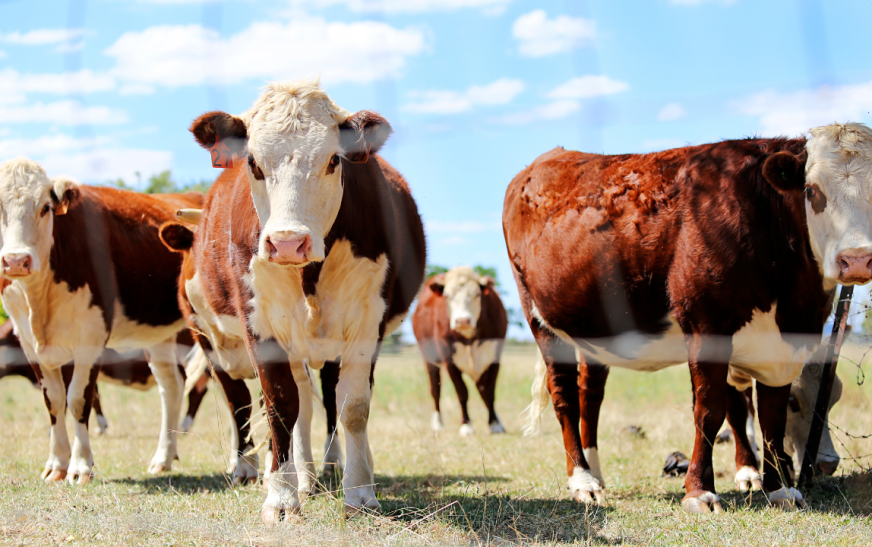
Cattle futures trade near record highs
Cattle futures continued to trade near all-time highs as stronger boxed beef prices added support to the livestock market. The move reflects a market where beef demand, wholesale pricing and futures positioning remain closely connected, especially as traders assess whether current price strength can extend further.
According to the original Dow Jones Newswires report via TradingView, live cattle futures were supported by stronger boxed beef prices, with both choice and select grades posting gains of just over $2.50 per hundredweight, based on USDA data. Live cattle futures rose 0.6% to $2.504 per pound, while lean hog futures fell 0.6% to $1.016 per pound.
The livestock market is currently showing a clear contrast. Cattle futures remain strong as beef prices improve, while lean hogs are moving lower. For traders, this divergence matters because it shows that not all protein markets are responding the same way. Beef-specific demand and pricing conditions are giving cattle a firmer tone than pork futures.
The key question now is whether boxed beef strength can continue supporting cattle futures near record levels. When futures already trade close to historical highs, markets often need fresh bullish confirmation to sustain momentum. Stronger wholesale beef prices can provide that confirmation, but traders will also watch consumer demand, packer margins, slaughter rates and broader food inflation trends.
Why boxed beef prices matter for cattle futures
Boxed beef prices are one of the most important indicators in the cattle market because they reflect wholesale beef values. These prices show what beef cuts are worth after cattle are processed and sold into the meat supply chain.
When boxed beef prices rise, it can signal stronger demand from retailers, foodservice buyers or distributors. That can support cattle futures because higher beef values may improve the outlook for cattle demand and packer buying interest.
In the latest report, both choice and select boxed beef grades gained just over $2.50 per hundredweight. That is important because strength across both categories suggests the move was not limited to one narrow segment of the market.
Choice beef usually commands a higher price because of better quality grading, while select beef is typically priced lower. When both rise together, it can indicate broader wholesale demand rather than isolated premium-beef strength.
For cattle futures traders, this is a constructive signal. Strong wholesale beef prices can help justify elevated futures levels, especially when live cattle contracts are already near record highs.
For wider futures and market updates, readers can follow Finprozone latest market news.
Live cattle futures remain supported by beef demand
Live cattle futures are closely tied to expectations for fed cattle prices, beef demand and supply conditions. When boxed beef prices rise, it often helps support live cattle because it suggests the market can absorb higher beef costs.
At $2.504 per pound, live cattle futures are trading at historically elevated levels. That kind of price level shows strong market confidence, but it also raises the bar for continued gains. Traders need to see evidence that demand can remain strong enough to support high prices.
The latest boxed beef data helps the bullish case. If wholesale beef prices keep firming, futures traders may continue to view cattle as supported. Strong boxed beef values can suggest that retailers and foodservice operators are still willing to pay up for product.
However, there is also a risk. If beef prices rise too quickly, consumer demand may eventually soften. High retail beef prices can reduce household purchasing power, especially if consumers are already facing pressure from broader food and energy inflation.
This makes the cattle market a balancing act. Strong prices support futures, but very high prices can eventually test demand.
Choice and select beef gains send a broad signal
The gains in both choice and select boxed beef are important because they show strength across quality categories. If only choice beef were rising, traders might interpret the move as premium-demand strength. If only select were rising, the market might see more value-driven buying. But when both categories rise, it suggests broader support.
USDA boxed beef data is closely watched because it gives traders a timely view of wholesale market conditions. Stronger boxed beef can influence expectations for packer demand, feedlot leverage and cattle cash prices.
For producers, stronger beef values can improve confidence in the cattle market. For packers, the impact depends on margins. Higher beef prices are positive if they outpace cattle costs. But if cattle prices rise too aggressively, packer margins can tighten.
For futures traders, the direct message is simpler: boxed beef strength is supportive as long as it remains consistent.
The market now needs to see whether this strength continues through the week. One or two strong days can lift sentiment, but sustained gains are more meaningful.
Cattle futures near record highs create technical pressure
Trading near all-time highs can be both bullish and risky. It confirms strong momentum, but it also means the market may be vulnerable to profit-taking if new supportive data does not appear.
When cattle futures approach record territory, traders often become more selective. Buyers want confirmation that demand and fundamentals justify the price. Sellers may look for signs that the rally is overextended.
The latest boxed beef gains help support the market, but traders will still watch follow-through. If live cattle futures continue rising while boxed beef prices stay firm, the trend may remain intact. If futures rise but beef prices stall, the market could become more vulnerable.
Technical traders may also watch whether live cattle can hold above recent breakout levels. A strong close near highs can attract momentum buyers. A reversal from record territory can trigger short-term selling.
In a market like this, both fundamentals and technicals matter. Boxed beef prices provide the fundamental support, while record-high futures levels create the technical test.
Lean hog weakness highlights livestock divergence
While live cattle futures rose, lean hogs fell 0.6% to $1.016 per pound. That divergence is useful because it shows the livestock complex is not moving as one unified market.
Cattle and hog futures can sometimes respond to similar macro factors, such as feed costs, consumer demand, inflation and protein-market trends. But each market also has its own supply-demand balance.
The weakness in lean hogs suggests pork fundamentals are less supportive than beef fundamentals right now. That could reflect different demand conditions, supply expectations or trader positioning.
For cattle futures, the divergence may reinforce the idea that current strength is specifically tied to beef-market support, not just broad commodity buying. That makes boxed beef prices even more important as the key driver.
If cattle continue outperforming hogs, traders may focus more closely on beef demand and cattle supply tightness. If the divergence narrows, it may suggest broader protein-market rotation.
Consumer demand remains the longer-term test
The long-term sustainability of cattle futures near record highs depends heavily on consumer demand. Strong boxed beef prices suggest buyers are still active, but the final test comes at the retail and foodservice level.
Beef is a premium protein compared with many alternatives. When prices climb, consumers may trade down to cheaper cuts, switch to poultry or pork, or reduce purchase frequency. Foodservice operators may also adjust menus or portion sizes if wholesale costs rise too much.
That does not mean high prices automatically destroy demand. Beef demand can remain resilient when employment is stable, wages are firm and consumers are willing to spend. But the higher prices go, the more sensitive the market becomes.
Traders should watch retail beef prices, restaurant demand and seasonal buying patterns. If demand holds up, cattle futures may remain supported. If consumers begin resisting higher prices, the market could lose momentum.
This is why boxed beef strength is helpful but not final. It shows wholesale demand now. The next question is whether that demand survives at higher price levels.
Supply conditions also matter for cattle futures
Demand is only one side of the cattle futures story. Supply also plays a major role. If cattle supplies are tight, futures can remain supported even if demand is only steady. If supplies expand, the market may need stronger demand to maintain high prices.
The U.S. cattle market has faced supply constraints in recent years due to herd dynamics, weather conditions and producer decisions. Tight cattle availability can support futures because packers must compete for limited animals.
When boxed beef prices rise in a tight-supply environment, the bullish effect can be stronger. Higher wholesale beef prices suggest end demand is firm, while limited cattle supplies restrict the ability of the market to respond quickly.
However, if high prices encourage expansion over time, the longer-term supply picture can change. Cattle cycles move slowly, so immediate supply relief is not always available. That is one reason futures can stay elevated for extended periods.
Food inflation adds macro importance
Cattle futures also matter beyond the livestock market because beef prices contribute to food inflation. If cattle and boxed beef prices remain high, consumers may feel pressure at grocery stores and restaurants.
Food inflation can influence household budgets and broader economic sentiment. It can also affect policy discussions if price increases become persistent across essential categories.
For traders, this macro link matters because livestock futures can become part of the broader inflation story. Rising beef prices may not drive monetary policy by themselves, but they contribute to the cost-of-living picture.
This is especially important in an environment where energy prices, shipping costs and commodity markets are already under scrutiny. If multiple input costs rise together, inflation concerns can become more persistent.
Cattle futures therefore sit at the intersection of agricultural supply, consumer demand and inflation pressure.
What traders should watch next
Cattle futures traders should watch several key indicators.
The first is boxed beef pricing. Continued strength in choice and select grades would support the bullish case. Weakness would raise questions about demand.
The second is cash cattle trade. Futures near record highs need support from physical-market pricing. If cash markets follow futures higher, confidence may improve.
The third is packer margins. Strong boxed beef prices help, but packer profitability depends on the spread between beef values and cattle costs.
The fourth is consumer demand. Retail and foodservice signals will show whether buyers can absorb higher beef prices.
The fifth is broader livestock performance. Divergence between cattle and hog futures may reveal where protein-market demand is strongest.
For traders tracking futures markets, price levels and commodity signals, Finprozone’s market tools and trading resources can help compare market conditions across asset classes.
Conclusion
Cattle futures traded near all-time highs as stronger boxed beef prices continued to support the livestock market. Live cattle futures rose 0.6% to $2.504 per pound, helped by gains of just over $2.50 per hundredweight in both choice and select boxed beef grades, according to USDA data cited in the report.
The strength in boxed beef gives bulls a clear argument. Wholesale beef demand remains firm enough to support elevated cattle futures, and broad gains across both major beef grades suggest the move is not limited to one narrow segment.
Still, the market is trading near historically high levels, which means traders need ongoing confirmation. Strong boxed beef prices, steady cash cattle support and resilient consumer demand will be needed to keep the rally intact.
The contrast with lean hog futures, which slipped on the day, highlights that cattle strength is being driven by beef-specific fundamentals rather than a broad livestock rally. For now, cattle futures remain well supported, but the next stage will depend on whether wholesale beef strength can continue.
FAQ
Why are cattle futures trading near record highs?
Cattle futures are trading near record highs because stronger boxed beef prices are supporting bullish sentiment. Higher wholesale beef values suggest firm demand and can strengthen expectations for live cattle pricing.
What are boxed beef prices?
Boxed beef prices represent wholesale beef values after cattle are processed into cuts for distribution. Traders watch choice and select boxed beef prices because they provide insight into demand from retailers, restaurants and distributors.
Why did stronger boxed beef support cattle futures?
Stronger boxed beef supported cattle futures because it showed improved wholesale demand. Gains in both choice and select grades suggested broader beef-market strength, helping justify elevated live cattle futures prices.
Why did lean hog futures fall while cattle rose?
Lean hog futures fell while cattle rose because pork and beef markets have different supply-demand conditions. The move shows that cattle strength is being driven by beef-specific fundamentals rather than a broad livestock rally.
What should cattle traders watch next?
Cattle traders should watch boxed beef prices, cash cattle trade, packer margins, retail demand and broader livestock market trends. These signals will help determine whether live cattle futures can hold near record highs or face profit-taking.