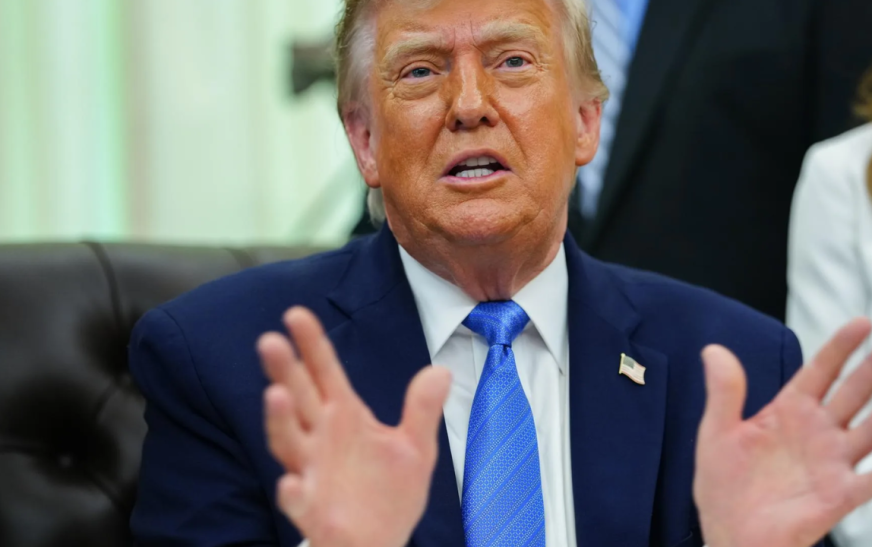
The USMCA trade agreement moved back into the center of economic debate after U.S. President Donald Trump said the United States would do better without the pact, even as he left the door open to signing a renewed version. The comments added uncertainty to negotiations between the United States, Mexico, and Canada, with major implications for agriculture, autos, supply chains, and nearly $1.6 trillion in annual trilateral trade.
According to the original Reuters report published through TradingView, Trump told reporters in France that he would rather not have the agreement but may sign it, adding that the country would do better without a trade agreement. The three countries must approve a renewal of the existing agreement by July 1 or signal their intention to exit the pact, a process that would take 10 years and leave room for changes.
The timing is important. The U.S. Trade Representative’s Office is holding talks with Mexico in Washington this week, focused on agriculture and a “level playing field.” A third set of talks is scheduled in Mexico City for the week of July 20. The process is entering a critical phase because industries that depend on North American integration want clarity before uncertainty affects investment, sourcing, and cross-border planning.
Why the USMCA Trade Agreement Matters
The USMCA trade agreement is the main framework governing trade between the United States, Mexico, and Canada. It replaced the earlier North American trade pact and supports a deeply integrated regional economy. The Reuters report noted that USMCA and its predecessor helped underpin nearly $1.6 trillion in annual trilateral trade.
That scale makes the agreement more than a diplomatic document. It is a business operating system for North American supply chains. Companies use the rules to plan production, manage tariffs, source inputs, certify origin, and move goods across borders. Any uncertainty around renewal can affect investment decisions long before a formal exit occurs.
The agreement is especially important because North American trade is not evenly distributed. Mexico has been the top U.S. trading partner since 2023, and around 80% of Mexican exports go to the United States. Nearly 70% of Canadian exports also head south. At the same time, Mexico and Canada import nearly one-third of exported U.S. goods.
Those numbers show why a breakdown would affect all three economies. The U.S. may be the largest economy in the pact, but U.S. exporters, farmers, manufacturers, logistics firms, and energy producers also rely heavily on Canadian and Mexican demand.
Trump’s Comments Raise Negotiation Risk
Trump’s statement that the U.S. would do better without the agreement suggests he may use renewal as leverage to demand stronger terms. His comment does not necessarily mean withdrawal is certain, especially since he also said he may sign a renewed agreement. However, it increases uncertainty around the final outcome.
For markets and businesses, uncertainty can be costly. Companies do not need an agreement to collapse before they begin adjusting behavior. If executives believe the trade framework may change, they may delay capital spending, reconsider cross-border sourcing, or build in higher risk premiums.
The 10-year exit process described in the Reuters report reduces the risk of an immediate shock, but it does not eliminate uncertainty. A formal signal to exit could trigger years of renegotiation, lobbying, legal review, and business adjustment. That would keep trade policy risk alive for an extended period.
Trump’s approach also places pressure on Mexico and Canada. If the U.S. enters negotiations with a more skeptical stance, its partners may need to offer concessions or prepare for a prolonged dispute. That could affect sectors such as agriculture, autos, dairy, energy, and manufactured goods.
Autos Push for Renewal
Automakers are among the industries most exposed to USMCA uncertainty. North American auto manufacturing is highly integrated, with parts and vehicles crossing borders multiple times before final sale. General Motors, Ford Motor, and Stellantis are represented by a group led by Matt Blunt, who said the USMCA review and renewal is an opportunity to address competitive disadvantages facing North American auto manufacturing and trade.
The auto industry’s position is understandable. Automotive supply chains depend on predictability. Tariffs, origin rules, labor provisions, and regional-content requirements can directly affect production costs. If the agreement becomes uncertain, automakers may struggle to plan model production, supplier contracts, and factory investment.
The sector also faces global competition. If North American producers believe they are disadvantaged compared with countries operating under other reciprocal trade agreements, they may push for changes that preserve regional competitiveness while improving market access.
For investors, autos are one of the clearest transmission channels from trade policy to earnings. Any change in USMCA terms could affect margins, pricing, sourcing, and production strategy across major automakers and suppliers.
Agriculture Wants a 16-Year Extension
Agricultural groups are urging Trump to extend USMCA for another 16 years. Their priorities include duty-free farm products, stronger provisions for genetically modified corn, ethanol access in Mexico, and improved access to Canada’s largely closed dairy market.
This shows that farmers and agribusinesses are not simply asking for renewal as it stands. They want the agreement extended and strengthened. Agriculture is highly sensitive to trade policy because export markets can determine farm income, commodity demand, and processing margins.
Mexico and Canada are critical buyers of U.S. agricultural goods. If the trade framework becomes uncertain, U.S. farmers could face more volatility in demand expectations. That matters especially for products such as corn, ethanol, dairy, livestock-related feed, and processed agricultural goods.
The genetically modified corn issue is particularly important because Mexico is a major market for U.S. corn. Stronger provisions could protect U.S. exporters from restrictions that limit market access. Ethanol access also matters because it connects agriculture with energy policy and industrial demand.
For readers tracking trade policy, commodities, and economic negotiations, Finprozone latest market news provides broader coverage of market-moving policy developments and global economic trends.
Trade Deficits Add Political Pressure
The Reuters report noted that the United States had a $46 billion goods trade deficit with Canada in 2025 and a $197 billion deficit with Mexico. These figures are likely to remain central to the political debate because Trump has often focused on trade deficits when evaluating trade agreements.
Trade deficits can be interpreted in different ways. Critics view them as evidence that the U.S. is losing economically or that agreements are unfair. Others argue that deficits reflect broader macroeconomic factors such as savings, investment, currency values, consumer demand, and supply-chain structure.
Regardless of interpretation, the political effect is clear. Large deficits give Trump an argument for renegotiation. He may use them to demand more favorable terms, stronger enforcement, or changes that encourage more production inside the United States.
For Mexico and Canada, the challenge is to preserve access to the U.S. market while responding to U.S. concerns. Since both economies depend heavily on exports to the United States, they have strong incentives to keep the framework intact. However, they may resist changes that are seen as too one-sided.
Why Mexico Is Central to the Negotiations
Mexico’s role is especially important because it has been the top U.S. trading partner since 2023, and around 80% of its exports go to the United States. That creates deep economic dependence, but it also reflects the scale of North American integration.
Many U.S. companies use Mexico as part of regional manufacturing networks. The country is important for autos, electronics, appliances, machinery, agricultural trade, and consumer goods. Supply chains that connect U.S. and Mexican production are often designed around tariff-free or lower-friction trade.
The current talks in Washington are focused on agriculture and a “level playing field.” That phrase may include concerns about market access, regulatory treatment, labor standards, subsidies, product rules, or enforcement. The exact details will matter because broad language can lead to very different outcomes.
Mexico has strong reasons to preserve USMCA. But it also has domestic economic and political interests to defend. The July 20 talks in Mexico City may become important if the first rounds leave major issues unresolved.
Canada’s Export Dependence and Dairy Issue
Canada is also highly exposed because nearly 70% of Canadian exports go to the United States. That makes the U.S. market essential for Canadian producers, energy firms, manufacturers, and agricultural exporters.
At the same time, Canada’s dairy market remains a point of friction. U.S. agricultural groups want improved access to what Reuters described as Canada’s largely closed dairy market. This issue has been a recurring trade concern because Canada’s supply-management system limits foreign competition in dairy.
For U.S. negotiators, dairy access may become a bargaining point in renewal talks. For Canada, protecting its dairy system is politically sensitive. That tension could make agriculture one of the hardest parts of the negotiation.
Canada’s broader goal will likely be to preserve stable access to the U.S. market while limiting concessions that could disrupt domestic industries. Given the size of cross-border trade, the stakes are high for both countries.
Market Impact of USMCA Uncertainty
USMCA uncertainty can affect markets through several channels. The first is corporate planning. Companies exposed to North American supply chains may delay investment if trade terms become unclear.
The second is inflation. If tariff-free trade becomes less certain, companies may anticipate higher costs and adjust prices. That could matter for autos, food products, industrial goods, and consumer categories.
The third is currency risk. The Mexican peso and Canadian dollar can react to trade headlines because their economies are closely linked to U.S. market access. Trade uncertainty may increase volatility in both currencies.
The fourth is commodity demand. U.S. farmers rely on export markets, and any uncertainty around Mexico or Canada can affect pricing expectations for agricultural products.
The fifth is equity sentiment. Automakers, agricultural suppliers, logistics companies, railroads, and manufacturers may all be sensitive to headlines around renewal.
Renewal Does Not Mean No Changes
Even if the USMCA trade agreement is renewed, investors should not assume the framework remains unchanged. Trump’s comments suggest he may prefer a tougher agreement or may be willing to use the threat of non-renewal as leverage.
Agricultural groups are already calling for specific changes. Automakers are asking for improved competitiveness. U.S. negotiators are focused on agriculture and a level playing field. These points suggest renewal could come with revisions, side agreements, enforcement changes, or sector-specific commitments.
That makes the negotiation process as important as the final renewal deadline. Each round of talks may reveal where the pressure points are. If negotiations appear constructive, markets may remain calm. If talks become confrontational, trade-sensitive sectors could react.
The 10-year exit process gives negotiators time, but it also extends uncertainty if no clear direction emerges. Businesses generally prefer stable rules over prolonged ambiguity.
What Investors Should Watch Next
The first signal is whether the three countries approve renewal by July 1 or signal an intention to exit. That decision will define the next stage of the trade debate.
The second signal is the outcome of U.S.-Mexico talks in Washington. Agriculture and level-playing-field issues may indicate where the U.S. is applying pressure.
The third signal is the Mexico City talks scheduled for the week of July 20. If negotiations continue beyond the deadline, those talks could become critical.
The fourth signal is sector lobbying. Automakers and agricultural groups are already pressing for renewal. Their public statements may reveal which provisions are most at risk.
The fifth signal is market reaction in currencies, autos, farm commodities, and trade-sensitive equities. If uncertainty grows, these areas may price in higher risk.
FAQ
What did Trump say about the USMCA trade agreement?
Trump said the United States would do better without the USMCA trade agreement and that he would rather not have it, though he also said he may sign a renewed version. His comments increased uncertainty ahead of the July 1 renewal deadline.
Why is the USMCA important for North America?
USMCA supports a highly integrated North American economy and underpins nearly $1.6 trillion in annual trilateral trade. It affects autos, agriculture, manufacturing, supply chains, and exports between the United States, Mexico, and Canada.
Which sectors are most exposed to USMCA talks?
Autos and agriculture are among the most exposed sectors. Automakers want renewal to support regional manufacturing competitiveness, while agricultural groups want duty-free farm trade, stronger genetically modified corn provisions, ethanol access in Mexico, and better dairy access in Canada.
What should investors watch next?
Investors should watch the July 1 renewal deadline, U.S.-Mexico talks, the Mexico City meeting scheduled for the week of July 20, auto-sector demands, and agriculture provisions. For major trade-policy and economic events, follow the economic calendar for upcoming market events to track key catalysts.