Timberland ETF investors get a new forestry signal
The timberland ETF and alternative real-asset investment space gained a fresh signal after Campbell Global, a J.P. Morgan company, closed the acquisition of Sandpiper Forest in Louisiana. The deal adds nearly 30,000 productive acres of commercial timberland to Campbell Global’s footprint in the U.S. South and reinforces the growing investor focus on sustainable forestry, land-based assets and long-term natural-resource returns.
According to the original Dow Jones Newswires announcement via TradingView, Sandpiper Forest includes approximately 29,760 productive acres of commercial timberland across Louisiana. The property is fully certified to Sustainable Forestry Initiative standards and is positioned near several mills in one of the stronger forest-products markets in the U.S. South.
For ETF and thematic investors, the transaction matters because timberland is increasingly viewed as more than a traditional forestry asset. It sits at the intersection of real assets, sustainable investing, carbon-aware land management, rural economic development and long-term institutional portfolio diversification.
While many retail investors think first of stocks, bonds or commodity futures, large asset managers have long treated forestland as a strategic asset class. Timberland can offer biological growth, income from timber harvests, land appreciation, inflation sensitivity and potential alternative revenue streams. That makes deals like Sandpiper Forest relevant for investors watching real-asset ETFs, infrastructure themes and sustainable land-use strategies.
Why timberland matters in the ETF market
Timberland is not always the most visible part of the ETF market, but it connects to several investment themes. Funds focused on real assets, natural resources, sustainable infrastructure, agriculture, climate solutions and materials can all be influenced by trends in forestland ownership and timber demand.
A timberland ETF or timber-linked fund may provide exposure to companies involved in forestry, paper, packaging, wood products, real estate investment trusts, land management or sustainable resource development. Even when an ETF does not hold a private asset like Sandpiper Forest directly, institutional acquisitions can shape market sentiment around the sector.
The appeal of timberland comes from its long-term characteristics. Trees grow regardless of daily market volatility. Harvest timing can sometimes be adjusted depending on pricing conditions. Land can also generate value through conservation, recreation, biomass, carbon projects or ecosystem services.
This gives timberland a different profile from many traditional financial assets. It is physical, productive and tied to long-duration demand for housing, packaging, pulp, engineered wood and renewable materials.
For investors following ETF categories and global market developments, Finprozone’s latest market news provides wider coverage across market sectors.
Sandpiper Forest adds scale in the U.S. South
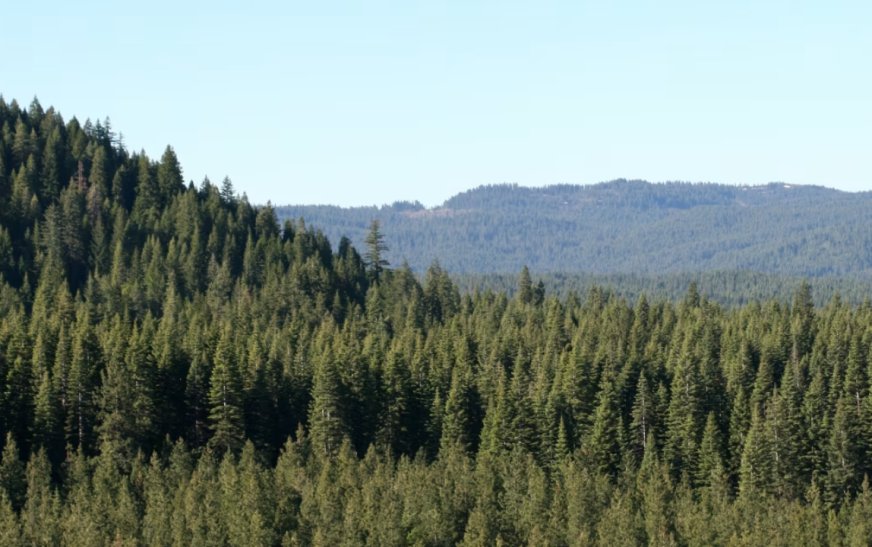
Sandpiper Forest covers approximately 29,760 productive acres, or 12,043 hectares, of commercial timberland. The asset is located across Louisiana, placing it inside one of the most important forestry regions in the United States.
The U.S. South is a major timber-producing region because it combines favorable growing conditions, established forestry infrastructure, strong mill networks and experienced land-management practices. For timberland investors, location matters as much as acreage. A forest asset becomes more valuable when it is close to demand centers, mills, transport infrastructure and processing facilities.
The announcement highlights that Sandpiper Forest is positioned near several mills and operates within a strong forest-products market. This matters because timberland value depends partly on access to buyers. If mills are nearby and demand is diversified, landowners may have more options when selling timber.
The market includes solid wood products, engineered wood manufacturing, pulpwood demand and emerging forest biomass technologies. This diversified demand base can reduce reliance on a single buyer or product category. For long-term investors, that can make an asset more resilient.
Sustainable forestry is central to the acquisition
One of the most important details in the announcement is that Sandpiper Forest is 100% certified to Sustainable Forestry Initiative standards. This certification supports Campbell Global’s positioning around responsible forest management.
Sustainable forestry is increasingly important for institutional investors. Pension funds, foundations, family offices and other large allocators often need to consider environmental stewardship, biodiversity, climate risk and long-term land productivity. Certification can help demonstrate that a property is managed according to recognized sustainability practices.
For ETF investors, sustainability credentials also matter because many funds now apply ESG or climate-related frameworks. Even investors who are not focused exclusively on ESG may still care about sustainable management because it can protect long-term asset value. Poor forestry practices can damage soil, water, biodiversity and future productivity. Responsible management can help preserve economic and ecological value.
Sandpiper Forest’s certification therefore adds more than a public-relations benefit. It supports the investment case by showing that the asset is being managed within a recognized stewardship framework.
Water resources and habitat add conservation value
The property includes significant water and habitat features. Sandpiper Forest has approximately 5,703 acres of streamside management zones, 12 acres of beaver ponds and 202 miles of protected streams. Those streams include 42 miles of ephemeral streams, 128 miles of intermittent streams and 32 miles of perennial streams.
These details matter because modern timberland investing is increasingly tied to ecosystem management. Forestland is not only a source of timber. It also supports water quality, wildlife habitat, biodiversity and carbon storage.
The announcement notes that the property supports diverse wildlife habitats, including species such as alligator snapping turtles and Calcasieu Creek crawfish. This adds ecological significance to the asset and highlights the balance between commercial forestry and environmental stewardship.
For investors, conservation value can support long-term optionality. Properties with strong ecological features may be suitable for conservation partnerships, carbon-related initiatives or other alternative revenue models. They may also face stronger regulatory or community expectations, making responsible management essential.
Campbell Global’s experience in forestland management is relevant here because the property requires both productive timber operations and habitat protection.
Timber resources show productive asset depth
Sandpiper Forest supports approximately 2.1 million trees across different ages and species. The asset includes about 1.8 million loblolly pine, roughly 63,000 sweetgum, and scattered white oak, elm and shortleaf pine.
This species mix matters for timber production. Loblolly pine is one of the most commercially important timber species in the U.S. South. It is widely used in lumber, pulp, plywood, engineered wood and other forest products. Its growth profile and commercial demand make it a core species for Southern timberland assets.
A property with trees of different ages can also support more flexible harvest planning. Age diversity helps land managers balance near-term income with long-term growth. If all trees are the same age, revenue can become more concentrated around specific harvest windows. A mixed-age structure can support smoother management.
The scale of timber resources gives Sandpiper Forest commercial importance. It is not only a conservation asset or a land bank. It is a working forest with productive capacity, market access and long-term management potential.
Alternative revenue opportunities may become more important
The announcement mentions potential alternative revenue sources. This is an increasingly important theme in timberland investing.
Traditional timberland income comes from harvesting and selling timber. But forestland can also generate value through other channels. These may include carbon credits, conservation easements, hunting leases, recreational access, biomass supply, renewable energy siting, mitigation banking or ecosystem-service programs.
Not every property will be suitable for every revenue stream, and investors should be cautious about assuming automatic upside. But the possibility of alternative revenues can strengthen the long-term investment case, especially when timber prices are cyclical.
In the case of Sandpiper Forest, the property’s size, certification, water resources and habitat features may create optionality beyond timber. The surrounding market’s emerging forest biomass technologies may also become relevant if biomass demand grows.
For ETF investors, this broader revenue mix matters because it shows why forestland can be part of climate and infrastructure themes, not just traditional timber production.
Campbell Global strengthens its U.S. South footprint
Campbell Global has decades of experience in Louisiana and the broader U.S. South. The firm says its on-the-ground teams and forestry professionals are positioned to manage Sandpiper Forest to high operational and sustainability standards while optimizing for timber yield, habitat protection and long-term asset value.
That local experience is important. Timberland management is not passive. It requires forestry planning, harvest scheduling, road maintenance, environmental compliance, market relationships, replanting, fire management, pest monitoring and community engagement.
A strong manager can improve outcomes by balancing harvest income with future productivity. A weak manager can damage long-term value through poor harvest timing, inadequate stewardship or weak market execution.
Campbell Global’s institutional profile also matters. The firm manages forestland for pension funds, foundations, family offices and other investors. That kind of client base usually requires strong reporting, risk controls and long-term discipline.
J.P. Morgan’s role highlights institutional demand
Campbell Global is part of J.P. Morgan Asset Management, which reported $4.3 trillion in assets under management as of March 31, 2026. That gives the transaction broader relevance because it shows continued institutional interest in timberland as an investable real-asset category.
J.P. Morgan Chase also reported $4.9 trillion in assets and $364 billion in stockholders’ equity as of March 31, 2026. The scale of the parent institution gives Campbell Global access to a large asset-management platform and institutional investor network.
Institutional investors have been increasing interest in assets that can provide diversification, inflation sensitivity and long-duration cash-flow potential. Timberland can fit that profile, particularly when managed sustainably and located in strong demand regions.
For ETF investors, institutional activity can help validate sector themes. When large asset managers commit capital to forestland strategies, it signals that timberland remains relevant in modern portfolio construction.
Forest and climate strategies are gaining capital
Campbell Global’s broader fundraising history also supports the investment theme. In March 2025, the firm closed its Forest & Climate Solutions Fund II, raising $1.5 billion, described in the announcement as the largest private timberland investment fundraise to date. Including separate account mandates, total capital raised for the strategy reached $2.3 billion.
This shows that investor interest in forest and climate solutions is not theoretical. Capital is actively moving into strategies connected to sustainable land management and forest assets.
That matters for ETF markets because private-market trends often influence public-market themes. When large institutional investors allocate to forest and climate strategies, public investors may also look for related exposure through ETFs or listed companies.
However, investors should understand the difference between direct timberland ownership and ETF exposure. Private timberland funds may own physical assets. ETFs may hold listed equities or related securities. The risk and return profiles can be different.
Still, the underlying theme is connected: investors are looking for ways to participate in sustainable natural assets and climate-linked resource strategies.
What ETF investors should watch next
Investors following timberland ETF themes should watch several signals.
The first is demand for forest products. Housing, packaging, pulp, engineered wood and biomass all affect timberland economics.
The second is institutional capital flow. Fundraising activity by managers like Campbell Global can show whether large investors continue to favor forestland.
The third is sustainability certification. Certified properties may be more attractive to institutions with stewardship or ESG requirements.
The fourth is alternative revenue development. Carbon markets, biomass and conservation-related income could influence future timberland valuation.
The fifth is interest-rate policy. Real assets can be sensitive to borrowing costs and discount rates. Higher rates can pressure valuations, while inflation concerns may support demand for physical assets.
To track major macro events that affect real assets, commodities and ETFs, readers can use the economic calendar for upcoming market events.
Conclusion
Campbell Global’s acquisition of Sandpiper Forest in Louisiana gives timberland ETF investors and real-asset watchers another important signal about sustainable forestry demand. The property includes approximately 29,760 productive acres of commercial timberland, is fully certified to Sustainable Forestry Initiative standards and sits in a strong U.S. South forest-products market.
The asset combines commercial timber resources with water, habitat and conservation features. It includes about 2.1 million trees, significant protected streams and potential alternative revenue opportunities. That mix reflects the evolving nature of timberland investing, where investors are looking at both productive yield and sustainable land value.
For J.P. Morgan Asset Management and Campbell Global, the deal expands exposure in a major U.S. forestry region. For investors, it reinforces the idea that timberland remains relevant as a long-term real asset linked to sustainability, inflation protection, climate strategies and institutional diversification.
The acquisition does not change the ETF market by itself, but it supports a broader investment theme. Forestland remains a serious asset class, and institutional capital continues to move toward sustainable timber and climate-linked land strategies.
FAQ
Why does this acquisition matter for timberland ETF investors?
The acquisition matters because it shows continued institutional interest in sustainable forestland assets. Timberland ETF investors often watch deals like this for signals about forestry demand, land value, sustainability trends and long-term real-asset allocation.
What is Sandpiper Forest?
Sandpiper Forest is a commercial timberland asset in Louisiana with approximately 29,760 productive acres. It includes timber resources, protected streams, habitat areas and sustainable forestry certification under Sustainable Forestry Initiative standards.
Who acquired Sandpiper Forest?
Campbell Global, a J.P. Morgan company, acquired Sandpiper Forest. Campbell Global is a forestland investment manager with decades of experience and a global portfolio focused on sustainable forestry and long-term asset value.
Why is sustainable forestry important for investors?
Sustainable forestry helps protect long-term land productivity, water resources, biodiversity and asset value. It can also support ESG mandates, institutional reporting standards and potential alternative revenue opportunities such as conservation or carbon-related strategies.
What should investors watch in timberland markets?
Investors should watch timber demand, housing activity, pulpwood markets, sustainability certification, carbon-market developments, interest rates and institutional capital flows. These factors can influence timberland values and related ETF themes.