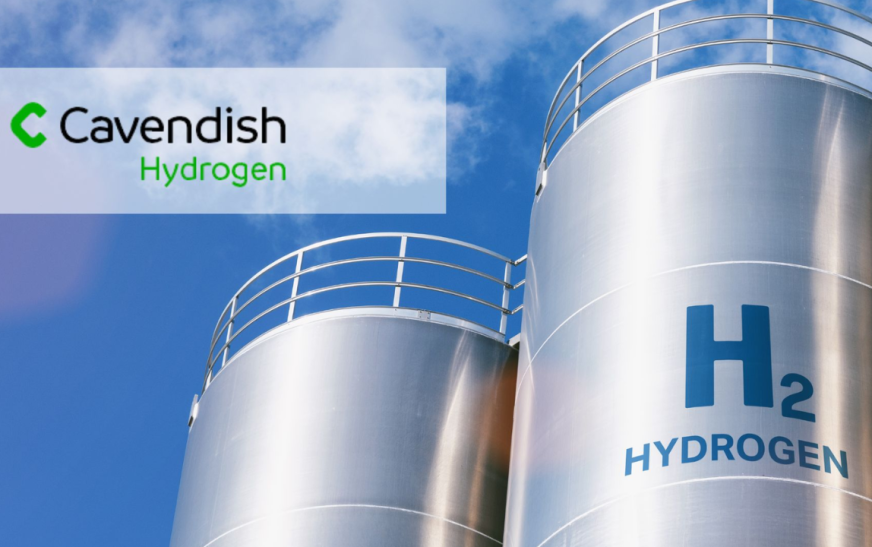
Hydrogen ETF market gets a fresh company update
The hydrogen ETF market received another company-level update this week after Cavendish Hydrogen ASA published its annual report for the 2025 financial year. While the announcement itself was brief, it matters for investors following clean energy, hydrogen infrastructure and mobility-focused exchange-traded funds because company reports help shape the broader view of where the sector is heading.
According to the original Cavendish Hydrogen announcement via TradingView, the company released its 2025 Annual Report in both PDF and ESEF format. Cavendish also published its 2025 Remuneration Report under the investor relations section of its website.
Cavendish Hydrogen ASA is listed on the Oslo Stock Exchange under the ticker CAVEN. The company describes itself as a global leader in hydrogen fueling solutions for the mobility sector, with operations covering development, production, installation, commissioning and maintenance.
For ETF investors, this kind of report is relevant because hydrogen-themed funds often depend on the progress of companies building the infrastructure behind clean transport. Hydrogen investing is not only about fuel-cell vehicles or green hydrogen production. It also depends on whether fueling systems can become safe, reliable, scalable and commercially competitive.
Why Cavendish Hydrogen matters for clean mobility investors
Cavendish Hydrogen operates in a part of the hydrogen value chain that is essential but sometimes overlooked: fueling infrastructure. For hydrogen mobility to expand, vehicles need reliable access to refueling stations. That is especially important for heavy-duty vehicles, where long range, fast refueling and high utilization can make hydrogen more relevant than battery-only solutions in some use cases.
The company’s stated goal is to support zero-emission mobility by offering hydrogen fueling solutions that provide the convenience of traditional fuels without tailpipe emissions. That positioning places Cavendish inside a clean transport theme that is watched by both equity investors and ETF managers.
Hydrogen infrastructure companies can be important holdings or reference points for clean energy ETFs, climate-transition funds and thematic funds focused on future mobility. Even if a specific ETF does not hold Cavendish directly, company-level developments across the sector can influence investor sentiment toward the wider hydrogen theme.
For readers following broader market categories, including clean energy, ETF themes and company updates, Finprozone’s latest market news offers ongoing coverage across global financial markets.
Annual reports help investors separate vision from execution
In emerging sectors like hydrogen, annual reports are especially important because they help investors distinguish between long-term vision and actual execution. Hydrogen companies often operate in markets with large potential but uneven near-term commercialization.
A company may have a strong mission, attractive technology and exposure to a major decarbonization trend. But investors still need to evaluate financial performance, order activity, cash position, operating costs, project timelines, customer relationships and strategic priorities.
That is why Cavendish’s 2025 Annual Report matters. It gives investors a formal document to review rather than relying only on market narratives or short announcements. The report can help investors assess whether the company is progressing toward commercial scale, managing costs effectively and positioning itself for demand in heavy-duty hydrogen mobility.
For the hydrogen ETF market, this type of company disclosure helps build the foundation for sector analysis. The more transparent companies are about their progress and challenges, the easier it becomes for investors to judge whether the theme is maturing or still facing execution risk.
Hydrogen fueling remains a key infrastructure challenge
Hydrogen mobility cannot grow without fueling infrastructure. This is one of the main reasons investors watch companies like Cavendish. Vehicle adoption, industrial hydrogen use and clean transport policies all depend on the availability of dependable fueling networks.
Unlike conventional fuels, hydrogen infrastructure requires specialized equipment, safety systems, compression technology, storage solutions and maintenance expertise. Building this network takes time and capital. It also requires coordination between vehicle manufacturers, fleet operators, governments, infrastructure providers and energy suppliers.
Cavendish’s business model covers the full value chain from development and production to installation, commissioning and maintenance. That integrated approach can be attractive because customers may prefer partners that can manage more than one piece of the infrastructure process.
For heavy-duty vehicles, reliability is especially important. Trucking, bus fleets and commercial mobility operators need uptime. If fueling equipment fails, it can disrupt operations and damage confidence in hydrogen as a transport solution.
This is why fueling companies play a critical role in the sector. The hydrogen economy cannot rely only on production capacity. It needs practical infrastructure that works consistently in real-world conditions.
Heavy-duty vehicles are central to the hydrogen opportunity
Cavendish emphasizes fueling solutions for heavy-duty vehicles. This focus is important because heavy-duty transport is one of the areas where hydrogen may have a stronger practical case.
Battery-electric systems are advancing quickly, but heavy-duty vehicles can face challenges related to battery weight, charging time, range and infrastructure availability. Hydrogen can offer faster refueling and longer operating range in some fleet applications.
That does not mean hydrogen will dominate all transport segments. Passenger cars, buses, trucks, industrial vehicles and shipping may each follow different technology paths. But heavy-duty mobility remains one of the areas where hydrogen has a clearer strategic argument.
For hydrogen ETFs and clean mobility investors, the heavy-duty segment matters because it may provide a more realistic commercialization path than consumer passenger vehicles alone. Fleet operators make decisions based on economics, reliability and uptime. If hydrogen fueling can meet those requirements, demand could grow over time.
Cavendish’s positioning in this segment makes its annual report relevant to investors tracking whether hydrogen infrastructure is moving closer to broad commercial use.
Hydrogen stocks remain tied to policy and infrastructure spending
The hydrogen ETF market is strongly influenced by policy support, infrastructure investment and energy-transition funding. Hydrogen projects often require public-private coordination, especially during the early stages of adoption.
Governments in Europe and other regions have supported hydrogen as part of decarbonization strategies, industrial policy and energy-security planning. However, the market still needs to prove that projects can become commercially sustainable.
For companies like Cavendish, policy can help create demand, but execution still matters. Investors will want to know whether customers are moving from pilot programs to larger deployments, whether margins can improve and whether the company can scale without excessive cash burn.
ETF investors should also understand that hydrogen stocks can be volatile. Many companies in the sector are tied to long-term growth expectations rather than stable near-term profits. When interest rates rise or risk appetite weakens, these stocks can face pressure. When clean energy sentiment improves, they can recover quickly.
This is why annual reports are useful. They allow investors to evaluate whether a company’s fundamentals are improving beneath the market volatility.
ESEF reporting adds regulatory structure
Cavendish published its annual report in ESEF format, the European Single Electronic Format, prepared in accordance with ESEF reporting requirements. This is important because standardized reporting improves accessibility and comparability for investors.
ESEF reporting is designed to make annual financial reports easier to analyze digitally. For institutional investors, analysts and data platforms, standardized financial reporting can improve transparency and reduce friction in financial analysis.
In practical terms, this means Cavendish’s report is not only available as a traditional PDF but also in a structured format aligned with European reporting rules. For investors following listed companies in Europe, this type of reporting is part of the broader regulatory framework around market transparency.
That matters for ETF investors because funds and analysts often rely on comparable company data when assessing sector exposure. Clean energy and hydrogen companies can vary widely in business models, maturity and financial strength, so structured reporting supports better analysis.
Remuneration report may offer governance signals
Cavendish also published its 2025 Remuneration Report. While many retail investors may focus mainly on revenue, profit and project updates, remuneration reports can provide useful governance signals.
Executive pay structures can show how management incentives are aligned with company performance. Investors may look at whether compensation is tied to long-term value creation, operational milestones, shareholder returns or sustainability goals.
In emerging industries, governance matters because companies often require patient capital and strong execution discipline. If management incentives encourage sustainable growth rather than short-term stock movement, investors may view governance more positively.
For ETF managers and institutional investors, governance analysis can also influence whether a company fits broader ESG or sustainability mandates. A hydrogen company may operate in a clean energy sector, but governance quality still matters.
Cavendish’s publication of the remuneration report gives investors another document to assess beyond the annual financial statements.
What ETF investors should look for in the report
Investors reviewing Cavendish Hydrogen’s annual report should focus on several areas.
The first is revenue development. Growth in sales can show whether demand for hydrogen fueling solutions is improving.
The second is order backlog or project pipeline. For infrastructure companies, future contracted work can be just as important as current revenue.
The third is gross margin and operating expenses. Emerging clean energy companies often face scale-up costs, so margin trends can reveal whether the business model is becoming more efficient.
The fourth is cash position. Hydrogen infrastructure can be capital intensive, and investors need to know whether a company has enough liquidity to execute its strategy.
The fifth is customer concentration. A diversified customer base can reduce risk, while reliance on a small number of projects or clients can increase volatility.
The sixth is management guidance. Any commentary about market demand, regulatory support, cost pressures or project timing can help investors judge the near-term outlook.
Hydrogen ETF market sentiment depends on execution
The hydrogen ETF market has often been driven by a mix of long-term optimism and near-term skepticism. The long-term case is based on decarbonization, clean transport, energy transition and industrial demand. The skepticism comes from commercialization challenges, high costs, slow infrastructure rollout and uncertain profitability.
Company reports like Cavendish’s annual report help determine which side of that debate gains strength. If companies show progress toward scaling, improving margins and securing customers, the sector narrative becomes more credible. If reports show delays, weak demand or rising losses, ETF investors may become more cautious.
Hydrogen remains a promising but demanding investment theme. The sector needs technological progress, supportive policy, customer adoption and financial discipline at the same time. Missing any one of those pieces can slow growth.
For Cavendish, the annual report gives investors a chance to evaluate whether the company is advancing within that difficult environment.
What could support hydrogen-related ETFs
Hydrogen-related ETFs could benefit if several trends improve.
The first is stronger infrastructure deployment. More fueling stations and commercial systems would support confidence in the sector.
The second is policy support. Government funding, clean transport mandates and decarbonization incentives can help accelerate adoption.
The third is cost reduction. Hydrogen infrastructure must become more competitive to scale widely.
The fourth is heavy-duty fleet adoption. If logistics companies, bus operators or industrial fleets increase hydrogen use, the commercial case could strengthen.
The fifth is improved company financials. Investors need to see clearer paths toward profitability or sustainable growth.
For readers who want deeper market insights and professional-style analysis, Finprozone’s Finprozone Pro market insights can support a broader view of sector trends and investment themes.
Conclusion
Cavendish Hydrogen ASA’s 2025 Annual Report gives the hydrogen ETF market another important company-level update. The announcement confirms that the company has published its annual report in PDF and ESEF format, along with its 2025 Remuneration Report.
Cavendish is positioned as a provider of hydrogen fueling solutions for the mobility sector, with a focus on safe, competitive and reliable infrastructure for zero-emission transport. Its role across development, production, installation, commissioning and maintenance places it inside a critical part of the hydrogen value chain.
For ETF investors, the report matters because hydrogen funds and clean energy portfolios depend on whether companies in the sector can move from long-term promise to commercial execution. Hydrogen fueling infrastructure remains essential for heavy-duty mobility, but the sector still faces challenges tied to cost, demand, scale and profitability.
The next step for investors is to look beyond the headline release and review the annual report itself. Key areas include revenue trends, project pipeline, margins, cash position, customer activity and management commentary. Those details will help determine whether Cavendish’s progress supports broader confidence in the hydrogen ETF market.
FAQ
Why does Cavendish Hydrogen matter to the hydrogen ETF market?
Cavendish Hydrogen matters because it operates in hydrogen fueling infrastructure, a key part of the clean mobility value chain. Hydrogen ETFs often track companies connected to production, storage, equipment and fueling systems, making company reports useful for sector analysis.
What did Cavendish Hydrogen publish?
Cavendish Hydrogen published its Annual Report for the 2025 financial year in PDF and ESEF format. The company also published its 2025 Remuneration Report under the investor relations section of its website.
What does Cavendish Hydrogen do?
Cavendish Hydrogen provides hydrogen fueling solutions for the mobility sector. Its activities cover development, production, installation, commissioning and maintenance, with a focus on supporting zero-emission mobility and heavy-duty vehicle fueling.
Why is hydrogen fueling important for clean transport?
Hydrogen fueling is important because vehicles need reliable refueling infrastructure before adoption can scale. This is especially relevant for heavy-duty transport, where fast refueling, long range and fleet uptime can make hydrogen a practical solution.
What should investors watch in hydrogen stocks?
Investors should watch revenue growth, project pipeline, cash position, margin trends, customer adoption and policy support. These signals help show whether hydrogen companies are moving from early-stage promise toward scalable commercial execution.