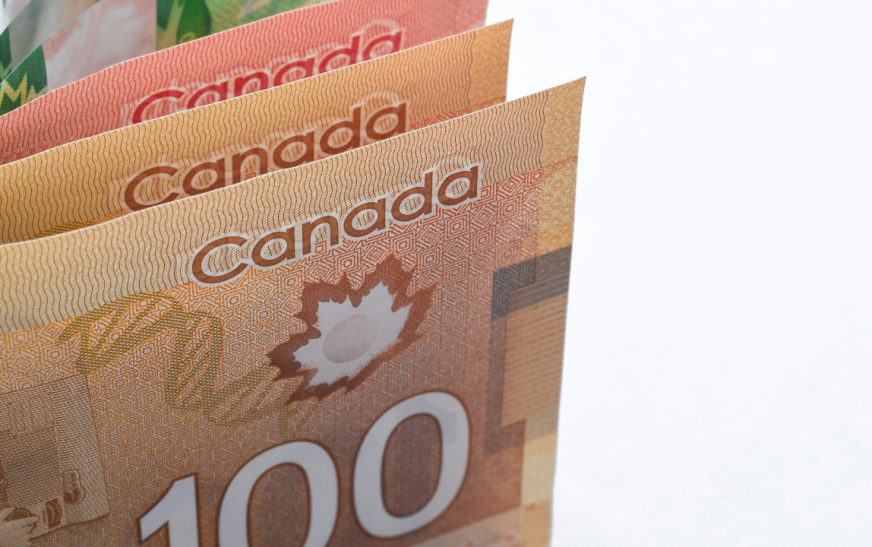
The Canadian dollar forecast improved after the loonie rebounded from a 14-month low against the U.S. dollar, helped by firmer oil prices and a pullback in the greenback after U.S. inflation data slightly reduced expectations for more aggressive Federal Reserve rate hikes. The move allowed the Canadian currency to recover after a seven-day losing streak that had pushed USD/CAD to its highest level in more than a year.
According to the original Reuters report published through TradingView, the Canadian dollar was trading 0.2% higher at 1.4202 per U.S. dollar, equivalent to 70.41 U.S. cents. The rebound followed a slide to 1.4248 on Wednesday, the loonie’s weakest level in 14 months.
The recovery was driven by two connected forces. First, the U.S. dollar gave back some of its recent broad-based gains after inflation data tempered the most aggressive Fed tightening scenarios. Second, oil prices rose, supporting the Canadian dollar because crude is one of Canada’s major exports. Together, those factors helped the loonie stabilize after a sharp stretch of weakness.
Canadian Dollar Rebounds After Seven-Day Slide
The Canadian dollar’s rebound was notable because it came after seven consecutive days of declines. A losing streak of that length often reflects strong market conviction, especially when driven by U.S. dollar strength and interest-rate expectations. The move to a 14-month low showed that traders had been aggressively favoring the greenback over the loonie.
Thursday’s recovery did not fully erase that weakness, but it did suggest that USD/CAD momentum may be slowing. When a currency rebounds after reaching a multi-month low, traders often watch whether the move is only short-covering or the beginning of a more durable correction.
For the Canadian dollar forecast, the distinction matters. A small rebound after a large decline can be temporary if the broader trend remains bearish. But if U.S. rate expectations continue easing and oil remains supported, the loonie may have room to recover further.
The immediate reference point is USD/CAD near 1.4202. If the pair falls further, it would indicate stronger Canadian dollar recovery. If USD/CAD returns toward 1.4248, the loonie’s rebound may prove fragile.
U.S. Inflation Data Weakens the Dollar
The U.S. dollar slipped after inflation data slightly reduced expectations for more Federal Reserve rate hikes this year. The report said the Personal Consumption Expenditures Price Index rose above 4% for the first time in three years, with energy prices boosted by the Iran war.
At first glance, inflation above 4% would seem clearly bullish for the dollar because it can support higher interest rates. However, markets often react to how data compares with the most aggressive expectations already priced in. If investors had feared an even stronger inflation shock, the actual report can still push the dollar lower.
Karl Schamotta, chief market strategist at Corpay, said overall price growth remains above target, but a slow-motion disinflation process should begin in the coming months. He argued that this could give the front end of the yield curve room to rally as the most aggressive tightening scenarios are priced out.
That interpretation helped the Canadian dollar. If traders reduce expectations for further Fed tightening, the U.S. dollar can lose some of its yield advantage. That gives currencies such as the loonie room to stabilize, especially when supported by commodity prices.
Fed Commentary Becomes Important for USD/CAD
The Canadian dollar forecast now depends heavily on how Federal Reserve officials interpret the inflation data. Schamotta said the U.S. dollar could be vulnerable to less hawkish commentary from Federal Open Market Committee members in the coming weeks.
This matters because USD/CAD is highly sensitive to U.S. rate expectations. If Fed officials continue warning about inflation and keeping rate-hike risk alive, the U.S. dollar could regain strength. If policymakers sound less aggressive, the dollar may soften further and allow the Canadian dollar to extend its rebound.
The market is not saying inflation is solved. Price growth remains above target. The question is whether inflation is strong enough to justify the most aggressive tightening scenarios. If those scenarios are priced out, the loonie can benefit.
For traders, the next phase is likely to be driven by central-bank language, inflation revisions, labor-market data, and bond-yield spreads.
For broader coverage of forex markets, central-bank expectations, and macro data, readers can follow Finprozone latest market news as rate expectations continue shaping USD/CAD.
Oil Prices Support the Loonie
Oil also helped the Canadian dollar recover. U.S. crude was trading 0.5% higher at $70.68 a barrel, according to Reuters. Since oil is one of Canada’s major exports, firmer crude prices often support the loonie through trade and income channels.
The relationship is not always perfect, but it remains important. Higher oil prices can improve Canada’s export revenues, support energy-sector sentiment, and strengthen confidence in the Canadian economy. That can make the loonie more attractive relative to currencies tied less directly to energy exports.
However, the oil backdrop is mixed. Crude has pulled back from peak levels reached during the U.S. war with Iran, easing some concerns about global inflation. That pullback has helped reduce pressure on consumers and central banks. But if oil rises again because of geopolitical risk, the effect on the Canadian dollar could be complicated.
Higher oil may support Canada’s terms of trade, but if the rise is driven by geopolitical stress, broader risk aversion could offset some of the benefit. For now, the modest oil gain helped the loonie recover without triggering a broader inflation panic.
Canada Payroll Data Adds Domestic Support
Canadian domestic data also provided some support. Statistics Canada reported that payroll employment rose by 22,000 jobs in April, while average weekly earnings accelerated to 3.8% year-over-year from 3.5% in March.
Those figures matter because they suggest the Canadian labor market retains some resilience. Payroll growth supports income and consumer spending, while stronger average weekly earnings may point to firm wage conditions.
For the Bank of Canada, the data creates a mixed signal. Stronger employment is positive for growth, but faster earnings growth can also keep inflation concerns alive. That balance affects expectations for Canadian interest rates.
For the loonie, stronger domestic data can help if it reduces expectations for Bank of Canada easing or supports confidence in the Canadian economy. However, the Canadian dollar’s near-term direction remains more heavily influenced by U.S. dollar movements and oil prices.
The payroll data is still relevant because it gives traders a reason not to view the loonie’s rebound as entirely external. Canada’s own macro backdrop is also part of the story.
Bond Yield Spread Narrows
The Canada-U.S. 10-year yield spread narrowed by 2.8 basis points to about 101 basis points in favor of the U.S. note. Canadian 10-year government bond yields were little changed at 3.360%.
Yield spreads are important for currency markets because they influence relative return expectations. When U.S. yields rise more than Canadian yields, the dollar often gains an advantage. When the spread narrows, the Canadian dollar can receive support.
A 101-basis-point advantage for U.S. 10-year yields still leaves the dollar with a meaningful yield edge. But the narrowing move helped the loonie because it reduced some of the pressure from U.S.-Canada rate differentials.
For USD/CAD, the yield spread is one of the key indicators to watch. If the gap narrows further, it could support a deeper Canadian dollar rebound. If the spread widens again, USD/CAD may return toward recent highs.
Why USD/CAD Remains Vulnerable to Fed Pricing
USD/CAD remains highly exposed to Federal Reserve pricing because the U.S. dollar has been the dominant side of the trade. The loonie’s seven-day decline was not only about Canadian weakness. It also reflected broad U.S. dollar strength as traders priced a high-rate environment.
That means the Canadian dollar can recover even without a major Canada-specific catalyst if the U.S. dollar loses momentum. Thursday’s move showed exactly that. Inflation data did not remove Fed risk completely, but it dented expectations enough for the dollar to retreat.
The risk is that the rebound may fade if Fed officials push back against market optimism. If policymakers argue that inflation remains too high and another rate hike is still possible, the dollar could regain support.
The Canadian dollar therefore needs either softer U.S. rate expectations, stronger oil, supportive Canadian data, or some combination of all three to extend gains.
Oil Pullback Eases Inflation Pressure
The report also noted that oil’s pullback from peak levels during the U.S. war with Iran has eased some concerns about the global inflation outlook. This is important because lower energy prices can reduce the risk that central banks need to tighten aggressively.
For Canada, lower oil is not entirely positive because crude is a major export. But lower oil can also reduce inflation pressure, support consumers, and improve global market sentiment. The net effect depends on whether traders focus more on Canada’s energy revenues or the broader inflation outlook.
In this case, the loonie benefited from a modest oil rise while also benefiting from reduced fears that energy prices would keep global inflation dangerously elevated. That is a favorable mix: oil firm enough to support Canada, but not so high that it triggers stronger Fed tightening expectations.
This balance can support the Canadian dollar if it continues. A stable oil market near current levels may be better for the loonie than an inflationary spike or a sharp collapse.
Technical Outlook for the Canadian Dollar
The Canadian dollar’s recovery from 1.4248 to 1.4202 against the U.S. dollar gives traders a near-term support and resistance framework. For USD/CAD, the 1.4248 level is now an important upside reference because it marked the 14-month high in the pair and the low point for the loonie.
If USD/CAD stays below that level and moves lower, the Canadian dollar rebound may gain credibility. A move toward 1.4100 would suggest stronger follow-through from loonie buyers. If USD/CAD breaks back above 1.4248, it would indicate renewed Canadian dollar weakness.
The short-term technical picture remains cautious because one positive day does not reverse a seven-day losing streak. But the rebound is meaningful because it shows the market is willing to take profit on long-dollar positions when Fed expectations soften.
Momentum now depends on whether U.S. dollar weakness continues.
What Traders Should Watch Next
The first signal is USD/CAD around 1.4202. A move lower would confirm Canadian dollar strength, while a return toward 1.4248 would suggest the rebound is fading.
The second signal is oil near $70.68 a barrel. A steady or rising oil price can support the loonie, while a sharp drop could weaken it.
The third signal is Fed commentary. Less hawkish remarks could pressure the U.S. dollar and help the Canadian dollar recover.
The fourth signal is the Canada-U.S. yield spread. Further narrowing would support the loonie, while widening would favor the greenback.
The fifth signal is Canadian labor and wage data. Stronger employment and earnings can support confidence in the domestic economy, but may also influence Bank of Canada expectations.
FAQ
Why did the Canadian dollar rebound?
The Canadian dollar rebounded because the U.S. dollar gave back some recent gains after inflation data slightly reduced aggressive Fed rate-hike expectations. Firmer oil prices also supported the loonie because crude is one of Canada’s major exports.
What level did USD/CAD reach?
USD/CAD traded at 1.4202, meaning the Canadian dollar was worth 70.41 U.S. cents. The rebound came after USD/CAD touched 1.4248 on Wednesday, the loonie’s weakest level in 14 months.
How does oil affect the Canadian dollar forecast?
Oil affects the Canadian dollar because Canada is a major energy exporter. Higher crude prices can support export revenues and improve sentiment toward the loonie. However, if oil rises because of geopolitical stress, broader risk aversion can sometimes offset the benefit.
Can the Canadian dollar keep recovering?
The Canadian dollar can keep recovering if the U.S. dollar weakens further, Fed officials sound less hawkish, oil prices remain supported, and Canada-U.S. yield spreads narrow. If Fed rate-hike expectations rise again, USD/CAD could move back toward recent highs.