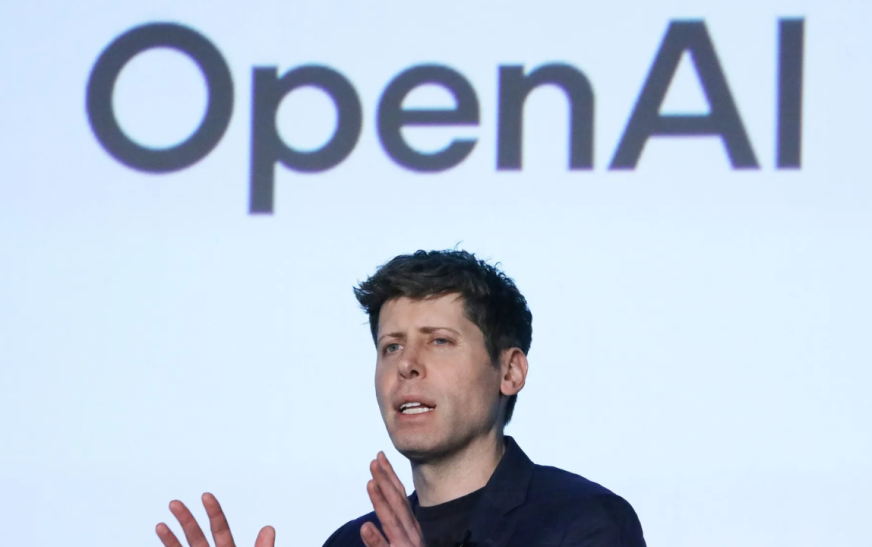
The OpenAI IPO process has officially moved into Wall Street’s spotlight after the ChatGPT creator confidentially submitted a draft S-1 filing to regulators. The filing marks a major step toward a potential public-market debut for one of the most closely watched artificial intelligence companies in the world, even as timing remains flexible and investors wait for more details on revenue, margins, governance, risk factors, and valuation.
According to the original TradingView report published through TradingView, OpenAI announced Monday that it had confidentially filed a draft S-1. The company said a public debut may still be “a while away,” though market rumors suggest shares could begin trading as early as September if preparations remain on track.
The announcement matters because OpenAI is not arriving in isolation. The source report said Anthropic disclosed its own confidential IPO filing one week earlier, while SpaceX is expected to debut this Friday at a valuation of $1.75 trillion. OpenAI’s latest funding round valued the company at roughly $852 billion post-money, placing it among the most valuable private technology companies approaching public markets.
Why the OpenAI IPO Matters
The OpenAI IPO is important because it could become one of the defining public listings of the AI era. OpenAI is closely associated with the mainstream rise of generative AI, and its public-market debut would give investors a direct way to price one of the most influential companies in the sector.
Until now, many investors have gained AI exposure through public companies tied to chips, cloud infrastructure, software platforms, data centers, and enterprise automation. OpenAI would offer a different kind of exposure: a company directly linked to AI model development, consumer AI adoption, enterprise AI services, and the broader competitive race for model supremacy.
A listing would also create a new benchmark for AI valuations. Public investors would be able to compare OpenAI’s valuation against other AI-linked companies, including infrastructure suppliers, cloud providers, and software firms. That could influence sentiment across the entire technology sector.
However, the confidential filing means investors still do not have the full prospectus. The market does not yet know the detailed financials, risk disclosures, business segment breakdown, profitability profile, or final offering structure. The current announcement is a major procedural step, but it is not yet a full investment case.
Confidential S-1 Filing Starts the Public-Market Process
A confidential S-1 filing allows a company to submit IPO registration documents to regulators before making the filing public. This gives the company time to work through comments, prepare disclosures, coordinate with banks, and refine its timing without immediately releasing sensitive details to the market.
OpenAI acknowledged the filing publicly, with the source report noting that the company expected news of the submission to leak anyway. The practical effect is that the market now knows the IPO process is active, even though the most important financial and legal details remain private for now.
For investors, the confidential filing changes the timeline. OpenAI is no longer only a private-company story discussed through funding rounds and secondary-market speculation. It has entered the formal public-listing pipeline.
That said, timing remains uncertain. The report stated that OpenAI said a public debut may still be “a while away,” while rumors point to a possible September trading debut. Investors should treat that as a working possibility, not a confirmed listing date. IPO timing can shift depending on market conditions, regulatory review, valuation negotiations, investor demand, and company readiness.
Valuation Above $850 Billion Raises the Stakes
OpenAI’s latest funding round valued it at roughly $852 billion post-money. That figure gives investors a reference point for the potential IPO valuation, although the final public valuation may differ depending on demand, market conditions, financial disclosures, and comparable listings.
A valuation above $850 billion places OpenAI in extraordinary territory. At that size, the company would not be treated like a typical growth IPO. It would immediately become a major public-market event with implications for technology indexes, institutional portfolios, AI-sector valuation models, and private-market pricing.
Large valuations create opportunity and pressure. On one hand, a company valued at this level can attract massive investor attention and become a centerpiece of AI allocation strategies. On the other hand, public investors will demand evidence that the valuation is supported by growth, monetization, customer demand, and a credible long-term path.
The OpenAI IPO may therefore become a test of how much public markets are willing to pay for AI leadership. If demand is strong, it could validate elevated private-market valuations across the AI sector. If investors push back, it could force a broader reassessment of AI pricing.
For readers tracking technology listings, valuation trends, and major market catalysts, Finprozone latest market news provides broader coverage of how public-market sentiment reacts to AI and growth-stock developments.
AI Giants Race Toward Public Markets
OpenAI’s filing comes as several high-profile technology companies move toward public listings. The source report said Anthropic disclosed its own confidential IPO filing one week earlier and could follow within weeks. SpaceX is expected to debut this Friday at a $1.75 trillion valuation.
This creates a rare IPO cycle centered on mega-scale private companies. Instead of a normal listing calendar made up of smaller growth firms, the market may be preparing for several companies that already carry enormous valuations and global brand recognition.
The timing matters. If SpaceX, Anthropic, and OpenAI all approach public markets within a short period, investors may need to decide how much capital they are willing to allocate to mega-growth listings. That could affect demand across technology stocks, private-market exits, venture-backed companies, and AI-related public equities.
The listings could also compete for attention. A strong debut from SpaceX may improve appetite for large private companies. A weak debut could make investors more selective. Anthropic’s timing may influence how OpenAI is received, especially because both companies operate in the competitive AI model space.
For OpenAI, the public market will likely compare it not only with Anthropic, but also with other AI beneficiaries. Investors will ask whether model companies deserve higher, lower, or different multiples than cloud providers, chipmakers, and enterprise software firms.
Employee Tender Offer Adds a Liquidity Layer
OpenAI also plans a tender offer allowing employees to sell some of their private shares before the IPO. This is common for fast-growing private companies that have stayed private long enough for employees to accumulate meaningful paper wealth.
Employee liquidity matters for several reasons. First, it can help retain talent by giving staff a way to realize value before a public listing. Second, it can reduce pressure on employees who may otherwise wait for an IPO to monetize shares. Third, it can help establish secondary-market pricing before the public offering.
For a company competing intensely for AI talent, liquidity is strategically important. The AI labor market is highly competitive, and compensation can include large equity packages. If employees believe their equity has real and accessible value, the company may be better positioned to retain key researchers, engineers, product leaders, and infrastructure specialists.
However, tender offers also raise questions. Investors may watch how many employees sell, what valuation is used, and whether the transaction signals confidence or caution. Employee selling does not automatically mean bearishness; diversification is normal. But public-market investors will still study the details once they become available.
What Investors Will Look for in the Prospectus
When OpenAI’s S-1 becomes public, investors will focus on several key areas. The first will be revenue growth. The company’s brand is powerful, but public investors will want to know how quickly revenue is expanding and which customer segments are driving growth.
The second will be profitability and costs. AI model development can require large spending on compute, infrastructure, research, data, safety systems, and talent. Investors will want to understand whether revenue growth is scaling faster than costs.
The third will be customer concentration. If a large portion of revenue depends on a small number of customers or partners, that could affect the risk profile.
The fourth will be governance. OpenAI’s structure and mission have attracted significant attention over time, and public investors will need clarity on control, board oversight, shareholder rights, and strategic decision-making.
The fifth will be risk factors. AI companies face regulatory, legal, competitive, safety, copyright, data, infrastructure, and reputational risks. The S-1 will likely become one of the most closely read technology filings in years.
Why the IPO Could Influence AI Stocks
The OpenAI IPO could affect the entire AI trade. Public investors often use major listings as valuation anchors. If OpenAI lists successfully at a high valuation and trades well, it could reinforce bullish sentiment toward AI-related stocks. If the IPO struggles, it could create pressure across the sector.
Chipmakers, cloud platforms, AI software providers, data-center operators, cybersecurity companies, and enterprise automation firms could all be affected by how investors interpret OpenAI’s debut. A strong listing may suggest that AI demand remains durable. A weak listing may suggest that investors are becoming more selective after a long AI rally.
The IPO could also influence private markets. Venture-backed AI firms may use OpenAI’s valuation and trading performance as a benchmark. A successful listing could open the door for more AI IPOs. A disappointing debut could delay other companies’ plans.
For institutional investors, OpenAI’s public-market arrival would also raise portfolio-construction questions. If the company becomes a major public stock, funds may need to decide whether to own it directly, own AI infrastructure suppliers, or balance exposure across the full AI ecosystem.
Risks Around a Mega-IPO
The first risk is valuation risk. A company valued above $850 billion must deliver very strong fundamentals to satisfy public investors. If expectations are too high, even impressive growth may not be enough.
The second risk is timing. Markets can shift quickly. If technology sentiment weakens, interest rates rise, or investors become more cautious on growth stocks, IPO demand may cool.
The third risk is competition. OpenAI is racing against Anthropic and other AI companies for customers, talent, and model leadership. Public investors will want to see whether OpenAI can maintain a durable advantage.
The fourth risk is regulation. AI is increasingly tied to policy debates around safety, labor, data use, competition, copyright, and national security. Regulatory changes could affect costs, product development, or market access.
The fifth risk is profitability. AI infrastructure can be expensive. If public disclosures show heavy spending without a clear path to margin improvement, investors may become more cautious.
What to Watch Before the Trading Debut
The first signal is the public S-1 release. That document will provide the details investors need to move from speculation to analysis.
The second signal is the tender offer. Its valuation, participation, and structure may provide clues about employee liquidity and private-market demand.
The third signal is SpaceX’s debut. A strong performance could improve the mood for mega-IPOs. A weak debut could make investors more careful.
The fourth signal is Anthropic’s progress. Since Anthropic is also moving toward public markets, investors will compare the two AI companies closely.
The fifth signal is overall market appetite for growth stocks. Even the strongest IPO candidates can be affected by rates, liquidity, index performance, and risk sentiment.
FAQ
What did OpenAI announce about its IPO?
OpenAI announced that it confidentially submitted a draft S-1 filing to regulators. This is an early step in the IPO process, but the filing details are not yet public. The company said a public debut may still be “a while away,” while rumors suggest a possible September listing.
What is OpenAI’s latest valuation?
OpenAI’s latest funding round valued the company at roughly $852 billion post-money, according to the source report. That figure may serve as a starting point for public-market expectations, but the final IPO valuation will depend on disclosures, investor demand, market conditions, and offering structure.
Why does the OpenAI IPO matter for AI stocks?
The OpenAI IPO could become a major valuation benchmark for the AI sector. A strong listing may support sentiment across AI-related stocks, while a weaker debut could make investors more cautious. It may also influence private-market pricing and the timing of other AI listings.
What should investors watch before OpenAI starts trading?
Investors should watch the public S-1 release, tender offer details, SpaceX’s debut, Anthropic’s IPO timeline, AI-sector sentiment, and market conditions. For deeper analysis of institutional positioning, valuation trends, and mega-IPO themes, follow Finprozone Pro market insights as the listing cycle develops.