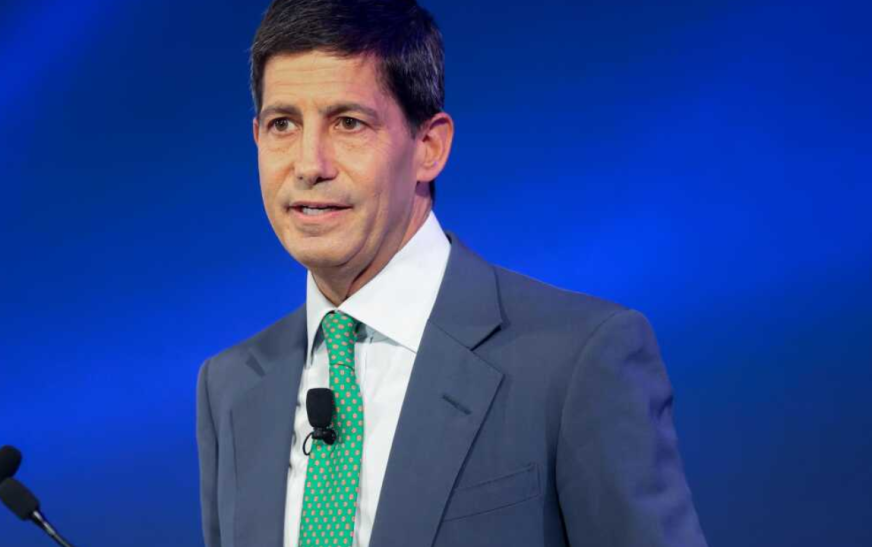
Market outlook turns cautious as investors price a Fed transition
The latest market outlook has turned more cautious as investors prepare for a potentially major shift in Federal Reserve leadership, while also dealing with Middle East tensions, rising oil prices, weaker technology stocks and higher Treasury yields.
According to the original Reuters report via TradingView, markets are beginning to adjust to what Ben Emons of Fed Watch Advisors described as the “Warsh path.” That refers to growing expectations that Kevin Warsh could become the next Federal Reserve chair, potentially bringing a different monetary-policy philosophy to the central bank.
The market reaction shows a clear defensive split. The Nasdaq fell around 1.3%, the S&P 500 declined about 0.7%, and the Dow was slightly positive. Technology was the weakest S&P 500 sector, while energy led gainers as crude oil rallied nearly 4%. The dollar strengthened, gold fell more than 2%, bitcoin declined over 1%, and the U.S. 10-year Treasury yield rose toward 4.36%.
That mix suggests investors are not reacting to one simple headline. They are repricing several risks at the same time: a possible change in Fed leadership, uncertainty over future rate policy, oil-driven inflation risk, geopolitical disruption and pressure on high-growth technology shares.
Why the “Warsh path” matters for markets
Kevin Warsh is being watched closely because a new Fed chair can influence market expectations well before policy actually changes. Central banks operate partly through interest rates, but also through communication, credibility and investor psychology.
If markets believe Warsh would guide the Fed toward a smaller role in financial markets, lower excess reserves and less accommodation for government borrowing, that could shift how investors price bonds, stocks and risk assets.
According to Ben Emons, Warsh’s policy vision may involve a Fed that plays a less intrusive role in markets and is less involved in indirectly financing government spending. A key part of that vision would be reducing excess reserves in the banking system, moving closer to a pre-financial-crisis framework.
That matters because the post-2008 market environment has been shaped by abundant liquidity, large central bank balance sheets and strong investor confidence that the Fed would step in during periods of market stress. A Fed that becomes less market-supportive could change valuation assumptions, especially for growth stocks.
This does not mean markets are pricing a crisis. But they are beginning to ask a more serious question: what happens if the next Fed era is less friendly to liquidity-driven asset inflation?
For broader coverage of market-moving policy and macro events, readers can follow Finprozone latest market news.
Technology stocks feel the most pressure
Technology was the weakest S&P 500 sector in the session, and that is not surprising. Tech stocks are often highly sensitive to changes in interest-rate expectations, liquidity conditions and long-term discount rates.
When Treasury yields rise, the present value of future earnings can come under pressure. That is especially relevant for high-growth companies whose valuations depend heavily on earnings expected years into the future. If markets begin pricing a Fed that is less supportive of liquidity and more focused on financial discipline, richly valued technology names can become vulnerable.
The Nasdaq’s decline of around 1.3% reflects this sensitivity. Semiconductor and AI-related stocks may also face pressure when investors reassess whether the data-center investment boom can keep supporting high valuations in a tighter policy environment.
The Reuters report noted that markets have not fully bought into a return to a 2% “new normal” growth trend, partly because investors remain optimistic about productivity gains from data-center investment. This is important. If AI and data-center spending continue to drive productivity, tech valuations may remain supported. If that optimism fades, the sector could face deeper downside.
Energy stocks gain as crude oil rallies
While technology weakened, energy led the market higher as U.S. crude rallied nearly 4%. This rotation makes sense. Rising oil prices can hurt broad market sentiment by increasing inflation risks, but they often support energy-sector earnings expectations.
The Middle East conflict remains central to the oil move. If supply routes stay disrupted or energy flows remain constrained, crude prices can stay elevated. That benefits producers, refiners and energy-linked companies, but it creates problems for consumers and central banks.
Higher oil prices can raise gasoline and transport costs. They can also increase input costs for companies across many industries. If those costs feed into inflation data, the Fed may have less room to cut rates.
This is why energy strength is not purely positive for the overall market outlook. It helps one sector but can pressure the broader economy. Investors may buy energy stocks as a hedge against oil inflation while selling technology and other rate-sensitive sectors.
The result is a more selective, less broad-based market.
Treasury yields rise as policy uncertainty builds
The U.S. 10-year Treasury yield rose to around 4.36%, reflecting both inflation concerns and uncertainty over the future direction of monetary policy.
Treasury yields are a key part of the market outlook because they influence equity valuations, mortgage rates, corporate borrowing costs and the dollar. When yields rise, risk assets often face more pressure, especially if the move is driven by inflation concerns or expectations of tighter policy.
A potential Warsh-led Fed could affect yields in several ways. If markets believe the Fed will reduce excess reserves and become less involved in supporting market liquidity, longer-term rates may adjust. If investors believe fiscal spending will be restrained, long-term inflation expectations could ease over time. But in the short term, uncertainty may push yields higher.
Emons suggested that if Warsh’s long-run rate targets gain traction, the yield curve could gradually flatten. That means short-term and long-term rates may adjust differently as markets price a new policy framework.
For bond investors, this is the key issue. The Fed transition is not only about the next rate decision. It is about the shape of policy over several years.
Dollar strength reflects defensive positioning
The dollar also strengthened, showing that investors are leaning defensive. A stronger dollar often appears when Treasury yields rise or when global uncertainty increases. In this case, both forces are relevant.
If U.S. yields remain elevated, dollar-denominated assets become more attractive. If geopolitical uncertainty remains high, investors may also favor the dollar as a safe and liquid currency.
Dollar strength can create additional pressure for global markets. It can weigh on commodities, emerging-market currencies and multinational earnings. It can also tighten global financial conditions, especially for borrowers with dollar-denominated debt.
For U.S. stocks, a stronger dollar can become a headwind for companies with significant international revenue. For commodities, the relationship is mixed. Oil rose because supply concerns dominated, but gold fell as higher yields and a firmer dollar reduced demand.
In this market environment, the dollar is acting as both a policy signal and a risk signal.
Gold and bitcoin weaken as yields rise
Gold fell more than 2%, while bitcoin dropped more than 1%. Both moves fit the broader pattern of rising yields and reduced risk appetite.
Gold often benefits during geopolitical stress, but it can struggle when real yields rise or when the dollar strengthens. Because gold does not pay interest, higher yields increase the opportunity cost of holding it. If investors believe the Fed will remain restrictive or if long-term rates stay elevated, gold can come under pressure even during uncertain periods.
Bitcoin’s decline also reflects a more cautious market tone. Crypto assets often perform better when liquidity is abundant and investors are willing to take risk. If markets begin pricing a less liquidity-friendly Fed, speculative assets can weaken.
The fact that both gold and bitcoin fell shows that investors are not simply moving into alternative stores of value. They are reducing exposure to assets that do not benefit directly from higher yields or stronger dollar conditions.
The Fed transition could matter more than one meeting
This week’s Fed decision is important, but the leadership transition may be even more important. Markets already expect the central bank to make its immediate policy decision. The bigger question is what kind of Fed investors will face in the months ahead.
Senator Thom Tillis reportedly dropped his hold on Kevin Warsh’s nomination after the conclusion of a criminal probe into the central bank. The Senate Banking Committee is expected to advance Warsh, with a full Senate vote likely by the end of the week.
If Warsh becomes Fed chair, investors will quickly look for signs of his policy priorities. Will he emphasize inflation discipline? Will he push for lower excess reserves? Will he seek to reduce the Fed’s market footprint? Will he support a different balance-sheet strategy?
Markets do not wait for full policy implementation. They begin pricing direction as soon as the leadership outlook becomes credible. That is why the “Warsh path” matters now.
June could become the key policy test
Emons highlighted June as a key period for markets. Traders will watch whether Warsh chairs the FOMC, whether the Fed changes its forecasts and dot plots, and how expectations around rate cuts shift.
The dot plot matters because it gives investors a view of where policymakers expect rates to go. If a new Fed leadership framework changes the long-run rate outlook, markets may need to reprice both short-term and long-term rates.
Rate-cut expectations are also critical. If markets expect fewer cuts, equities may struggle, especially growth stocks. If the Fed signals a path toward lower rates after a period of discipline, markets may stabilize.
A Warsh-led Fed could also influence how investors think about the balance sheet. Reducing excess reserves would affect liquidity conditions, bank reserves and potentially money-market dynamics. That is more technical than a simple rate change, but it can be highly important for asset prices.
For investors tracking upcoming rate decisions and major economic releases, Finprozone’s economic calendar for upcoming market events can help follow the next policy catalysts.
What investors should watch next
Investors should focus on several key signals.
The first is Warsh’s confirmation process. Any delay, change in support or policy statement could move markets.
The second is the next FOMC communication. Markets will watch whether the tone shifts toward a smaller Fed footprint or tighter liquidity management.
The third is Treasury yields. A continued rise in the 10-year yield would pressure equities, especially technology.
The fourth is oil. If crude keeps rallying because of Middle East risk, inflation concerns may remain elevated.
The fifth is sector rotation. If energy continues outperforming while tech weakens, markets may be shifting toward a more defensive and inflation-sensitive setup.
The sixth is the dollar. Continued dollar strength would suggest tighter global financial conditions.
Conclusion
The market outlook is becoming more complicated as investors start down what analysts call the “Warsh path.” A potential Kevin Warsh Fed chairmanship could mark a shift toward a smaller central bank role in markets, reduced excess reserves and a less liquidity-heavy policy framework.
That possibility is arriving at a difficult moment. Oil prices are rising because of Middle East tensions, inflation concerns remain active, Treasury yields are moving higher and technology stocks are under pressure. The Nasdaq fell around 1.3%, the S&P 500 dropped about 0.7%, and energy outperformed as crude rallied nearly 4%.
Markets are not only reacting to current economic data. They are preparing for a possible change in the structure of monetary policy. If Warsh’s long-run rate views and liquidity preferences gain traction, the yield curve, growth-stock valuations and risk appetite could all adjust.
For now, investors should avoid treating this as a normal Fed week. The immediate rate decision matters, but the bigger issue may be the direction of the next Fed era.
FAQ
Why are markets focused on Kevin Warsh?
Markets are focused on Kevin Warsh because he is expected to become the next Federal Reserve chair. Investors believe his policy approach could reduce the Fed’s market footprint, lower excess reserves and change how monetary policy supports financial markets.
Why did technology stocks weaken?
Technology stocks weakened because higher Treasury yields and uncertainty over future Fed policy pressured growth valuations. Tech companies are sensitive to discount-rate changes because much of their valuation depends on future earnings expectations.
Why did energy stocks outperform?
Energy stocks outperformed because crude oil rallied nearly 4% amid Middle East tensions. Higher oil prices can support energy-sector earnings, even though they create inflation risks for the broader economy.
How could a Warsh-led Fed affect Treasury yields?
A Warsh-led Fed could affect Treasury yields by shifting expectations around long-run rates, liquidity, excess reserves and the Fed’s role in markets. If investors price tighter liquidity or fewer rate cuts, yields could remain elevated.
What should investors watch next?
Investors should watch Warsh’s confirmation, the next FOMC signals, Treasury yields, oil prices, dollar strength and sector rotation. These factors will show whether markets are entering a deeper policy-driven repricing phase.