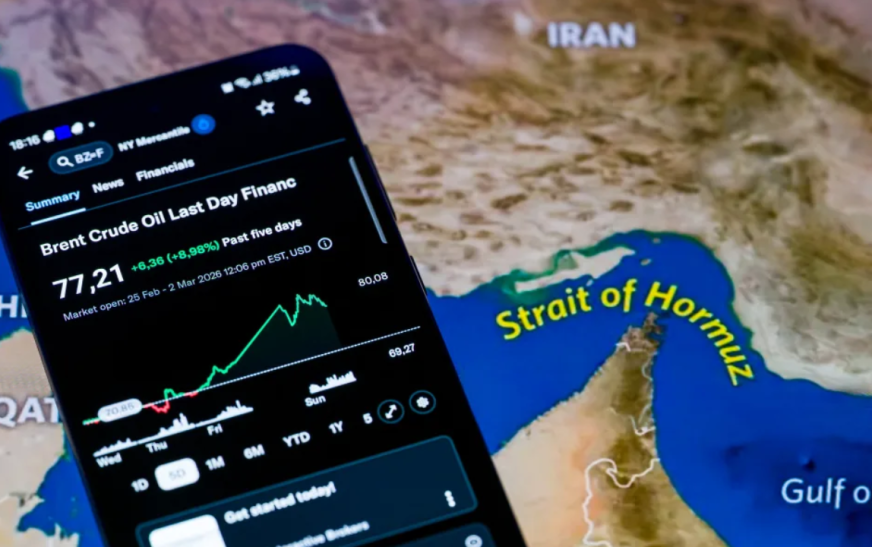
Oil prices fell sharply after renewed hopes of a possible agreement with Iran raised expectations that energy flows through the Persian Gulf could eventually normalize. The move immediately shifted the oil price forecast for traders, investors, and policymakers watching whether lower crude prices can ease inflation pressure and support risk assets.
According to the original Dow Jones Newswires report published through TradingView, the most actively traded Brent crude oil futures dropped roughly 7% to $93.42, marking the lowest level since mid-April. The decline came as global stock indexes moved higher, European bond yields fell, and investors reassessed the inflationary impact of the conflict-driven energy shock.
The market reaction was clear, but confidence was limited. Traders have seen several rounds of optimism before, only for negotiations to slow or geopolitical risks to return. That makes this oil price forecast more complicated than a simple bearish call. Brent’s drop reflects relief, but not certainty.
Brent Crude Falls as Iran Deal Hopes Build
The immediate driver behind the latest move was the possibility of a peace arrangement involving Iran and a reopening of the Strait of Hormuz. Because the Strait is one of the world’s most important energy transit routes, any disruption or reopening can have an outsized impact on oil prices, shipping costs, inflation expectations, and central bank policy assumptions.
Brent crude futures slid to $93.42 after investors reacted to signs that negotiations were still active. For energy markets, the price action suggests traders are beginning to price in at least some chance of improved supply conditions. A full reopening of the Persian Gulf would reduce one of the largest geopolitical risk premiums embedded in crude prices.
However, Brent remains significantly above prewar levels. That matters because the market is not yet behaving as if the supply shock has fully reversed. Instead, traders appear to be adjusting the risk premium while still accounting for delays, bottlenecks, and uncertainty over whether shipping can safely resume at normal levels.
This creates a two-sided oil price forecast. If negotiations produce a signed agreement and shipping activity improves, Brent could face additional pressure. If talks stall or shipping companies remain cautious, prices may stabilize or rebound as risk premiums return.
Why the Strait of Hormuz Matters for Energy Markets
The Strait of Hormuz is not just a geopolitical headline. It is a critical route for global oil and energy shipments. When market participants believe that access to the Strait is at risk, crude prices tend to rise because traders factor in the possibility of reduced supply, higher transport costs, and broader disruptions to energy availability.
The prospect of reopening the route explains why oil prices fell so sharply. A more stable shipping environment would improve supply visibility and reduce fears of prolonged shortages. It could also ease pressure on related markets, including refined fuels, fertilizers, freight, and industrial inputs tied to energy costs.
Still, reopening is not the same as normalization. Shipping companies often require an extended period of calm before they are willing to return to contested routes. Insurance costs, logistical delays, vessel backlogs, security concerns, and port congestion can keep pressure on supply chains even after political headlines improve.
That is why the oil price forecast remains cautious. The market can react quickly to negotiation headlines, but physical flows take longer to recover. Prices may move first, while real-world supply improvements follow slowly.
Inflation Fears Ease, but Not Disappear
The drop in crude prices also affected bond markets. European bond yields moved lower as investors reassessed inflation risks. The report noted that Germany’s benchmark 10-year government bond yield fell below 3%, trading near its lowest level in more than six weeks.
This reaction shows how closely oil prices are tied to inflation expectations. Higher energy prices feed into transportation, production, heating, electricity, agriculture, and consumer prices. When oil falls, investors often expect some relief for headline inflation, especially if the decline appears durable.
For central banks, lower energy prices could eventually reduce pressure to keep interest rates higher. Earlier war-driven price increases forced the Federal Reserve and other central banks to shift away from rate-cutting expectations. If energy costs continue to fall, markets may start reconsidering whether tighter policy assumptions have gone too far.
But this process is not automatic. Central banks will likely need to see sustained price relief, not one session of lower crude futures. Energy markets are volatile, and policymakers typically avoid reacting too strongly to temporary commodity moves. Inflation expectations may cool, but actual inflation data could take longer to reflect any improvement.
For readers tracking broader developments across assets, Finprozone latest market news provides continued coverage of the market reaction to energy, inflation, and geopolitical headlines.
Stocks Rally as Energy Risk Premium Shrinks
The decline in oil prices supported risk appetite across global equity markets. Stock indexes in Asia and Europe rose, while U.S. equity futures also advanced despite U.S. and U.K. markets being closed for holidays. The Nikkei gained around 3% to reach a record close, while Nasdaq-100 futures climbed 1.4% and contracts tied to the Dow Jones Industrial Average and S&P 500 rose around 1%.
The logic is straightforward. Lower oil prices can reduce inflation pressure, lower input costs for businesses, support consumer spending, and reduce the risk that central banks will need to maintain restrictive interest rates for longer. Growth-sensitive sectors, especially technology, often benefit when bond yields fall and monetary policy expectations become less aggressive.
However, investors were not fully celebrating. Equity markets were already near record levels after a strong technology-led rebound. The S&P 500 had risen sharply from its wartime low, limiting the potential size of any additional relief rally.
This means the equity-market impact of a confirmed deal may be positive but not explosive. Much of the recovery in sentiment may already be reflected in stock prices. Investors may now require confirmation that the geopolitical situation is improving in a durable way before pricing in a much larger rally.
Why Traders Remain Skeptical
The skepticism around the latest move is important. Markets have repeatedly reacted to potential breakthroughs only to face reversals when negotiations slowed, political language shifted, or implementation details became unclear.
The source report highlighted that President Trump first announced the near finalization of a pact with Iran, then later said his representatives should not rush into a deal and that the blockade on Iranian shipping would remain until an agreement is signed. On Monday, he said negotiations were proceeding well, but mediators indicated that progress had slowed as both sides remained divided over references to Iran’s nuclear program and financial relief for Tehran.
That sequence explains why traders are cautious. Markets can price optimism quickly, but political agreements require formal terms, signatures, enforcement, and practical implementation. Until those elements are visible, the risk of disappointment remains elevated.
For oil traders, this makes headline risk central to the near-term outlook. A positive update could extend the decline in crude. A setback could reverse the move quickly, especially if shipping companies delay their return or if tensions rise again.
What the Oil Price Forecast Means for Bonds and Central Banks
The oil price forecast now has direct implications for bond yields and monetary policy expectations. If Brent continues to fall, inflation expectations could ease further. That would likely support government bonds, particularly in markets where investors had recently priced in higher benchmark rates.
Lower oil prices could also reduce pressure on central banks that had been forced to respond to renewed inflation risk. However, the timing matters. Even if the Strait reopens soon, some energy-price effects may persist. Businesses, shippers, and consumers may not immediately see lower costs, especially if supply chains remain disrupted or insurance premiums stay elevated.
Central banks may therefore treat the decline as helpful but incomplete. They will likely watch whether energy prices stabilize at lower levels, whether inflation data improves, and whether wage and service-price pressures remain contained.
For investors, the key issue is whether lower crude prices create a sustained shift in inflation expectations or only a short-term repricing of geopolitical risk. The first scenario would be more supportive for bonds and equities. The second would leave markets vulnerable to another reversal.
Key Levels and Market Signals to Watch
The most important level in the current oil price forecast is Brent’s move below $100. The report noted that Brent had not settled below $100 since late April, making the break psychologically significant. A sustained move below that area could suggest that traders believe geopolitical risk is fading.
The next issue is whether Brent can hold near the low-$90s or whether buyers return. If crude rebounds quickly, it may indicate that the market sees the latest drop as overextended or premature. If prices continue moving lower, attention could shift toward whether energy costs begin approaching prewar levels.
Traders should also monitor bond yields, equity futures, shipping updates, and central bank commentary. A synchronized move lower in oil and yields, alongside stronger equities, would suggest broader confidence in a relief scenario. A divergence, such as rising oil prices or renewed pressure on bonds, would signal that the market remains unconvinced.
Volumes also matter. The report noted that trading activity was lighter than usual because many traders in the U.S. and Europe were away for holidays. That can exaggerate price moves and reduce the reliability of one-day reactions.
Risks That Could Limit Further Oil Price Declines
Several risks could limit additional downside in crude. The first is negotiation risk. If talks fail to produce a signed agreement, the market may quickly rebuild the risk premium that was removed during Monday’s selloff.
The second is shipping risk. Even if a deal is reached, companies may wait for a longer period of calm before sending vessels through the Strait. That would delay the recovery in energy flows and keep prices above prewar levels.
The third is inflation persistence. Lower crude prices help, but they do not erase earlier cost increases immediately. Businesses may still face higher transport, fertilizer, and input costs for some time.
The fourth is market positioning. Since stocks and bonds have already rallied on relief expectations, investors may take profits if the deal is delayed or if the final terms disappoint. A crowded relief trade can reverse sharply when headlines shift.
FAQ
Why did oil prices fall after the Iran deal headlines?
Oil prices fell because traders priced in the possibility that an agreement could reopen the Strait of Hormuz and improve energy flows. That reduced some of the geopolitical risk premium in Brent crude, though the market still remains cautious because negotiations have not produced confirmed, fully implemented changes.
Does lower Brent crude mean inflation will fall quickly?
Not necessarily. Lower crude prices can reduce inflation pressure, but the effect usually takes time. Shipping delays, insurance costs, supply bottlenecks, and earlier price increases can keep energy-related costs elevated even after oil futures decline. Central banks will likely wait for sustained evidence before changing policy expectations.
Could stocks continue rising if oil keeps falling?
Stocks could benefit if lower oil prices reduce inflation fears and support expectations for easier financial conditions. However, many equity markets are already near records, so the upside may be limited unless the deal is confirmed and energy prices continue falling in a durable way.
What should traders watch next for the oil price forecast?
Traders should monitor Brent’s ability to stay below $100, updates on Iran negotiations, shipping activity through the Strait of Hormuz, bond yields, and central bank commentary. For chart monitoring and asset-level tracking, readers can use Finprozone’s market tools and trading resources to follow key market signals.