The wheat price forecast turned more supportive after Chicago Board of Trade wheat futures rose on Tuesday, helped by worsening U.S. crop conditions and drought stress across the Plains. According to the original Reuters report published through TradingView, the U.S. Department of Agriculture rated only 27% of the nation’s winter wheat crop in good-to-excellent condition as of Sunday, the lowest rating for this time of year since 1996.
That number matters because winter wheat is a key component of U.S. grain supply, especially hard red winter wheat grown in the Plains and used for bread. Extreme dryness has damaged crop prospects in major growing areas, increasing concern about yield potential and future supply availability.
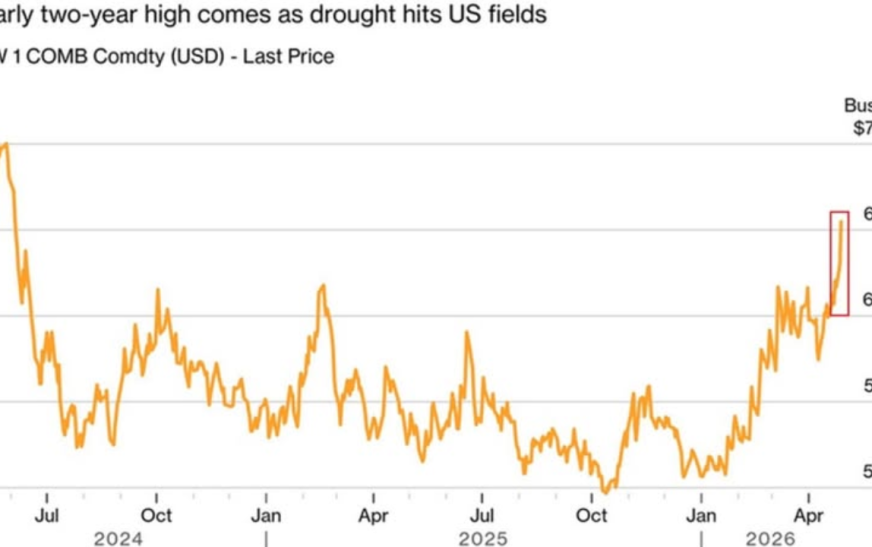
CBOT July soft red winter wheat finished 2-3/4 cents higher at $6.67-1/4 per bushel. The move was not dramatic, but it was directionally important because it showed that weather risk remains a key support factor even as fund selling limited broader gains across grain and soybean futures.
The wheat market is now balancing two major forces: deteriorating U.S. crop conditions and uncertainty around demand, especially after fresh optimism about potential Chinese purchases of U.S. farm goods.
Why the USDA Crop Rating Matters
The USDA’s weekly crop condition report is closely followed because it gives traders a regular snapshot of crop health. When the percentage of wheat rated good-to-excellent falls, the market often begins to price higher production risk.
In this case, the rating dropped to 27%, down one percentage point from the previous week. More importantly, it reached the lowest level for this time of year in 30 years. That historical comparison makes the data harder to ignore.
Crop ratings are not perfect yield forecasts. A poor rating does not automatically mean final production will collapse. Weather can improve, and some crops can recover partially if rainfall arrives at the right time. Still, ratings this weak signal that the crop is under serious stress.
For traders, the rating reinforces the idea that U.S. wheat supply may be smaller or lower quality than expected. That can support futures prices, especially if global demand remains steady or if other producing regions face their own weather problems.
Drought in the Plains Is the Main Supply Risk
The U.S. Plains are central to hard red winter wheat production. This wheat class is especially important for bread-making because of its protein content and milling qualities. When drought hits the Plains, the impact can move beyond futures prices and affect flour markets, food manufacturers, and export competitiveness.
Extreme dryness has already ravaged crops in the region, according to the report. Drought can hurt wheat in several ways. It reduces soil moisture, limits root development, weakens plant stands, lowers yield potential, and can reduce grain quality. If dry conditions persist late in the growing cycle, the crop may have limited ability to recover.
The market reaction shows that traders are paying attention. As Randy Place of the Hightower Report said in the Reuters report, the rating is “supportive” and a reminder that the crop is bad. That kind of comment reflects the current supply-side mood: traders may not yet be panicking, but they are taking the drought damage seriously.
For a stronger bullish wheat price forecast, the market would likely need continued dry weather, further rating declines, or confirmation that yield losses are worse than expected.
Why Wheat Gains Were Limited
Even though the crop-rating news was supportive, wheat’s gains were limited. Fund selling across grain and soy futures capped the move after Monday’s rally. This shows that the market is not trading only on drought risk.
Funds and managed-money traders can have a strong influence on agricultural futures. If funds sell into strength, even bullish supply news may produce only modest gains. That appears to have happened Tuesday, as soybeans and corn ended lower despite earlier gains.
This matters because wheat traders need to separate fundamental support from market positioning. A poor crop rating can support prices, but if speculative funds reduce exposure or take profits, upside may be controlled in the short term.
The result is a wheat market with a supportive supply story but uneven momentum. Prices can move higher if weather risk intensifies, but the rally may need stronger participation from funds, commercial buyers, or export demand to extend meaningfully.
China Demand Hopes Add Another Layer
The grain market is also watching potential Chinese demand for U.S. agricultural products. The report noted that the White House said China committed to buying at least $17 billion of U.S. agricultural products in 2026, 2027, and 2028 following President Donald Trump’s visit to Beijing.
Traders and analysts said the pledge could lift China’s total U.S. farm imports to around $28 billion to $30 billion a year. That would be well above last year’s $8 billion and higher than $24 billion in 2024, though still below the $38 billion peak seen in 2022.
For wheat specifically, the China demand story is less direct than it is for soybeans. China is the world’s biggest soybean importer, so soybean futures often react strongly to any purchase agreement. Wheat can still benefit from broader agricultural trade optimism, but traders will want specific details on crop categories, volumes, timing, and tariff treatment.
The market’s hesitation reflects that uncertainty. Traders were looking for more details on potential Chinese purchases, which limited follow-through after Monday’s optimism.
For broader coverage of commodities, agriculture, currencies, and macro-market catalysts, Finprozone latest market news provides regular updates on the developments shaping futures markets.
Tariffs and Trade Access Remain Important
The report also noted that U.S. farm exports to China still face an additional 10% levy, although some market watchers expect the Chinese government to lift it soon. This is important because tariffs can reduce the competitiveness of U.S. agricultural exports.
If China reduces tariffs or improves market access, U.S. farm goods could become more attractive. That would support export demand and potentially improve sentiment across grains and oilseeds. If tariffs remain in place, the impact of any purchase pledge may be more limited.
Trade policy is especially important for agricultural commodities because export flows can change quickly based on price, tariffs, logistics, and political decisions. A strong demand pledge can support prices, but the market will want confirmation through actual sales and shipments.
For wheat, improved trade relations could help sentiment, but weather remains the more immediate driver. The drought-hit U.S. crop is a concrete supply issue, while Chinese demand expectations still need more detail.
Soybeans and Corn Fail to Hold Early Gains
The broader grain complex was mixed. CBOT July soybean futures ended down 3-1/2 cents at $12.09-1/2 per bushel, while July corn closed 1-3/4 cents lower at $4.75-1/4 per bushel. Both had risen earlier in the session but failed to hold gains.
This matters because wheat often trades within the broader grain-market environment. If corn and soybeans are under fund selling pressure, wheat can struggle to rally aggressively even when its own fundamentals look supportive.
Soybeans were especially tied to the China trade story because China is the world’s largest soybean importer. The fact that soybean futures ended lower shows that traders are not yet fully convinced by the purchase headlines. They want evidence, not just political statements.
Corn also faced pressure, suggesting that broader agricultural buying interest weakened during the session. Wheat was able to close higher because its supply story was stronger, but the modest gain shows that cross-market selling still mattered.
Wheat’s Supply Story Is Stronger Than Corn and Soybeans
Wheat currently has a clearer supply-risk argument than corn or soybeans because the winter wheat crop is already far enough along for drought damage to matter. Corn and soybean crops can still be influenced heavily by planting progress, summer weather, acreage, and yield development.
Winter wheat, by contrast, is already dealing with visible stress. A 30-year-low good-to-excellent rating for this time of year puts immediate focus on yield potential. That gives wheat a more direct bullish catalyst.
However, wheat also faces global competition. U.S. wheat prices must remain competitive in export markets against supplies from Russia, Europe, Australia, Canada, and other producers. If U.S. wheat becomes too expensive, export demand may shift elsewhere unless global supply tightens more broadly.
That is why traders will monitor both U.S. crop conditions and international wheat production outlooks. A poor U.S. crop is supportive, but the global supply balance will determine how far prices can move.
What Could Push Wheat Prices Higher?
Several factors could strengthen the wheat price forecast. The first is continued drought in the U.S. Plains. If dryness persists and crop ratings deteriorate further, traders may price greater yield losses.
The second is confirmation from field reports. USDA ratings are useful, but traders also watch harvest data, crop tours, local basis levels, and producer reports for real-world confirmation.
The third is stronger export demand. If China or other buyers step up purchases of U.S. agricultural goods, wheat could benefit, especially if trade barriers ease.
The fourth is fund buying. If managed-money traders shift from selling to buying, futures could gain momentum quickly.
The fifth is global weather risk. Problems in other major producing regions would make U.S. supply losses more important.
What Could Pressure Wheat Prices?
Wheat could face pressure if weather improves enough to stabilize the crop. Late rainfall may not fully reverse drought damage, but it could prevent further deterioration and reduce panic buying.
Prices could also weaken if funds continue selling grain futures. Speculative flows can dominate short-term price action, especially when traders are waiting for more demand confirmation.
A lack of detail on Chinese purchases could also limit upside. If the market does not see actual sales commitments, Monday’s trade optimism may fade.
Global supply competition is another risk. If other exporters offer cheaper wheat or show better crop prospects, U.S. wheat may struggle to attract demand even with domestic production concerns.
Finally, a stronger U.S. dollar could pressure exports by making U.S. agricultural commodities more expensive for overseas buyers.
Market Takeaway: Wheat Has Weather Support, but Needs Demand Confirmation
The wheat price forecast is more supportive after USDA crop ratings confirmed severe drought stress. A good-to-excellent rating of only 27% is historically weak and gives the market a clear supply concern. That helped CBOT wheat close higher even as corn and soybean futures ended lower.
Still, the rally was limited. Fund selling, uncertainty around Chinese buying details, and broader grain-market weakness kept wheat from moving sharply higher. The market is supportive, but not yet explosive.
The next stage depends on weather, crop ratings, export demand, and fund positioning. If drought persists and demand improves, wheat could extend gains. If weather stabilizes or trade optimism fades, prices may struggle to build momentum.
For now, wheat remains one of the more weather-sensitive agricultural futures to watch.
FAQ
Why did CBOT wheat prices rise?
CBOT wheat prices rose after the USDA lowered the U.S. winter wheat crop rating to 27% good-to-excellent, the lowest for this time of year since 1996. Drought stress in the U.S. Plains increased concern about yield potential and future supply.
Why is the U.S. Plains drought important for wheat?
The U.S. Plains are a key region for hard red winter wheat, which is used to make bread. Extreme dryness can reduce yield, weaken crop quality, and tighten supply expectations, making weather conditions important for wheat futures.
Why were wheat gains limited?
Wheat gains were limited by fund selling across grain and soy futures. Traders were also waiting for more detail on potential Chinese purchases of U.S. agricultural goods, which kept broader market enthusiasm controlled.
How could China demand affect grain markets?
China’s commitment to buy more U.S. agricultural products could support grain and oilseed markets if it leads to actual purchases. However, traders want details on volumes, timing, product categories, and whether tariffs will be reduced or removed.
How should traders follow the wheat price forecast?
Traders should track USDA crop ratings, Plains weather, export sales, China trade updates, fund positioning, and global wheat production. For scheduled agricultural and macro events, use the economic calendar for upcoming market events to monitor key catalysts.