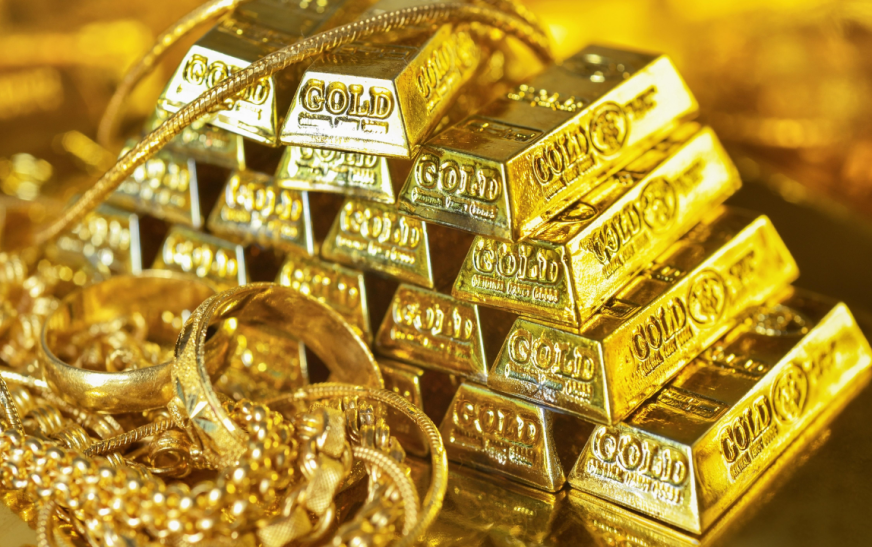
The gold price forecast has turned more cautious after bullion fell more than 1% as higher Treasury yields, a stronger U.S. dollar, and persistent inflation concerns pressured the precious metals market. According to the original Reuters report published through TradingView, spot gold dropped 1.4% to $4,503.98 per ounce, while U.S. gold futures for June delivery settled 1% lower at $4,511.20.
The decline pushed gold to its lowest level since March 30 earlier in the session, showing that the market is struggling against a tougher macro backdrop. The pressure came from two classic gold headwinds: rising yields and a firmer dollar. Benchmark 10-year U.S. Treasury yields were near a more than one-year high, while the dollar strengthened as investors considered whether the Federal Reserve could shift more hawkishly to contain energy-driven inflation.
Gold is often viewed as an inflation hedge, but that does not mean it always rises when inflation concerns increase. When inflation pushes interest rate expectations higher, gold can come under pressure because it does not pay interest. That is the central tension now driving the market.
Why Gold Fell Despite Inflation Concerns
Gold’s decline may look counterintuitive because inflation fears usually support demand for hard assets. However, the current market reaction is about the policy response to inflation, not only inflation itself.
Brent crude oil prices remained above $110 a barrel, keeping energy inflation in focus. Higher fuel costs can feed into transportation, production, food, and consumer prices. If central banks believe energy inflation could become broader and more persistent, they may keep policy tight or even consider further rate hikes.
That is where gold faces pressure. Higher interest rates increase the opportunity cost of holding bullion. Investors can earn income from Treasury bills, bonds, cash-like instruments, and other yield-bearing assets. Gold, by contrast, offers no coupon, dividend, or interest payment.
This means gold can struggle when inflation leads to higher real rates. In the Reuters report, Edward Meir of Marex pointed to a multi-country rise in real rates as a key factor weighing on gold. That global rise in real yields makes non-yielding bullion less attractive in the short term.
Treasury Yields Are the Main Pressure Point
Treasury yields are one of the most important variables in the gold market. When yields rise, investors often reassess whether holding gold makes sense compared with interest-bearing assets.
The 10-year Treasury yield being near a more than one-year high is particularly important because it reflects market expectations around inflation, growth, and Federal Reserve policy. If investors believe the Fed may need to stay restrictive for longer, longer-term yields can remain elevated.
For gold, this creates a valuation problem. Bullion can still be attractive as a store of value, but the short-term trade becomes more difficult when safe government debt offers higher returns. The higher the yield available from bonds, the more gold needs strong safe-haven or inflation-hedge demand to compete.
This is why rising yields can weaken gold even when inflation is high. The market is effectively saying that the response to inflation may be tighter monetary policy, not easier financial conditions. That is bearish for gold in the short run.
The Stronger Dollar Adds Another Headwind
The U.S. dollar is the second major pressure point. Gold is priced globally in dollars, so a stronger dollar makes bullion more expensive for buyers using other currencies. That can reduce international demand or slow new buying.
A firmer dollar also reflects the market’s view that U.S. interest rates may remain attractive relative to other economies. If investors expect the Fed to stay more hawkish than other central banks, dollar-denominated assets can draw support.
This matters because gold often performs best when the dollar weakens. A weaker dollar usually improves affordability for non-U.S. buyers and can signal easier financial conditions. In the current setup, the opposite is happening. The dollar is strengthening because inflation and rate concerns remain elevated.
For investors following commodities, currencies, central-bank policy, and cross-market risk, Finprozone latest market news provides regular updates on the forces shaping gold and broader financial markets.
Fed Expectations Are Shifting Against Gold
Markets now see very limited scope for rate cuts through most of 2026, according to the report. Expectations have shifted toward no change or possible tightening later in the year. That is a major change for gold.
When investors expect rate cuts, gold often benefits. Lower rates reduce the opportunity cost of holding bullion and can weaken the dollar. When investors expect rates to remain high or rise further, gold usually faces more pressure.
This is why the upcoming Federal Reserve meeting minutes are important. Traders will look for signs that policymakers are becoming more concerned about energy-driven inflation. If the minutes sound hawkish, yields and the dollar could remain supported, creating more pressure on gold.
If the minutes suggest the Fed is still cautious about tightening further, gold may find some relief. But for now, the market is not pricing an easy path toward lower rates.
Oil Prices Keep Inflation Risk Alive
Brent crude holding above $110 a barrel is a major macro risk. Energy prices affect inflation quickly and broadly. Higher oil can raise gasoline prices, airline fuel costs, shipping expenses, manufacturing costs, and household utility bills.
For gold, high oil prices create a mixed effect. On one hand, energy-driven inflation can support the argument for holding gold as a hedge. On the other hand, if higher oil forces central banks to remain hawkish, the impact becomes negative.
Right now, the second effect appears stronger. Gold is not falling because inflation risk disappeared. It is falling because inflation risk is keeping rates high and supporting the dollar.
This is a difficult environment for bullion. Gold needs inflation concern, but not so much inflation pressure that central banks become more aggressive. The market has moved into the less favorable version of the inflation story.
The Long-Term Gold Case Is Not Broken
Despite the short-term decline, the longer-term investment case for gold remains intact. Ole Hansen of Saxo Bank noted in the report that structural support for gold remains largely in place, even though short-term macro conditions have become more challenging.
That distinction is important. Gold can face near-term pressure from yields and the dollar while still retaining long-term support from central-bank demand, geopolitical uncertainty, debt concerns, currency diversification, and inflation protection.
Central-bank demand may become more important again once immediate energy-related pressures ease. Many central banks hold gold as a reserve asset because it is not tied to a single government’s credit risk. If reserve diversification continues, it can provide a steady source of demand over time.
For now, however, short-term traders are focused on real rates, Treasury yields, the dollar, and Fed expectations. That is why gold has struggled even though broader uncertainty remains high.
Silver, Platinum, and Palladium Also Weaken
Gold was not the only precious metal under pressure. Spot silver fell 4.1% to $74.53 per ounce after touching a roughly two-week low. Platinum lost 2.2% to $1,936.10, while palladium dropped 4.2% to $1,359.26.
The broad weakness suggests that the pressure was not only gold-specific. Higher yields, a stronger dollar, and risk reduction affected the wider precious metals complex. Silver can be especially volatile because it has both precious-metal and industrial-metal characteristics. Platinum and palladium are also exposed to industrial demand, especially in automotive and manufacturing-linked uses.
J.P. Morgan forecast platinum at $2,400 per ounce in the fourth quarter of 2026 and palladium at $1,600 per ounce in the same period, according to the Reuters report. Those forecasts suggest some analysts still see recovery potential in platinum group metals, even as short-term pressure remains visible.
Key Levels Traders Should Watch
Gold’s drop toward its lowest level since March 30 puts technical levels back in focus. Traders will watch whether gold can stabilize above the $4,500 area or whether selling pressure continues.
The $4,500 level is psychologically important because it is a round number and close to the latest spot price. If gold holds near this zone and rebounds, traders may interpret the decline as a short-term correction. If it breaks below with momentum, the market could look for deeper support.
On the upside, gold needs to recover lost ground and show that buyers are willing to step in despite higher yields. A weaker dollar or softer Treasury yields would help. Without that support, rebounds may remain limited.
The next major catalyst is the Fed minutes. Any indication that policymakers are leaning more hawkish could keep pressure on gold. A less aggressive tone could help the metal stabilize.
What Could Help Gold Recover?
Gold could recover if Treasury yields retreat, the dollar weakens, or Fed rate-hike expectations fade. Softer economic data could also help if it reduces the case for tighter policy.
Another supportive factor would be easing energy pressure. If oil prices fall from elevated levels, inflation concerns may cool. That could reduce the need for hawkish central-bank policy and support gold indirectly.
Safe-haven demand could also return if geopolitical risks escalate in a way that directly drives investors into bullion rather than into the dollar. In recent sessions, dollar strength has dominated the safe-haven trade. If that changes, gold could benefit.
Central-bank buying remains a longer-term support factor. If official-sector demand continues, it may limit downside during corrections.
What Could Push Gold Lower?
Gold could fall further if Treasury yields continue rising and the dollar remains firm. A hawkish Fed minutes release would be an obvious risk. Strong inflation data, resilient employment, or higher oil prices could also reinforce the higher-for-longer rate narrative.
Another risk is investor positioning. If traders who bought gold earlier in the year begin exiting positions, selling pressure could accelerate. Precious metals often move quickly when momentum shifts, especially if leveraged futures positions are involved.
Gold may also struggle if broader markets remain stable and investors prefer yield-bearing assets. In that environment, gold’s defensive appeal may not be enough to offset its lack of income.
Market Takeaway: Gold Faces a Harder Short-Term Setup
The gold price forecast has weakened because the market is now focused on rising real rates, elevated Treasury yields, a stronger dollar, and fewer expected Fed rate cuts. Those factors are difficult for gold to overcome in the short term.
The longer-term case is still alive. Gold remains supported by structural demand, reserve diversification, geopolitical uncertainty, and inflation-hedge appeal. But the immediate trading backdrop is challenging because inflation is currently pushing rates higher rather than weakening confidence in policy.
For now, gold needs relief from yields or the dollar to rebuild momentum. Until that happens, traders may remain cautious around bullish positions.
FAQ
Why did gold fall more than 1%?
Gold fell because higher Treasury yields and a stronger U.S. dollar pressured the market. Persistent inflation fears increased expectations that the Federal Reserve may keep rates high or consider tighter policy, reducing gold’s appeal as a non-yielding asset.
Why do higher Treasury yields hurt gold?
Higher Treasury yields increase the opportunity cost of holding gold. Since gold does not pay interest, investors may prefer bonds or cash-like assets when yields are attractive. This can reduce demand for bullion, especially in the short term.
How does the U.S. dollar affect gold prices?
Gold is priced in U.S. dollars, so a stronger dollar makes it more expensive for buyers using other currencies. That can weaken international demand and put pressure on gold prices. A weaker dollar usually supports gold.
Can gold still act as an inflation hedge?
Gold can act as an inflation hedge, but it often struggles when inflation leads to higher interest rates. If inflation damages confidence in currencies and real yields fall, gold may benefit. If inflation pushes yields higher, gold can come under pressure.
How should traders follow the gold price forecast?
Traders should monitor Fed minutes, inflation data, Treasury yields, oil prices, and dollar movement. For scheduled policy events and economic releases, use the economic calendar for upcoming market events to track major catalysts.