Ethereum has spent most of early 2026 doing something that looks boring on a chart but loud in investor behavior: moving sideways around the $2,000 level. Price has failed to reclaim last year’s highs, yet it also hasn’t unraveled in a way that typically triggers mass capitulation. Instead, the market’s response has leaned toward accumulation—less “get me out,” more “get it off the exchange.”
That tension—muted price action paired with aggressive self-custody—has now produced a data point that stands out even in a market used to extremes: CryptoQuant data cited in recent reports shows roughly 31.6 million ETH withdrawn from exchanges in February, the highest level since November of last year. At the same time, Ethereum co-founder Vitalik Buterin is pushing the conversation beyond price and speculation, calling for Ethereum to become an ecosystem for what he describes as “sanctuary technologies”—open tools that help people function under political and institutional pressure.
Together, the two threads tell a clear story: whatever investors feel about ETH’s short-term chart, a meaningful segment of them are positioning as if they want to hold it through instability rather than trade it through volatility.
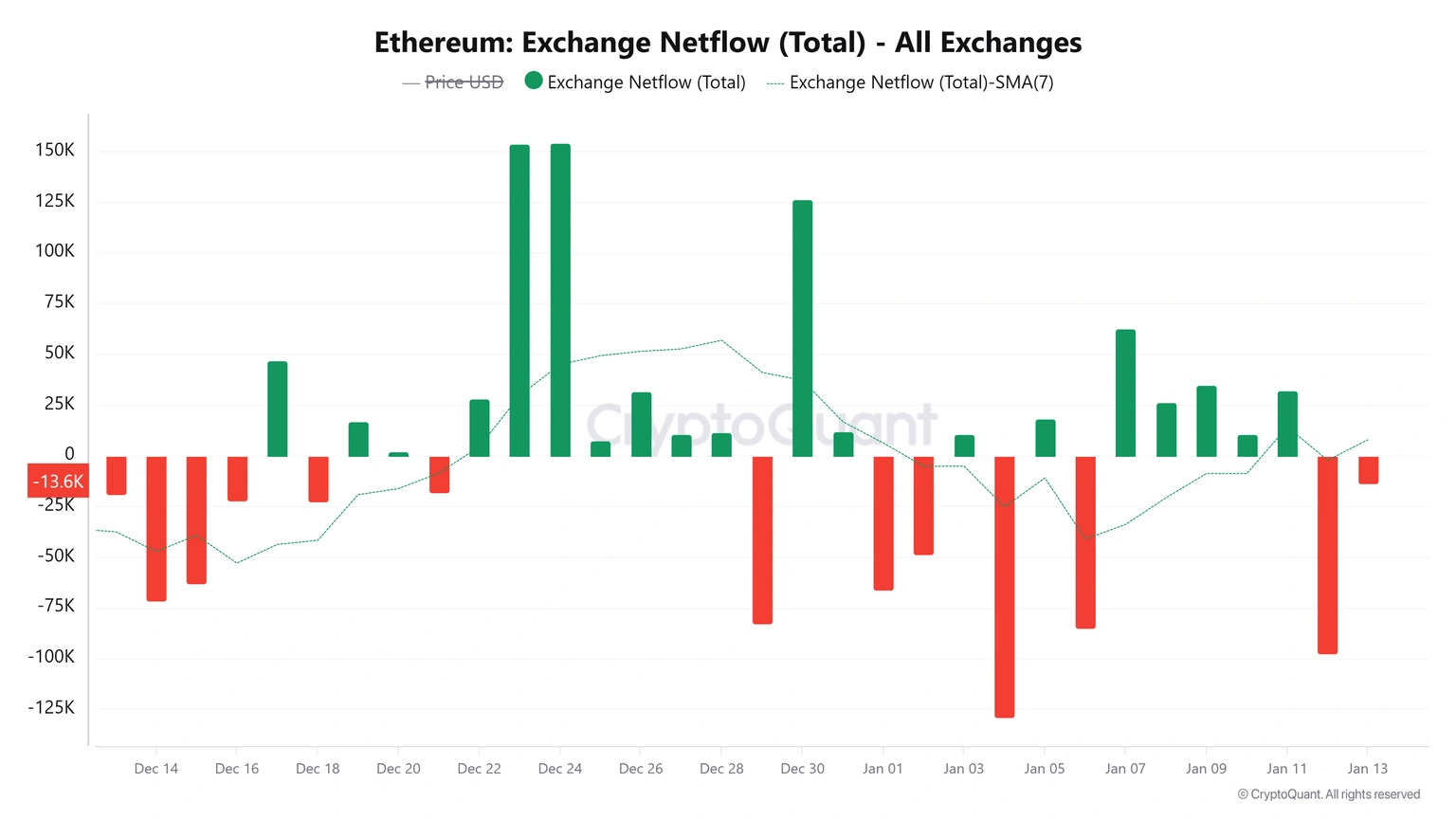
Exchange outflows: what the “31.6 million ETH” figure really signals
Exchange reserve data is one of the simplest market gauges with one of the most useful interpretations—when it’s treated carefully.
- Rising exchange balances often imply investors are transferring coins to exchanges, increasing “ready-to-sell” supply.
- Falling exchange balances often imply investors are withdrawing coins from exchanges, reducing immediate sell-side liquidity and signaling a preference for holding in private custody.
The February figure—31.6 million ETH in exchange withdrawals—is striking not only because of the raw size, but because it happened while ETH remained roughly 60% below last year’s peak (as noted in the text you provided). That’s the part that challenges the usual narrative. If this were purely a “we’re euphoric, let’s go long forever” cycle, you’d expect it to show up alongside a strong uptrend and expanding risk appetite. Instead, the market is behaving as if the decision to hold is strengthening even without the price doing anything dramatic.
An analyst quoted in your text, Arab Chain, summed up the ambiguity well: when large movements occur around sensitive price levels, they can reflect long-term conviction—or a strategic repositioning. That’s an important caveat, because “coins leaving exchanges” is not a magical bullish spell. But it does change market structure in ways traders can’t ignore.
When exchange liquidity declines, price can become more reactive to marginal flows. In plain English: if fewer coins are sitting on venues designed for instant selling, it can take less incremental demand to move the market. That doesn’t guarantee upside, but it can affect how sharp moves become once momentum returns.
Where did the outflows come from?
The breakdown in your source text highlights Binance as the largest contributor to these withdrawals.
- Binance: ~14.45 million ETH withdrawn (nearly half of total outflows)
- OKX: ~3.83 million ETH
- Kraken: ~1.04 million ETH
Even without speculating about motives, the distribution matters. Binance leading the withdrawals suggests the behavior is not limited to a small niche exchange or a single user group. It looks broader—more like a structural shift in how ETH holders are choosing to store their assets.
It also continued into early March. Your text notes that exchange reserves fell to a record low in March, with CryptoQuant showing exchange balances declining from 16.8 million ETH at the start of the year to 15.9 million ETH, hitting an all-time low around March 2.
That’s the kind of datapoint that tends to show up when investors prefer “ownership and control” over “speed and convenience.” And in crypto, that preference usually means self-custody.

The “gammafund.eth” withdrawal and what it represents
One example cited from Lookonchain is the wallet gammafund.eth withdrawing 9,000 ETH (roughly $17.86 million) from Binance on March 4.
A single transaction like this can be interpreted in multiple ways—fund rebalancing, cold storage movement, operational reshuffling, a long-term holder deciding to reduce counterparty risk. The value isn’t in “one whale did a thing.” The value is that the transaction fits the larger pattern: coins moving away from centralized venues rather than toward them.
When you see a repeated pattern of withdrawals at scale, it often indicates a psychological shift: holders are increasingly optimizing for safety and sovereignty rather than trading optionality.
BitMine’s big ETH buy: not just a headline, a signal of intent
Your text also references BitMine’s purchase of 50,992.8 ETH on March 2, bringing its total holdings to 3.71% of Ethereum’s total supply.
That’s a meaningful data point because it puts a name on the demand side of the ledger. Outflows matter, but outflows paired with visible strategic accumulation can shape expectations:
- If large entities accumulate while price is depressed, it can reinforce the narrative of “smart money positioning.”
- It can also influence how retail holders interpret the risk: if a major buyer is adding aggressively, some investors become more willing to tolerate drawdowns.
This doesn’t guarantee price recovery—plenty of large buyers have been early, wrong, or both. But it reinforces the theme that current behavior looks less like panic and more like positioning.
Why “no panic selling” is itself a signal
A key line in your text is that recent escalations in military conflicts did not trigger panic selling—investors responded in the opposite direction, accumulating more aggressively.
That’s notable because geopolitical shocks usually drive a predictable sequence:
- volatility rises
- leverage gets reduced
- weak hands de-risk
- “safe havens” outperform
Crypto has not always behaved like a safe haven under stress. Often it trades like a high-beta risk asset. But here, the reaction described is closer to a “hold through it” posture—especially among holders who are moving coins into private wallets.
That doesn’t mean ETH is suddenly behaving like gold. It means a subset of holders are treating it as something they want to own, not merely trade.
Vitalik’s “sanctuary technologies”: the philosophy behind the market behavior
Against this market backdrop, Vitalik Buterin’s call for Ethereum to focus on “sanctuary technologies” reads less like a random manifesto and more like an attempt to define Ethereum’s purpose in a world that feels increasingly unstable.
In the summary you provided, Vitalik’s core argument is blunt:
- government and corporate control is increasing
- surveillance is expanding
- wars persist
- power is concentrating
- and Ethereum has not yet made a meaningful contribution to improving people’s real lives
His proposed answer is an ecosystem of free and open-source technologies that help people:
- live and work under pressure
- communicate under censorship risk
- manage assets and risks without relying on fragile institutions
- cooperate toward shared goals
- remain sustainable under external coercion from governments, corporations, or censorship regimes
The phrase “sanctuary technologies” is doing a lot of work here. It frames Ethereum not as a casino, not as a tech fad, and not even primarily as a financial primitive—but as an infrastructure layer for resilience.
Why this matters for ETH holders right now
There’s a quiet symmetry between the data and the philosophy:
- Investors withdrawing ETH from exchanges are reducing counterparty risk and asserting custody.
- Vitalik is calling for tools that remain functional and trustworthy even under external pressure.
In both cases, the underlying theme is durability—the idea that systems should keep working when the environment gets hostile.
That doesn’t automatically translate into a short-term price rally. ETH can remain range-bound, or even fall, while this type of positioning continues. But it does suggest that a chunk of the market is thinking in longer time horizons. The willingness to tolerate unrealized losses while still moving coins off exchanges is a behavior you typically associate with investors who are not seeking immediate gratification.
And that matters because markets are not driven only by information. They’re driven by time horizons. When more participants move from “short-term trade” to “medium/long-term hold,” the market’s liquidity dynamics can shift, often in ways that only become obvious later—when sentiment flips and the scramble is no longer to sell, but to buy what’s not readily available on exchanges.
The big picture: accumulation without celebration
Ethereum around $2,000 is not a victory lap. It’s a waiting room.
But the record outflows, declining exchange reserves, and large strategic accumulation events suggest that many investors are treating this waiting room as a place to quietly take seats, not exit the building.
Meanwhile, Vitalik’s push for “sanctuary technologies” adds a narrative layer that could matter over years, not weeks: Ethereum as an open, resilient coordination and value system in a world that feels more fragmented and more monitored.
If that vision remains distant, the market behavior indicates that plenty of holders are still willing to bet—patiently—that Ethereum will eventually grow into it.