Bitcoin is rising again as risk appetite returns
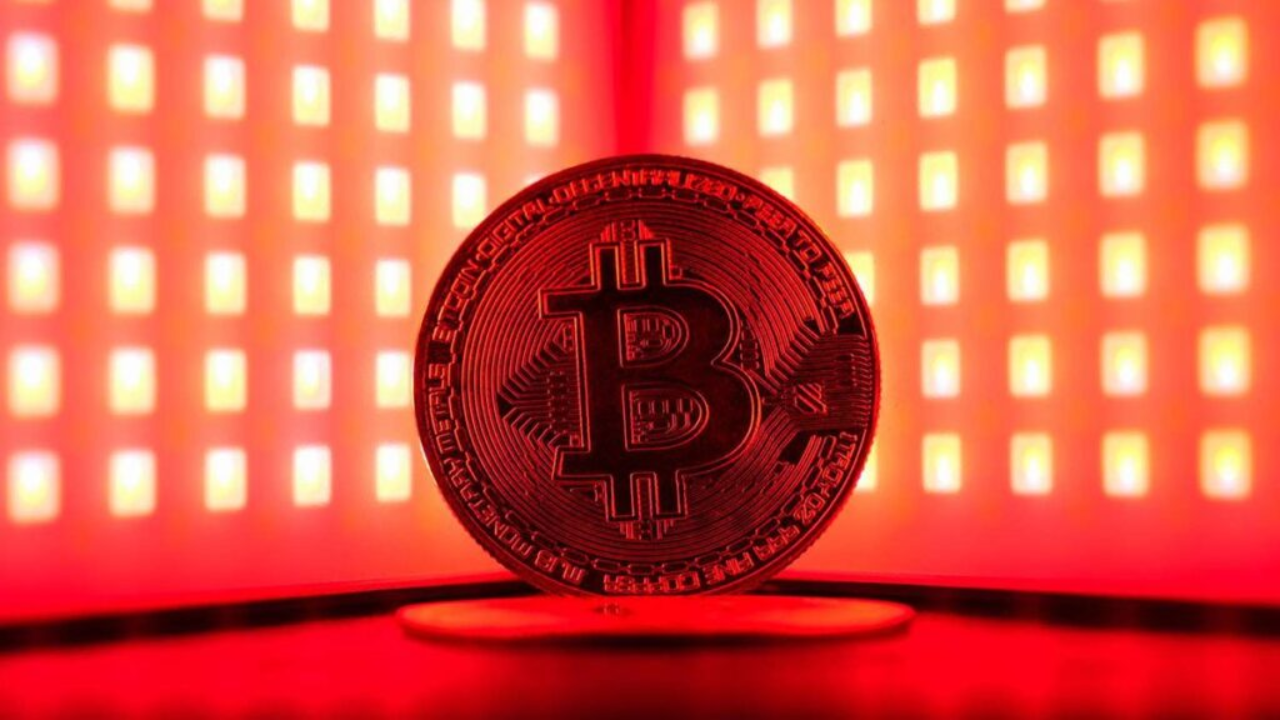
Bitcoin is back near its strongest levels in months, and the latest move higher is reviving a question that had started to fade from the market conversation: could the cryptocurrency realistically return to $100,000 in the near future?
That idea no longer sounds as distant as it did only a few weeks ago. Bitcoin has been climbing steadily alongside the technology sector, benefiting from a broader recovery in risk appetite as investors respond to signs of easing geopolitical pressure and start positioning for a potentially more supportive monetary backdrop in the United States. The latest rally has pushed Bitcoin to its highest level since early February, adding fresh energy to a market that had spent months trying to recover from a deep pullback.
What makes this moment particularly interesting is that Bitcoin is not rallying in isolation. It is moving in step with a broader market narrative centered on growth, technology, liquidity, and the possibility that the next phase of Federal Reserve policy could become more favorable to risk assets. That combination is now encouraging investors to think again about the upside potential not just for equities, but also for digital assets.
Bitcoin is closely tracking the rebound in tech stocks
One of the clearest features of Bitcoin’s recent strength is how closely it has mirrored the performance of technology shares. Since March 30, Bitcoin has risen more than 18%, roughly matching the gain of the Nasdaq Composite and the so-called Magnificent Seven group of major technology stocks.
That comparison matters because it reinforces the idea that Bitcoin is behaving less like a detached speculative asset and more like a high-beta part of the broader risk complex. In the current environment, investors are not treating it purely as an alternative monetary system or as a narrow crypto-only trade. They are increasingly treating it as a growth-sensitive asset that can respond positively when sentiment toward technology and liquidity improves.
At the same time, Bitcoin has still lagged some of the most explosive areas of the equity market, particularly the PHLX Semiconductor Index, which has posted even stronger gains. That suggests that Bitcoin remains part of the risk-on trade, but not necessarily its most aggressive expression at this stage. Even so, simply moving in line with the Nasdaq is meaningful. It shows that Bitcoin is participating directly in the same broader optimism that has been lifting U.S. technology stocks.
Easing Iran tensions are helping the broader market mood
A key reason for the recent improvement in sentiment has been the gradual, even if uneven, progress toward a more durable cease-fire involving Iran. Talks encountered difficulties late Tuesday, but President Donald Trump still chose to extend the temporary cease-fire currently in place. Even with setbacks, the fact that communication continues has been enough to support the market’s broader hope that a more permanent de-escalation could still emerge.
This matters because the war with Iran has been one of the most important macro drivers of recent months. It has affected oil prices, inflation expectations, central bank assumptions, and global risk appetite. As long as the conflict appeared likely to intensify, markets had to price in a more unstable energy environment and a more complicated policy backdrop. Now, even partial signs of progress are helping unwind some of that anxiety.
Technology stocks have responded positively to this shift, and Bitcoin has effectively followed. The connection may not be perfect, but the underlying mechanism is the same. When investors see a lower probability of a geopolitical shock spilling into inflation and monetary tightening, they become more willing to buy risk assets again. Bitcoin is clearly benefiting from that change in mood.
Bitcoin is outperforming gold in the current phase
Another striking element of the recent market environment is the contrast between Bitcoin and gold. Since March 30, gold has risen only about 4.3%, while Bitcoin has gained more than 18%. Even more notably, gold is down nearly 10% since the war began on February 27, while Bitcoin has been moving toward recovery.
This divergence says a great deal about how investors are currently interpreting both assets. Gold remains the traditional safe haven, but it has struggled in an environment where the dollar and Treasury yields have at times stayed relatively firm. Bitcoin, by contrast, appears to be benefiting from a more flexible identity. It is being treated partly as a risk asset, partly as a hedge, and partly as a vehicle for exposure to a future liquidity cycle.
David Morrison, senior market analyst at Trade Nation, described Bitcoin as increasingly behaving like a hybrid asset, drawing inflows both during periods of easing tension and as a hedge during geopolitical uncertainty. That description helps explain why Bitcoin’s behavior has looked more resilient than many expected. It has not shown the kind of erratic volatility that some investors still associate with crypto markets. Instead, it has moved in a comparatively controlled way while broader equity benchmarks have remained strong.
Lower volatility is changing how investors view Bitcoin
One of the most important changes beneath the surface of this rally may be the decline in Bitcoin’s volatility. Morrison noted that the reduced volatility in crypto, and in Bitcoin especially, has gone a long way toward easing investor concerns about whether the asset can be treated as investable in a serious portfolio context.
That point is more important than it may seem. For many traditional investors, the biggest obstacle to taking Bitcoin more seriously has never been just regulation or valuation. It has been the fear that the asset remains too unstable to fit within a disciplined allocation framework. When volatility starts to fall while price performance remains positive, that concern begins to weaken.
A calmer Bitcoin is often a more attractive Bitcoin for larger pools of capital. It suggests a market with deeper liquidity, stronger institutional participation, and a better ability to absorb macro headlines without collapsing into disorderly price action. That does not mean Bitcoin has become a low-volatility asset by conventional standards. But it may mean that it is maturing enough for more investors to view it differently than they did in earlier cycles.
The broader recovery is still unfolding from a major drawdown
Despite the recent rally, Bitcoin is still down more than 35% from its early October peak. That is an important reminder that the asset is not yet back near its old highs. In that sense, the current recovery can still be seen as the rebuilding phase after a significant correction rather than the final stage of a full euphoric run.
This is one reason the $100,000 discussion is returning with so much force. Investors know that Bitcoin has already shown the capacity to move rapidly when momentum and liquidity align. If the market now believes that the macro backdrop is improving while Bitcoin remains well below prior peak levels, then the upside case becomes easier to imagine.
The question is not simply whether Bitcoin has rallied. It is whether this rally is the beginning of a larger repricing process. If it is, then the current move toward the high-$70,000 area could be interpreted as only an intermediate stage rather than the main event.
Strategy is reinforcing the bullish narrative
Another factor supporting enthusiasm around Bitcoin has been the continued aggressive accumulation by Strategy, whose shares have surged more than 47% since March 30. According to an updated filing, the company added more than $2.5 billion worth of Bitcoin over the past week alone, marking its largest purchase since November 2024.
This is significant for two reasons. First, Strategy remains one of the most visible public-market vehicles for Bitcoin exposure, so its buying activity carries strong signaling power. Second, purchases of this size reinforce the perception that large, confident buyers are still willing to accumulate substantial amounts of Bitcoin at current levels.
When major corporate or institutional players add aggressively during a recovery, it tends to strengthen conviction among other investors. It suggests that the rally is not being driven solely by retail speculation or short covering. It may also reflect growing belief that the long-term thesis remains intact, even after a volatile and difficult stretch.
Kevin Warsh is becoming part of the crypto bull case
A major part of the current bullish argument for Bitcoin is now tied to Kevin Warsh, President Trump’s nominee for Federal Reserve chair. Warsh appeared before the Senate Banking Committee for confirmation hearings and told lawmakers that cryptocurrencies are already part of the fabric of the financial-services industry. His financial disclosures also revealed numerous crypto-related holdings, including exposure to the decentralized trading platform dYdX and the venture-capital firm Polychain.
That profile matters because it suggests a level of familiarity with digital assets that would be highly unusual for a Fed chair. According to Matt Mena, senior crypto research strategist at 21Shares, a Warsh appointment would represent a historic shift for the digital-asset industry because he would be the first Federal Reserve chair with a deeply established personal and professional history in the crypto ecosystem.
This is not just symbolic. Markets are trying to understand whether a Warsh-led Fed might behave differently on rates, liquidity, and balance-sheet policy. If investors believe that his leadership would tilt toward more proactive cuts and a leaner but more growth-supportive policy environment, then Bitcoin naturally becomes one of the assets most likely to benefit.
A more liquid Fed backdrop could become a major tailwind
Mena’s argument is that a Warsh-led Federal Reserve would likely prioritize proactive rate cutsand a leaner balance sheet, creating a high-liquidity environment that has historically served as a powerful tailwind for risk assets like Bitcoin.
That is a strong claim, but it fits with the way crypto markets tend to behave. Bitcoin often performs best when investors expect easier monetary conditions, more abundant liquidity, and a weaker constraint from real yields. If Warsh is seen as someone who could accelerate such a shift, then part of Bitcoin’s rally may reflect anticipatory positioning rather than just response to current conditions.
In other words, the market may not be waiting for policy easing to happen. It may already be starting to price in the possibility that the next Fed leadership structure will be more supportive of the type of financial conditions that tend to favor digital assets.
This is why the Warsh story matters so much. It combines politics, monetary policy, and crypto in a way that few prior Fed nominations ever have.
Why $100,000 is back in the discussion
Once all these pieces are combined, the return of the $100,000 conversation starts to make more sense. Bitcoin has rallied with tech stocks. Geopolitical pressure has eased somewhat. Volatility has become less threatening. Institutional accumulation remains strong. And a potentially crypto-friendlier Federal Reserve leadership scenario is now being discussed seriously.
Mena argued that if the conflict in Iran moves toward an official end soon and Warsh’s path to the Fed continues, that combination could be the catalyst needed to send Bitcoin back to $100,000 in the first half of this year.
That target still requires a substantial move from current levels, so it should not be treated casually. But it no longer sounds detached from the prevailing market narrative. If risk appetite continues to strengthen and liquidity expectations improve, Bitcoin would have a plausible framework for extending the rally.
The more important point may be this: the market is once again talking about six-figure Bitcoin as a realistic scenario rather than as a distant dream. That alone says a great deal about how much sentiment has shifted in a relatively short time.
Bitcoin’s rally to its highest level since early February is being driven by more than just crypto-specific enthusiasm. It is being supported by the broader strength in technology stocks, improving sentiment around Iran cease-fire efforts, continued institutional buying, and rising speculation that a Kevin Warsh-led Federal Reserve could create a more favorable liquidity backdrop for risk assets.
The cryptocurrency remains well below its prior peak, but that may be precisely why the upside conversation is intensifying. Investors are increasingly viewing Bitcoin as a hybrid asset that can participate in both risk-on moves and strategic hedging, especially now that volatility appears more controlled than in earlier cycles.
Whether Bitcoin actually returns to $100,000 will depend on how these macro, political, and market forces evolve. But for the first time in a while, the target has clearly moved back from the edge of speculation into the center of serious market debate.