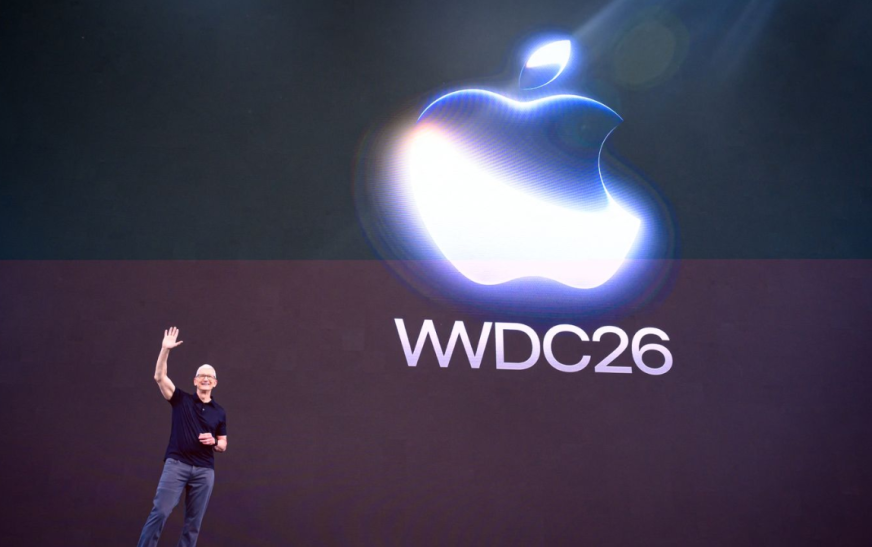
Apple stock slipped after WWDC 2026 as investors reacted cautiously to a software-heavy keynote that delivered meaningful artificial intelligence updates but lacked the kind of major surprise Wall Street appeared to be waiting for. The event included a long-awaited Siri AI overhaul, broader Apple Intelligence features, Safari upgrades, password automation, call-context tools, and interface refinements. Still, the market response showed that investors wanted more than polished software improvements.
According to the original TradingView report published through TradingView, Apple shares fell about 2% after the event as traders assessed whether the announcements were strong enough to change the company’s growth narrative. The keynote also carried symbolic weight because it marked Tim Cook’s final WWDC appearance as CEO, with John Ternus already named as his successor but absent from the presentation.
For Apple stock, the issue was not that WWDC lacked updates. The problem was that the market had already raised expectations around AI. Investors have been watching whether Apple can move faster in a field where competitors have built powerful narratives around generative AI, assistant technology, automation, and AI-integrated productivity tools. WWDC showed progress, but not a decisive shift in the competitive story.
WWDC 2026 Delivered Features, Not a Breakthrough
Apple’s WWDC 2026 keynote offered a wide set of software announcements. The company introduced upgrades across Siri, Safari, Passwords, calls, app intelligence, and the visual interface. From a product standpoint, these improvements suggest Apple is pushing deeper into AI-assisted user experiences.
From a stock-market standpoint, however, the event lacked a major breakthrough. Investors often treat developer conferences differently from normal product updates. They look for signs of a platform shift, a new monetization path, a major device category, a services expansion, or evidence that a company is moving ahead of competitors. Apple delivered a refined software direction, but not a dramatic market catalyst.
That helps explain why Apple stock fell despite the number of announcements. A polished keynote can still disappoint if expectations were higher than the actual reveal. In this case, traders seemed to want a clearer answer to one question: can Apple’s AI strategy accelerate growth in a way that changes earnings expectations?
The answer from WWDC was not strong enough for the market. The event showed Apple improving its ecosystem, but investors were not convinced that the updates would immediately reshape demand, services revenue, or competitive positioning.
Siri AI Was the Main Event
The biggest announcement was Siri AI, Apple’s long-delayed overhaul of its voice assistant. The updated Siri can handle more complex requests, pull information across apps, organize tasks, and sound more natural. That marks a significant improvement from older versions of Siri, which were often viewed as less capable than rival AI assistants.
This upgrade matters because Siri is one of Apple’s most visible AI touchpoints. If Apple can turn Siri into a more capable assistant, it can make the iPhone, Mac, iPad, and Apple ecosystem feel more intelligent and useful. A stronger assistant could also increase user retention by making Apple devices more integrated into daily workflows.
Still, the market’s reaction suggests investors wanted more evidence of commercial impact. Better Siri performance may improve the customer experience, but it does not automatically create a new revenue stream. Apple needs to show how AI upgrades will support device demand, services engagement, developer adoption, or higher ecosystem value.
For Apple stock, Siri AI is a necessary step, but investors may not view it as sufficient on its own. The company needed to prove that it is not simply catching up, but setting a new standard. The keynote showed progress, but the selloff indicates Wall Street was not convinced that Apple had taken the lead.
Apple Intelligence Expands Across the Ecosystem
Apple also expanded AI features across multiple parts of its software ecosystem. Safari can now group tabs by topic, monitor webpages for updates, and surface alerts after pages are closed. The Passwords app can automatically upgrade weak credentials. During calls, AI tools can pull relevant information from emails, messages, and other apps to create a more context-aware experience.
These features point to Apple’s broader AI philosophy. Rather than presenting AI as a separate product, the company is embedding intelligence into existing apps and workflows. Apple appears focused on making software act more proactively on behalf of users rather than only responding to direct commands.
That approach fits Apple’s traditional product strategy. The company often emphasizes integration, privacy, design, and user experience instead of raw feature count. The challenge is that financial markets may be more interested in obvious growth catalysts than subtle ecosystem improvements.
For consumers, these upgrades may be useful. For investors, the question is whether they are enough to drive upgrades, increase device sales, or deepen services revenue. Apple has a large installed base, so even incremental improvements can matter over time. But after years of strong AI momentum across the technology sector, investors may be looking for stronger proof that Apple can monetize AI at scale.
For broader coverage of technology stocks, AI catalysts, and major market reactions, readers can follow Finprozone latest market news as investors continue assessing software and hardware leaders.
Investors Wanted a Stronger AI Growth Story
The market reaction shows that Apple is being judged against an aggressive AI standard. Investors have seen major technology companies benefit from AI infrastructure, cloud demand, model development, chip demand, and enterprise automation. Against that backdrop, Apple’s AI story needs to answer how it can translate software intelligence into financial growth.
Apple’s advantage is its ecosystem. The company controls hardware, operating systems, apps, services, chips, and distribution. If it successfully integrates AI across that ecosystem, it could create a powerful user experience that competitors struggle to match.
The weakness is timing. Investors have been waiting for Apple to show that it can compete more directly with AI-first rivals. If WWDC feels like an incremental catch-up event, Apple stock may struggle to receive the same AI premium as faster-moving technology names.
This does not mean Apple’s AI strategy is weak. It means the market wanted clearer evidence of acceleration. Investors often reward companies that make AI feel like a revenue engine. Apple presented AI as a product-experience layer. That may be strategically consistent, but it may not be enough to excite traders in the short term.
Tim Cook’s Final WWDC Adds Leadership Focus
WWDC 2026 also marked Tim Cook’s final keynote as Apple CEO. Cook closed the event with a personal farewell message, reflecting on major moments from his tenure leading the iPhone maker. That added an emotional and strategic dimension to the keynote.
Leadership transitions at companies of Apple’s size matter because investors look for continuity, execution, and strategic clarity. Apple had already announced in April that John Ternus would take over as CEO. However, Ternus was absent from the keynote, leaving Cook as the central figure during his final developer conference.
That absence may not change the company’s strategy, but it gives investors another issue to monitor. Apple’s next CEO will inherit a company facing high expectations in AI, hardware innovation, services growth, regulatory pressure, and global competition. Traders will want to see whether Ternus places a different emphasis on AI, product design, developer relations, or hardware cycles.
For Apple stock, the transition adds uncertainty and potential opportunity. A smooth succession could reassure investors. A more aggressive AI or product strategy under new leadership could become a future catalyst. But until the market sees the new CEO’s style and priorities more clearly, the transition may remain part of the stock’s risk profile.
Why the Stock Fell Despite Strong Brand Power
Apple remains one of the strongest consumer technology brands in the world, but even powerful companies can disappoint investors when expectations are high. A 2% decline after WWDC suggests traders were not reacting to business weakness as much as a lack of surprise.
This is a key distinction. The keynote did not show that Apple’s ecosystem is deteriorating. It showed that investors may have already priced in a more exciting AI reveal. When expectations outrun announcements, stocks can fall even if the actual products improve.
Apple stock also faces the challenge of scale. Because Apple is already massive, investors often look for catalysts that can move revenue or earnings meaningfully. Small software improvements can improve customer satisfaction, but they may not be enough to alter financial models.
The AI upgrades may still support long-term loyalty and device engagement. But the market appears to be saying that loyalty alone is not the issue. Apple needs to show how AI can become a major growth driver rather than only a defensive upgrade to protect its ecosystem.
The “Liquid Glass” Interface Shows Apple Still Values Polish
Apple also refined its “Liquid Glass” interface after user feedback, giving customers more control over transparency levels. This detail may seem minor compared with Siri AI, but it shows Apple’s continued focus on design polish and user experience.
Interface refinements matter because Apple’s brand is built on usability and visual consistency. If users push back on design choices, Apple often adjusts. That responsiveness can help maintain customer trust.
However, from an investor perspective, design polish is rarely enough to move Apple stock. It supports the ecosystem, but it does not necessarily answer concerns about AI leadership, device upgrade cycles, or services growth. This highlights the difference between product quality and market catalyst strength.
WWDC delivered product quality. It did not deliver the kind of surprise that traders wanted.
What Traders Should Watch Next
The first signal to watch is whether Apple stock quickly recovers from the post-WWDC decline. If buyers step in, the selloff may be treated as a short-term disappointment rather than a deeper concern. If the stock continues to weaken, traders may conclude that AI skepticism is becoming a larger valuation issue.
The second signal is user adoption. Investors need evidence that Siri AI and Apple Intelligence features are actually useful enough to increase engagement. Positive consumer response could strengthen the long-term story.
The third signal is developer reaction. WWDC is a developer conference, so Apple needs developers to build around its AI tools and software features. A strong developer response could make the ecosystem more valuable.
The fourth signal is the leadership transition. John Ternus’ first major public moves as CEO will be closely watched. Investors will look for his vision on AI, hardware, services, and Apple’s product roadmap.
The fifth signal is future monetization. Apple must eventually show whether AI drives upgrades, services growth, app activity, or stronger ecosystem retention.
FAQ
Why did Apple stock fall after WWDC 2026?
Apple stock fell because investors were not impressed enough by the WWDC 2026 announcements. The company introduced meaningful AI and software upgrades, including a stronger Siri, but traders appeared to expect a bigger surprise or clearer growth catalyst from Apple’s AI strategy.
What was the main AI update at WWDC?
The main AI update was Siri AI. Apple’s voice assistant can now handle more complex requests, pull information across apps, organize tasks, and sound more natural. The upgrade shows progress, but investors questioned whether it is enough to change Apple’s competitive position.
Why does Tim Cook’s final keynote matter?
Tim Cook’s final WWDC keynote matters because Apple is entering a leadership transition. John Ternus has been named the next CEO, and investors will watch whether he changes Apple’s approach to AI, product strategy, software development, and ecosystem growth.
What should investors watch after Apple’s WWDC?
Investors should watch Apple stock reaction, Siri AI adoption, developer response, Apple Intelligence usage, and John Ternus’ strategic direction. For chart levels and stock-monitoring tools, Finprozone’s market tools and trading resources can help traders follow AAPL after the WWDC selloff.