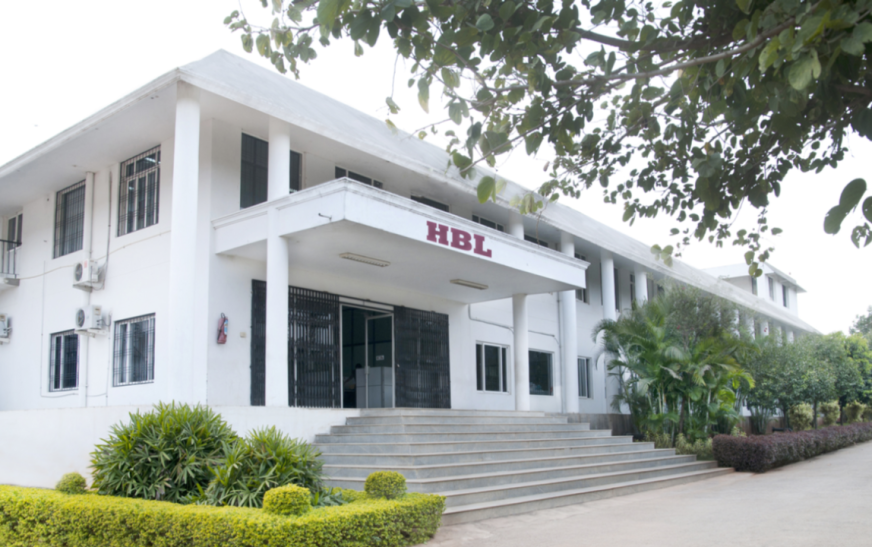
HBL Engineering Q4 results showed strong profit and revenue growth, but the earnings update also highlighted pressure on operating margins. According to the original CNBC TV18 report published through TradingView, HBL Engineering Ltd reported a 42.2% year-on-year rise in net profit for the fourth quarter of FY26, with profit increasing to ₹64 crore from ₹45 crore in the same quarter last year.
Revenue also improved sharply. The company reported quarterly revenue of ₹604.1 crore, up 27% from ₹475.6 crore a year earlier. That top-line growth shows that HBL Engineering continues to benefit from demand across its core business areas, including specialised batteries, power electronics, railway signalling systems, defence, industrial applications, and transportation-related solutions.
However, the operating picture was more mixed. EBITDA fell 6.5% year-on-year to ₹74.7 crore from ₹80 crore. More importantly, EBITDA margin contracted to 12.37% from 16.80% in the year-ago quarter. That margin decline suggests that higher sales did not fully translate into stronger operating profitability. For investors, this is the key issue: HBL Engineering is growing, but the quality of that growth now depends on whether margins can stabilize in future quarters.
Why HBL Engineering’s Q4 Numbers Matter
The latest HBL Engineering earnings update matters because it shows both strength and pressure at the same time. A 42.2% increase in net profit is a positive headline. A 27% rise in revenue also points to healthy execution and demand. But the drop in EBITDA and sharp margin compression suggest that costs, product mix, execution expenses, or operating leverage may have affected profitability.
This kind of result requires careful interpretation. Investors should not focus only on the net profit increase, because the operating margin trend gives a deeper view of business quality. A company can grow revenue and profit while still facing operational pressure if expenses rise faster than sales or if higher-margin business contributes less than expected.
HBL Engineering operates in sectors that can benefit from long-term structural demand. Railway modernization, defence procurement, industrial electrification, specialised battery systems, and power electronics are all relevant themes in India’s infrastructure and manufacturing landscape. That makes the company’s growth profile interesting.
Still, strong end-market opportunity does not remove the need for margin discipline. Investors will want to know whether Q4 margin pressure was temporary or whether it signals a more persistent profitability challenge.
Revenue Growth Remains a Positive Signal
Revenue rose to ₹604.1 crore in Q4 FY26 from ₹475.6 crore a year earlier. This 27% increase is a strong top-line performance and suggests that business activity remained healthy during the quarter.
For an engineering company with exposure to specialised products and project-driven segments, revenue growth can reflect improved order execution, stronger demand, better delivery schedules, or expansion across key verticals. HBL Engineering’s presence in railway signalling, specialised batteries, defence, power electronics, and transportation gives it multiple sources of revenue opportunity.
The revenue increase also indicates that the company is not facing a demand collapse. That is important because margin pressure can sometimes be more manageable if sales growth remains strong. A company with rising revenue has more room to absorb cost volatility, improve scale, and recover margins over time.
However, investors should watch whether revenue growth remains consistent. Q4 revenue was lower than the very strong Q3 figure mentioned in the report, when revenue from operations reached ₹863.65 crore. That does not automatically indicate weakness, because quarter-to-quarter performance can vary depending on project execution and order timing. But it does suggest that investors should monitor consistency across future quarters.
Profit Growth Looks Strong, but Needs Context
Net profit increased to ₹64 crore from ₹45 crore, marking a 42.2% year-on-year rise. On the surface, that is a strong improvement. It shows that HBL Engineering delivered better bottom-line performance than in the same quarter last year.
However, profit growth should be evaluated alongside EBITDA performance. EBITDA declined even though net profit rose. This difference means that below-operating-line items, tax effects, other income, depreciation, finance costs, or accounting factors may have influenced the final profit figure.
For investors, EBITDA is often useful because it gives a clearer view of operating profitability before interest, taxes, depreciation, and amortization. A decline in EBITDA while revenue rises suggests that operating costs consumed a larger share of sales.
This does not make the profit growth irrelevant. It remains positive that net profit rose strongly. But the earnings quality question is valid. Investors will want to see whether future profit growth is supported by stronger EBITDA expansion, not only by non-operating or lower-cost effects.
EBITDA Margin Compression Is the Main Concern
The biggest concern in the HBL Engineering Q4 results is the EBITDA margin decline. Margin fell to 12.37% from 16.80% in the year-ago quarter. That is a significant contraction.
EBITDA margin measures operating profitability as a percentage of revenue. When margin falls, it means the company is keeping less operating profit from every rupee of sales. This can happen for several reasons. Input costs may rise. Employee costs may increase. Product mix may shift toward lower-margin orders. Project execution costs may be higher. Pricing may not fully reflect cost inflation. Or certain one-time expenses may affect the quarter.
The CNBC TV18 report did not provide a detailed breakdown of the margin pressure, so investors should avoid guessing too aggressively. The practical conclusion is simpler: HBL Engineering delivered strong revenue growth, but operating profitability weakened.
That will likely be the main area analysts and investors track in future results. If margins recover, the market may treat Q4 pressure as temporary. If margins remain weak, valuation expectations may need adjustment.
For broader earnings updates, sector performance, and market-moving company news, Finprozone latest market news provides regular coverage of developments shaping investor sentiment.
Q4 Shows Moderation After a Strong Q3
The latest quarter follows a very strong third-quarter performance. In Q3 FY26, HBL Engineering reported standalone net profit of ₹217.69 crore, more than three times the ₹61.48 crore recorded a year earlier. Revenue from operations in Q3 surged to ₹863.65 crore from ₹454.66 crore.
Compared with that powerful Q3 performance, Q4 shows moderation. Net profit of ₹64 crore and revenue of ₹604.1 crore remain above year-earlier levels, but they are significantly below Q3 figures. This suggests that investors should not extrapolate one unusually strong quarter into a permanent run rate.
Engineering and project-linked businesses can show uneven quarterly performance. Revenue recognition, project delivery, order execution, and milestone billing can cause results to vary from quarter to quarter. The key is whether the annual trend remains healthy and whether the company can protect margins across cycles.
The moderation in Q4 does not erase the positive growth story. But it does make margin and execution consistency more important.
What HBL Engineering Does
HBL Engineering is engaged in the design and manufacture of specialised batteries, power electronics, and railway signalling systems. The company serves sectors such as defence, industrial applications, and transportation.
This business mix gives HBL exposure to several important themes. Railway signalling systems are tied to transportation modernization and safety upgrades. Specialised batteries can serve industrial, defence, and backup power needs. Power electronics are relevant across energy, infrastructure, and industrial systems. Defence exposure can support long-term demand if procurement cycles remain favorable.
These sectors can offer durable opportunities, but they can also involve complex execution. Engineering products may require technical customization, compliance standards, quality controls, and project timelines. That can affect margins depending on order type and delivery complexity.
For investors, the company’s sector positioning remains attractive, but financial performance must confirm that growth can be converted into profitable execution.
Why the Share Price Reaction Was Cautious
Ahead of the earnings announcement, HBL Engineering shares closed 1% lower at ₹776.45 on the NSE. That mild decline suggests investors were cautious before the results.
A stock can fall before earnings for many reasons. Traders may reduce risk before an announcement. Some investors may lock profits after prior gains. Others may worry about valuation, margins, or quarter-on-quarter moderation. Without detailed trading data, it is not possible to identify the exact reason.
However, the Q4 results help explain why caution may have been reasonable. The company delivered strong net profit growth and revenue expansion, but margin pressure was significant. Markets often respond not only to headline growth but to whether that growth is profitable and sustainable.
If investors focus on the 42% profit rise, sentiment may remain constructive. If they focus on the EBITDA decline and margin contraction, the reaction may be more measured.
What Investors Should Watch Next
The first factor to watch is margin recovery. HBL Engineering needs to show whether EBITDA margin can move back toward stronger levels. A recovery would support confidence in operating execution.
The second factor is order flow. The report mentioned healthy order flows and execution across core segments. Future updates should confirm whether demand remains strong across railway signalling, batteries, power electronics, defence, and industrial applications.
The third factor is revenue consistency. After a very strong Q3 and a more moderate Q4, investors will want to see whether growth remains stable across FY27.
The fourth factor is product mix. If lower-margin projects are driving revenue growth, profitability may remain under pressure. If higher-margin segments contribute more, margins may improve.
The fifth factor is cost management. Input costs, execution expenses, and operating efficiency will matter if the company wants to convert sales growth into stronger EBITDA.
Market Takeaway: Growth Is Strong, but Margins Need Repair
HBL Engineering Q4 results show a company with healthy revenue momentum and strong year-on-year profit growth, but also clear operating margin pressure. The 42.2% increase in net profit and 27% rise in revenue are positive. The 6.5% decline in EBITDA and margin compression to 12.37% are the main concerns.
For investors, the result is neither purely bullish nor clearly weak. It is a mixed quarter. HBL Engineering continues to benefit from demand across its core sectors, but the company must demonstrate that it can protect profitability as revenue grows.
The next few quarters will be important. If margins stabilize and order execution remains healthy, the Q4 margin decline may be viewed as temporary. If margin pressure persists, investors may become more cautious despite top-line growth.
FAQ
Why did HBL Engineering’s Q4 profit rise?
HBL Engineering’s Q4 net profit rose 42.2% year-on-year to ₹64 crore, supported by strong revenue growth. Revenue increased 27% to ₹604.1 crore, showing healthy business activity across the company’s core segments.
Why did margins fall despite higher revenue?
EBITDA margin fell to 12.37% from 16.80% a year earlier, suggesting higher operating costs, possible product mix pressure, or execution-related expenses. The company grew sales, but operating profitability did not improve at the same pace.
What does HBL Engineering manufacture?
HBL Engineering designs and manufactures specialised batteries, power electronics, and railway signalling systems. It serves defence, industrial, transportation, and related infrastructure sectors.
Was Q4 weaker than Q3 for HBL Engineering?
Yes, Q4 showed moderation compared with the company’s very strong Q3 FY26 performance, when standalone net profit rose sharply to ₹217.69 crore and revenue from operations reached ₹863.65 crore. Quarterly variation may reflect project timing and execution patterns.
How should investors analyze HBL Engineering now?
Investors should monitor EBITDA margin recovery, order flows, revenue consistency, cost control, and execution across core segments. For broader market tracking and company research, use market tools and trading resources to follow earnings and sector trends.