Trump approval rating hits new low of current term
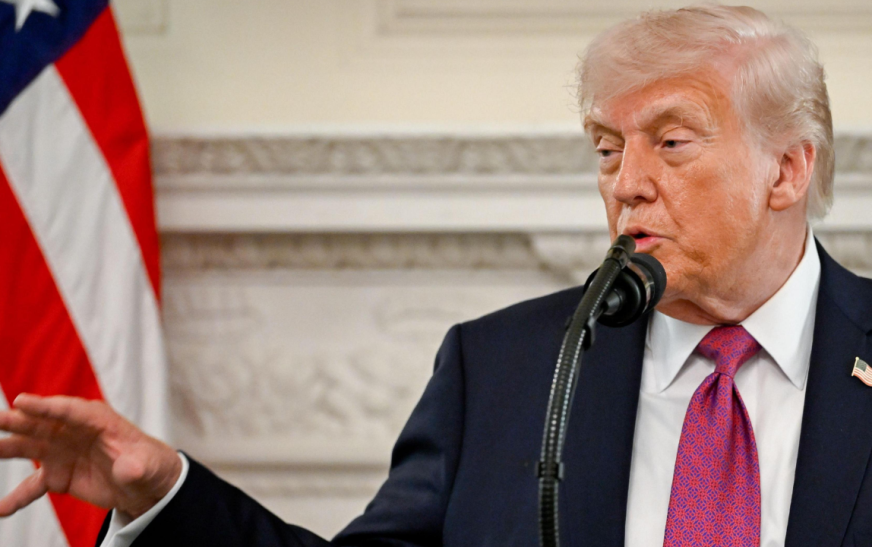
The latest Trump approval rating has fallen to the lowest level of his current term, as rising gasoline prices, cost-of-living pressure and public unease over the war with Iran weigh heavily on American voters. A new Reuters/Ipsos poll showed that 34% of Americans approve of President Donald Trump’s performance in the White House, down from 36% in the previous Reuters/Ipsos survey conducted from April 15 to April 20.
According to the original Reuters report via TradingView, Trump’s approval has trended lower since January 2025, when 47% of Americans approved of his performance after he returned to office. The latest decline reflects growing dissatisfaction with his handling of prices, the economy and the U.S. conflict with Iran.
The political problem is clear. Trump won the 2024 election after promising to bring down prices following years of inflation pressure under the previous administration. Now, many voters are judging his second term through the same cost-of-living lens. Gasoline prices have surged, household budgets are strained, and the Iran war has become a direct economic issue for millions of Americans.
For markets and political observers, the poll matters because economic frustration can quickly become electoral risk. With the November midterm elections approaching, Republicans face the challenge of defending control of Congress while voters remain focused on fuel costs, grocery bills and the broader affordability problem.
Cost of living becomes Trump’s biggest weakness
The most damaging number in the poll may not be the overall approval rating. It is Trump’s rating on the cost of living. Only 22% of respondents approved of his performance on that issue, down from 25% in the previous Reuters/Ipsos poll.
That is a weak reading for a president who made prices a central campaign issue. Cost-of-living concerns are powerful because they affect voters daily. People may ignore some political debates, but they do not ignore the price of gasoline, rent, food, insurance or utilities.
The problem is especially serious because gasoline prices are highly visible. Voters see the price every time they fill their tanks. A sharp rise in fuel costs can make inflation feel worse even if other economic indicators look stable.
Gasoline also affects more than driving. Higher fuel costs can feed into delivery prices, airline fares, food distribution, construction expenses and business operating costs. That means voters may feel the energy shock in multiple parts of their budget.
For Trump, the political risk is that voters connect the cost-of-living problem directly to the Iran war. If Americans believe foreign policy decisions are making daily life more expensive, approval can weaken quickly.
Gasoline prices are reshaping voter sentiment
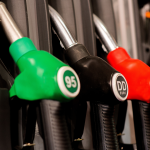
Gasoline prices have surged more than 40% to roughly $4.18 per gallon since the U.S. and Israel launched attacks on Iran on February 28, according to the report. The conflict triggered a response that shut down a significant share of global oil trade, creating pressure on U.S. and global energy prices.
This is now one of the biggest economic challenges facing the White House. Rising fuel prices hit lower- and middle-income households especially hard because transportation is often a necessary expense. Many workers cannot simply stop driving to work, school or essential appointments.
When gasoline rises sharply, households often cut back elsewhere. Restaurants, retail, travel, entertainment and discretionary purchases can all suffer. This can create a wider economic slowdown if the pressure lasts long enough.
For voters, the issue is not abstract. It is not about oil futures or shipping routes. It is about whether a full tank of gas costs noticeably more than it did a few weeks or months ago.
That is why the Trump approval rating is vulnerable. Energy prices have turned the Iran war from a foreign policy story into a household finance story.
Republican support remains strong, but cracks are visible
Trump still has strong support inside his own party. The poll found that 78% of Republicans continue to back him. That is a solid base and shows that the president remains dominant among Republican voters.
However, the cost-of-living issue is creating visible strain even within the party. The poll found that 41% of Republicans disapprove of Trump’s handling of the cost of living. That is politically important because it shows frustration is not limited to Democrats or independents.
A president can survive broad opposition from the other party if his own base remains fully aligned. But when a major economic issue begins to weaken confidence among supporters, the electoral consequences become more serious.
Republicans running in competitive districts may face difficult questions from voters. They may support Trump’s broader agenda but still need to explain high gasoline prices and household financial pressure. If local candidates become defensive on the economy, the midterm environment can become more dangerous.
This is the type of issue that can shift turnout, fundraising and campaign messaging. Even if Republican voters do not abandon Trump entirely, lower enthusiasm could matter in close races.
For broader market and economic coverage, readers can follow Finprozone latest market news.
Independents could decide the midterms
Independent voters are one of the most important groups in the poll. Among independent registered voters, Democrats held a 14-point advantage, with 34% favoring Democrats and 20% favoring Republicans in congressional voting preference. At the same time, one in four independents said they were still undecided.
This is a major warning sign for Republicans. Independents often decide competitive House and Senate races, especially when the national mood turns against the party in power. If independents remain frustrated with gasoline prices and inflation, they may punish Republican candidates even if they are not enthusiastic about Democrats.
The large undecided share also means the election environment is still fluid. Republicans have time to recover if energy prices fall or if the administration convinces voters that conditions are improving. Democrats have an opening if they can frame the election around affordability and economic management.
The midterm battle may therefore depend less on ideology and more on daily economic pressure. If voters feel poorer because of fuel and living costs, the party in power usually faces a difficult environment.
The Iran war is becoming unpopular
The poll also showed declining support for the U.S. conflict with Iran. Only 34% of Americans approved of the conflict, down from 36% in mid-April and 38% in mid-March.
That trend matters because wars can become politically damaging when voters do not see clear progress or direct benefits. If a conflict appears costly, prolonged or connected to rising prices, public support can erode.
The U.S. conflict with Iran has cooled somewhat since the two sides agreed to a ceasefire earlier this month. However, the report noted that Iranian threats are still preventing most oil shipments from leaving the Persian Gulf. That is keeping pressure on energy prices and global supply.
For voters, the ceasefire may not feel like a solution if gasoline prices remain high. A conflict can appear less intense militarily but still damaging economically. That is the challenge for the administration.
The White House needs to show either that the conflict is moving toward resolution or that it can protect households from energy-price shocks. Without one of those outcomes, public support may keep weakening.
Economy rating falls below previous benchmarks
Trump’s approval rating on the economy is now 27%, according to the poll. That is below any reading he received during his 2017-2021 administration and lower than President Joe Biden’s weakest economy rating.
That comparison is politically damaging because Trump has long positioned himself as stronger on economic management. If voters no longer give him an advantage on the economy, Republican messaging becomes more difficult.
The economy is usually judged through personal experience. Voters ask whether their wages are keeping up, whether prices are manageable, whether jobs feel secure and whether they can afford major expenses. If gasoline prices rise sharply, that personal experience deteriorates quickly.
There may still be positive economic data in some areas. Employment may remain stable, and some asset prices may hold up. But voters often care more about household cash flow than headline indicators.
This is why cost-of-living pressure can overpower other political arguments. A president can point to growth or market performance, but if voters feel squeezed, approval often falls.
The White House Correspondents’ dinner incident adds uncertainty
The poll was mostly conducted before the Saturday night shooting at the White House Correspondents’ Association dinner, where Trump was due to speak. Federal prosecutors charged the accused shooter with attempting to assassinate the president after the gunman was stopped before entering a hall where Trump was dining.
The report noted that it remains unclear whether the incident will affect public views of the president. Major security incidents can sometimes shift public sentiment, at least temporarily. They can increase sympathy, harden partisan views or change the focus of media coverage.
However, it is too early to know whether this event will alter the underlying political trend. The poll’s main economic signals were already in place before the incident: approval was falling, cost-of-living frustration was high and support for the Iran conflict was weakening.
For now, the key political issue remains affordability. Security concerns may shape the news cycle, but gasoline prices and household budgets remain central to the approval-rating decline.
Why this matters for financial markets
Political approval ratings can affect markets when they influence policy expectations, fiscal decisions, regulation or election outcomes. A falling Trump approval rating does not automatically move markets, but it can shape how investors think about the midterms and the policy environment.
If Republicans fear losing Congress, they may become more aggressive in trying to address gasoline prices or household costs. That could include energy policy changes, tax measures, subsidies, strategic reserve decisions or pressure on oil producers.
Markets may also begin pricing greater political uncertainty. A weaker president can face more resistance from Congress, courts, state governments and foreign partners. If the midterms look more competitive, investors may reassess policy continuity.
The biggest market link remains energy. If the Iran war continues to restrict oil shipments, gasoline prices may stay elevated. That affects inflation, consumer spending, central bank policy and corporate margins.
In that sense, the Trump approval rating is not only a political number. It is also a signal of how deeply energy inflation is affecting voter and consumer psychology.
What Democrats may focus on
Democrats are likely to focus heavily on affordability. The poll gives them a clear argument: voters are dissatisfied with Trump’s handling of the cost of living, his economy rating is weak and independents currently lean Democratic for congressional races.
They may also frame the Iran war as an economic burden. If the conflict is seen as contributing to high gasoline prices, Democrats can argue that foreign policy decisions are hurting American families.
However, Democrats still face their own challenge. One in four independents remains undecided, meaning the opposition party has not fully converted dissatisfaction into firm support. Voters may be frustrated with Trump but still uncertain about Democratic alternatives.
To benefit politically, Democrats will likely need to connect criticism with a clear affordability message. Simply pointing to Trump’s falling approval may not be enough. Voters will want to know how prices, fuel costs and household expenses would improve.
What Republicans may need to do
Republicans may need to focus on damage control. Strong support among the party base remains an advantage, but dissatisfaction over the cost of living cannot be ignored.
The most urgent issue is gasoline prices. If fuel costs remain high into the midterm campaign, Republican candidates may face repeated questions about the administration’s handling of Iran, oil supply and inflation.
Republicans may try to argue that the conflict is necessary for national security and that price pressures are temporary. They may also push domestic energy production, tax relief or other measures to show they are responding.
The risk is that voters judge results rather than explanations. If prices stay high, messaging alone may not solve the problem.
The party’s best-case scenario would be a decline in oil and gasoline prices before the midterms, combined with stable employment and stronger consumer confidence. Without that, the political environment could remain difficult.
What to watch next
The next signals to watch are gasoline prices, Iran-related developments, consumer confidence and congressional polling.
Gasoline prices are the most immediate economic pressure point. If prices fall, Trump’s cost-of-living rating could stabilize. If they rise further, approval may weaken.
Iran developments are equally important. Any reopening of Persian Gulf oil flows could ease energy pressure. Continued disruption would keep the issue alive.
Consumer confidence will show whether households are absorbing the shock or becoming more pessimistic. If confidence falls, economic approval may decline further.
Congressional polling will show whether independent voters continue leaning toward Democrats or move back toward Republicans as the campaign develops.
Readers tracking political risk, macro data and market reactions can use Finprozone Pro market insights for broader analysis of how policy and markets interact.
Conclusion
The latest Trump approval rating shows a president under growing pressure from the cost of living, gasoline prices and the unpopular Iran conflict. Overall approval fell to 34%, the lowest level of his current term, while approval of his handling of the cost of living dropped to just 22%.
The political danger is that gasoline prices have turned the Iran war into a domestic affordability issue. Fuel prices have surged more than 40% to around $4.18 per gallon since the February 28 attacks on Iran, and voters are feeling the effect directly.
Republican support for Trump remains strong at 78%, but 41% of Republicans still disapprove of his handling of living costs. Independents currently lean Democratic in congressional voting preference, though many remain undecided.
The midterm implications are significant. If gasoline prices stay high and the Iran conflict continues disrupting oil flows, Republicans may face a more difficult November election. If energy prices ease and the administration restores confidence on affordability, the political damage may be contained.
For now, the message from voters is clear: economic pressure is outweighing political loyalty for a growing share of the public.
FAQ
Why did the Trump approval rating fall?
The Trump approval rating fell because Americans are increasingly dissatisfied with his handling of the cost of living and the war with Iran. Rising gasoline prices have made the conflict a direct household-budget issue for many voters.
What is Trump’s current approval rating?
The Reuters/Ipsos poll showed that 34% of Americans approve of Trump’s performance in the White House. That is down from 36% in the prior survey and marks the lowest level of his current term.
Why are gasoline prices hurting Trump politically?
Gasoline prices have risen more than 40% to roughly $4.18 per gallon since the U.S. and Israel launched attacks on Iran. Higher fuel costs are visible to voters and directly affect household budgets, making cost-of-living concerns more politically damaging.
How do independent voters view the midterms?
Independent registered voters favored Democrats by 14 points, 34% to 20%, when asked who they would support in congressional elections. However, one in four independents remained undecided, meaning the midterm outlook is still fluid.
What should political observers watch next?
Political observers should watch gasoline prices, Iran war developments, consumer confidence and independent voter polling. These factors will determine whether Trump’s approval rating stabilizes or continues to weaken before the midterm elections.