One month into the war in Iran, the global economy is no longer dealing with a temporary geopolitical scare. It is dealing with a widening economic shock that is spreading through energy markets, food systems, supply chains, inflation expectations, public finances, and consumer confidence. The conflict has already pushed oil prices sharply higher, disrupted trade flows, rattled stock markets, and forced governments in poorer countries to ration fuel, subsidize energy, and improvise emergency responses just to keep daily life functioning.
The deeper problem is that the war is no longer just threatening prices. It is damaging infrastructure. That changes everything. A short conflict can create a temporary spike in oil, panic in markets, and stress in shipping. But once refineries, pipelines, gas facilities, tanker terminals, and related logistics systems are actually being hit, the economic consequences become harder to reverse and much more likely to last. That is why economists are becoming more alarmed. The issue is no longer just volatility. It is durability.
Christopher Knittel, an energy economist at MIT, captured that shift clearly when he said that a week or two earlier, the long-term implications might still have looked limited if the war had ended immediately. But now, with energy infrastructure being destroyed, the effects are likely to be long-lived. That assessment fits what markets are beginning to realize: even if the shooting stopped soon, the economic healing process would not be fast.
The war’s impact now touches nearly every layer of the world economy. Oil is more expensive. Fertilizer is tighter. Helium supply is under threat. Air travel is more chaotic. Inflation risks are rising again. Growth forecasts are weakening. And the burden is falling hardest on countries and households least able to absorb it. The result is a global economy under pressure from multiple directions at once, with very few easy escape routes.
The oil shock has become the center of the economic crisis
The most immediate and visible consequence of the war has been the energy shock. Iran responded to the U.S. and Israeli attacks that began on February 28 by effectively shutting down the Strait of Hormuz to normal tanker traffic, threatening ships trying to pass through one of the most important trade chokepoints in the world. That matters because roughly one-fifth of global oil and a major share of liquefied natural gas normally moves through that corridor.
Once access to that route became severely constrained, the consequences were immediate. Gulf exporters such as Kuwait and Iraq had fewer ways to move oil outward, and production cuts followed because there was simply nowhere for part of that oil to go. The International Energy Agency has described the resulting loss of around 20 million barrels per day as the largest supply disruption in the history of the global oil market.
That language is extraordinary, and so is the price response. Brent crude settled at $105.32 on Friday, while benchmark U.S. crude ended at $99.64. Before the war, Brent was around $70. That is not a routine move. It is the kind of shock that instantly affects fuel, transportation, industrial costs, consumer sentiment, and inflation across continents.
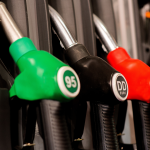
For households, the effect is painfully simple. Filling a car costs more. Heating and electricity become more expensive. Businesses pay more to transport goods. Airlines pay more for jet fuel. Food production becomes costlier. A higher oil price behaves like a tax that spreads through the economy, only unlike a tax, it is driven by war and offers very little policy control.
A prolonged conflict raises the odds of recession and stagflation
Historically, sharp oil shocks have often been followed by recessions, and economists are becoming more open about that risk again. Knittel warned that oil-price shocks like this have repeatedly led to global downturns. Carmen Reinhart of Harvard has framed the danger in equally direct terms: the war is raising the risk of both higher inflation and lower growth.
That combination brings back one of the ugliest words in economics: stagflation.
Stagflation is particularly feared because it creates a policy trap. Inflation is already bad. Recession is already bad. But when both happen together, central banks lose room to maneuver. They cannot easily cut rates to support the economy if inflation is still being pushed higher by energy. Governments can try to cushion consumers, but that often means more fiscal strain just as costs are already rising. Businesses face weaker demand and higher expenses at the same time. Workers see their real incomes squeezed even if nominal wages rise.
This is why the memory of the 1970s keeps resurfacing in commentary around the war. That earlier era of oil-driven stagflation damaged growth, reduced living standards, and created long-running instability. The present situation is not identical, but the resemblance is close enough to make investors and policymakers nervous.
Gita Gopinath, former chief economist of the IMF, recently wrote that global growth, previously expected to come in at 3.3% this year, could be 0.3 to 0.4 percentage points lower if oil averages $85 a barrel in 2026. Given that oil is already above $100, that estimate underscores just how sensitive the global economy remains to sustained energy stress.
Fertilizer markets are tightening, and food prices could be next
One of the most important but less visible effects of the war is what it is doing to fertilizer markets. The Persian Gulf is a major exporter of key fertilizer components, including about a third of global urea and a quarter of ammonia. Producers there benefit from cheap natural gas, which is the main feedstock for nitrogen-based fertilizers.
Up to 40% of world exports of nitrogen fertilizer pass through the Strait of Hormuz. When that route is blocked or badly disrupted, fertilizer flows tighten quickly. Since the war began, urea prices have risen 50% and ammonia prices 20%. That is not a niche commodity issue. It is a food issue.
Brazil is especially vulnerable because it imports about 85% of its fertilizer needs. Egypt, even though it is a major fertilizer producer, also suffers because it depends on natural gas to make the product and faces problems when gas access tightens. Over time, higher fertilizer costs are likely to force farmers to use less, which means weaker crop yields and higher food prices.
That is how a war centered in the Gulf ends up showing up in grocery bills thousands of miles away. The damage may not be immediate in every country, but it builds steadily. Farmers under pressure do not always cut planting, but they do often cut optimal input use. Lower productivity follows, and then tighter food supply. In poorer countries, where families already spend a larger share of income on food, that pain hits hardest and fastest.
Helium, chips, and the hidden hit to the tech economy
Oil gets the headlines, but the war is also disrupting the supply of helium, which matters far more than most people realize. Qatar produces helium at Ras Laffan and supplies roughly one-third of global demand. Helium is a byproduct of natural gas production, and it is critical for semiconductor manufacturing, medical imaging, rockets, and other advanced industrial uses.
That makes the war an underappreciated threat to technology supply chains. At a moment when AI investment is helping support major parts of the U.S. market and broader industrial optimism, pressure on helium becomes a real issue. Chips do not only depend on software breakthroughs or data-center capital spending. They also depend on the smooth functioning of highly specialized physical supply chains.
If helium supply remains disrupted, that becomes another way the war pushes costs higher and slows production in strategically important sectors. It also shows why this conflict is not just an energy shock. It is a wider industrial shock that can spill into the very industries investors have been counting on to drive growth.
Poorer countries are already rationing energy and changing daily life
Fatih Birol of the International Energy Agency warned on March 23 that no country would be immune to the effects of the crisis if it continued in this direction. Even so, poorer countries are clearly the most vulnerable.
Lutz Kilian of the Dallas Fed pointed out that these economies are likely to suffer the biggest shortages because they will simply be outbid when competing for the remaining oil and gas supplies. That is already visible in policy responses across Asia, which is especially exposed because more than 80% of the oil and LNG moving through Hormuz is headed there.
In the Philippines, government offices are now open only four days a week, and public employees are required to keep air conditioning no lower than 75°F, or 24°C. In Thailand, public workers have been told to take the stairs instead of elevators to conserve energy. In India, the government is prioritizing household access to liquefied petroleum gas used for cooking and absorbing much of the price increase to shield poorer families. Yet even with that support, shortages are forcing some restaurants to cut hours, close temporarily, or remove dishes that require more fuel to prepare.
South Korea, another major energy importer, has restricted car use by public employees and reimposed fuel price caps that had been abandoned decades ago. These are the kinds of measures governments take not when a market is merely volatile, but when they fear that normal price mechanisms are no longer sufficient to preserve social and economic stability.
Even the United States is not insulated
The United States is better positioned than many countries, but not immune. It exports oil, so American energy producers benefit from higher prices. It also faces lower domestic LNG prices than many other regions because its export liquefaction capacity is already maxed out, meaning more gas stays at home.
But that does not protect consumers from pain at the pump. AAA data shows average gasoline prices in the U.S. rising to nearly $4 a gallon from $2.98 a month earlier. Mark Zandi of Moody’s Analytics put it well: few things weigh more heavily on consumer psychology than paying more for gasoline.
That matters because the U.S. economy was already showing signs of softness before the war intensified. Growth had slowed sharply, employers unexpectedly cut 92,000 jobs in February, and average monthly job creation in 2025 was running at just 9,700, the weakest non-recession hiring pace since 2002. Gregory Daco of EY-Parthenon has now raised the odds of a U.S. recession over the next year to 40%, well above a normal baseline of around 15%.
In other words, the war is hitting an economy that was already more fragile than headline optimism suggested.
Recovery will be slow even under the best conditions
One of the hardest truths for markets to accept is that even a ceasefire would not restore normality quickly. Damage to LNG facilities in Qatar may take years to repair. Refineries in places like Kuwait will also need time. Tankers must be repaired, reprovisioned, and restocked with marine fuel. Insurance markets will need reassurance. Shipping confidence will not come back overnight.
The world economy has shown impressive resilience through the pandemic, Russia’s invasion of Ukraine, high inflation, and aggressive rate hikes. That history created hope that it could shrug off the Iran war too. But those hopes are fading as the physical damage across the Gulf grows.
Lutz Kilian warned that the recovery process will be slow even under the best possible circumstances. That may be the most important economic conclusion of all. The issue is no longer whether this conflict matters. It is how much damage will accumulate before it ends and how long the world will need to rebuild afterward.
Conclusion
The war in Iran has already delivered a deep blow to the global economy, and the longer it continues, the more universal the pain becomes. Oil has surged. Fertilizer markets are tightening. Helium supply is under pressure. Air travel is disrupted. Inflation risks are rising again. Markets are weakening. Poorer countries are rationing fuel and rewriting daily routines to cope.
What makes this conflict so economically dangerous is that it touches both prices and physical supply. That combination is what turns volatility into lasting damage. It means the war does not only make things more expensive. It also threatens to make some things harder to get at all.
No country is fully untouched. Some will suffer sooner, and some far more severely, but the overall direction is clear. The global economy has taken a hard hit, and unless the war de-escalates meaningfully and soon, that hit is likely to deepen into something far more lasting.