One month into the U.S. and Israeli war on Iran, the global economy is no longer reacting as if this is a distant geopolitical crisis with limited spillover. It is now treating the conflict as a broad economic shock with real consequences for energy, transportation, inflation, trade, food systems, capital markets, and industrial supply chains. What began as a military confrontation has quickly become a worldwide economic stress test.
The most visible sign of that shift is oil. Before the war, a barrel traded around $70. Now, it is holding above $100, with Brent crude climbing well past that level at times. That price jump has already filtered through to gasoline, freight, jet fuel, electricity costs, and inflation expectations. In the United States, gas prices are approaching $4 a gallon. In parts of Asia, fuel rationing, shortened workweeks, and long lines at stations have already become part of daily life.
But oil is only the beginning. The war is also disrupting access to helium, fertilizer inputs, air corridors, shipping routes, and industrial materials tied to advanced manufacturing. That means the damage is not confined to motorists and airlines. It reaches semiconductor production, food prices, AI infrastructure, and household budgets far from the battlefield. For the global economy, the danger is not just that prices are higher. It is that the conflict is starting to interfere with the physical movement of the goods modern economies depend on.
This is why so many economists are now speaking in more serious terms. The concern is no longer just inflation. It is the possibility of stagflation: high prices, weak growth, and rising labor-market stress arriving together. That combination is especially dangerous because it leaves policymakers with fewer clean solutions. Central banks cannot easily cut rates if inflation stays hot. Governments cannot easily shield every consumer or company from higher costs. And markets cannot confidently price a quick recovery if the conflict keeps mutating into new forms of disruption.
A month into the war, the world economy looks more fragile, more expensive, and more exposed than it did before the first strikes began.
The oil shock has become the central economic force of the war
The most immediate economic damage has come through the energy system. The near-closure of the Strait of Hormuz has disrupted one of the world’s most important trade arteries. Roughly one-fifth of the world’s oil supply and liquefied natural gas flows through that narrow passage off Iran’s coast. When traffic there is interrupted, the consequences spread almost instantly.
That is exactly what has happened. Global oil prices surged after the conflict began in late February. Damage to other regional energy hubs, including the UAE’s Port of Fujairah, added more pressure. By the end of the week, Brent crude stood at $112.57 while West Texas Intermediate settled at $99.64. Those are not merely market numbers. They are prices that ripple through every layer of the global economy.
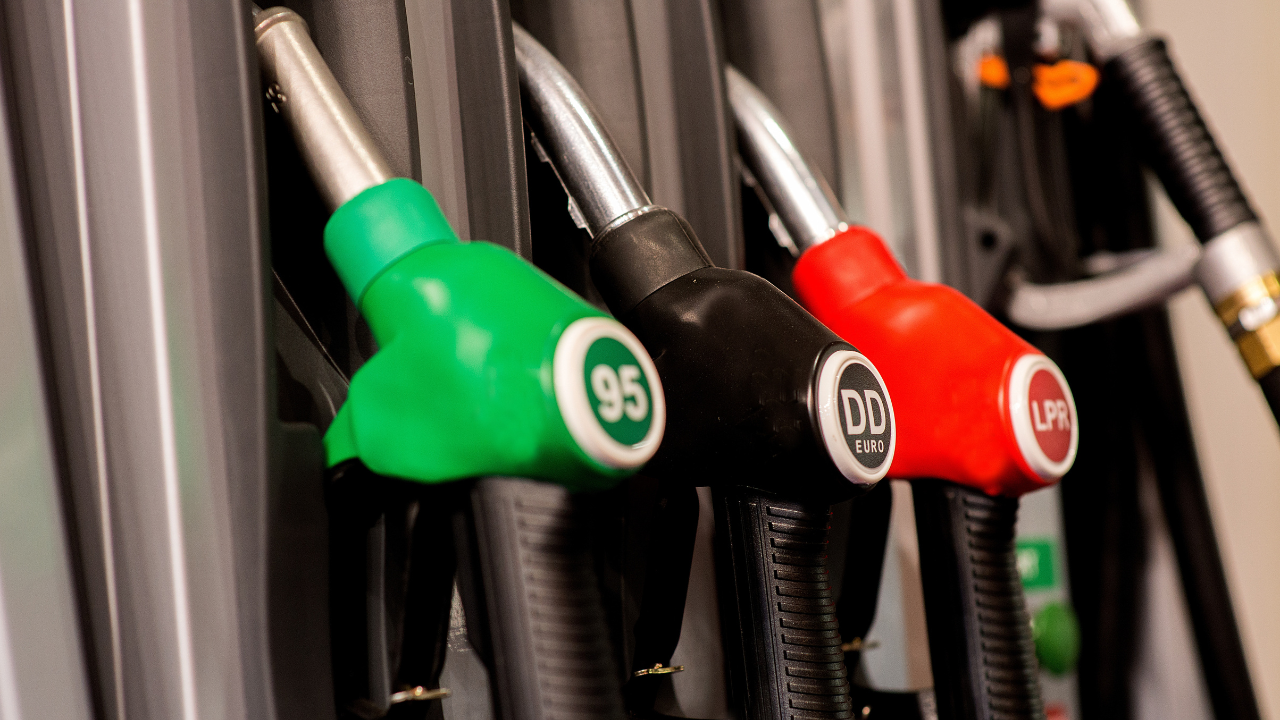
For ordinary households, the effect is straightforward and painful. Fuel gets more expensive. Electricity bills begin to rise. Shipping costs increase. Anything that depends on transport, packaging, industrial heat, or petrochemical inputs starts to feel pressure. In the United States, the national average gas price hit $3.98, up sharply from $2.98 in February. In California, prices are already well above $5 a gallon. In economies with lower incomes and less fiscal space, the pain is even sharper.
Some governments are trying to blunt the damage through rationing. The Philippines has introduced a temporary four-day workweek for public employees and urged businesses to conserve energy. Pakistan has shortened the workweek, temporarily closed schools, and shifted public-sector employees to remote work to preserve oil supplies. These are not symbolic measures. They reflect an environment in which policymakers fear that energy scarcity could begin to constrain normal economic life.
The International Energy Agency has already responded by releasing 400 million barrels from reserves, describing the current conflict as the largest supply disruption in the history of the global oil market. That is a remarkable statement. It reflects just how central this war has become to global energy stability.
Financial markets are starting to show stress fractures
Markets initially tried to behave as if the war could be absorbed. That confidence is beginning to weaken.
One reason is that traders are increasingly less willing to rely on political rhetoric alone. President Donald Trump has often used optimistic language to shape market expectations, but as the conflict drags on, investors appear less willing to accept verbal reassurances without clear evidence of de-escalation. This week, several indexes moved into or toward correction territory, a sign that markets are starting to price in more durable economic damage.
The Dow and the Nasdaq 100 are now halfway to bear-market territory. The Nasdaq 100, already under pressure from uncertainty around the economic effects of AI on software and technology companies, slid further as the war raised new concerns about growth, rates, and supply chains. The S&P 500 closed its fifth consecutive week of losses and ended Friday just short of a correction after peaking near 6,980 in January.
The significance of these declines lies not just in the points lost, but in what they reveal about investor psychology. Markets are beginning to recognize that this is not simply another geopolitical headline cycle. It is an event capable of altering growth expectations, inflation paths, monetary policy assumptions, and corporate margins all at once.
Not everyone believes the war is enough to derail the broader U.S. investment narrative. Some strategists still argue that enthusiasm around AI and Trump’s tax agenda may continue to provide underlying support. But even those more optimistic voices must now contend with a much messier macro picture. A conflict that lifts oil, complicates supply chains, raises inflation expectations, and destabilizes global transport is not easy to isolate from broader asset pricing.
Inflation fears are intensifying, and stagflation is back in the conversation
Inflation is the mechanism through which the war reaches the widest number of people. When energy prices jump, the effect goes well beyond gasoline and heating. Energy enters transportation, food production, manufacturing, aviation, logistics, and consumer goods. Once the cost of oil and gas rises sharply enough, the entire economy begins to feel it.
This is why the war has revived serious discussion of stagflation. That word carries heavy historical baggage for a reason. It describes an economy suffering from rising prices and weak growth at the same time, often with labor-market deterioration added on top. It is a particularly dangerous condition because the usual policy tools work against each other. Cutting rates to support growth can worsen inflation. Tightening policy to fight inflation can deepen the slowdown.
The last time stagflation became a defining economic problem, in the 1970s, oil was again at the center of the story. That episode damaged living standards, weakened household finances, and produced prolonged instability. Economists are not unanimous that today’s situation will become a full replay of that era, but the comparison is back in the discussion for good reason.
Federal Reserve Chair Jerome Powell has tried to downplay the risk, arguing earlier this month that the present environment, while difficult, is not directly comparable to the 1970s. Others are less certain. Once inflation becomes energy-driven and persistent, and once supply shortages begin to affect real activity rather than only prices, the danger rises quickly.
The core problem is that oil does not need to reach absurd levels to hurt growth. It just needs to stay high long enough to grind down confidence, consumer spending, and corporate margins. If the conflict lasts and oil remains elevated, inflation may stop looking like a spike and begin looking more like a structural drag.
Air travel has become one of the war’s earliest casualties
Aviation felt the economic shock almost immediately. Airspace closures across parts of the Middle East forced airlines to cancel or reroute flights, leaving travelers stranded and raising costs across the sector.
Dubai International has gradually resumed some operations, but many airports in the region have either cut activity sharply or suspended flights. Several U.S. embassies in the Middle East also closed, leaving travelers with fewer support options and in some cases no clear path home. Even where local governments have pledged to help stranded passengers with accommodation, many travelers have accumulated thousands of dollars in unexpected expenses while waiting for routes to reopen or for seats to become available.
At the same time, jet fuel prices have exploded. According to the International Air Transport Association, jet fuel reached an average of $197 a barrel on March 20, up from $99 at the end of February. That kind of increase cannot be quietly absorbed for long. Airlines are already starting to pass costs through to consumers. Qantas and Air India are among those raising ticket prices.
This matters because aviation sits at the intersection of tourism, trade, business mobility, and consumer confidence. When air travel becomes more expensive and less reliable, the damage spreads well beyond the airline industry itself. Hotels, conferences, cargo schedules, vacation demand, and even labor mobility can all suffer.
Supply chains for AI and food are also under pressure
The most underappreciated effect of the war may be what it is doing to supply chains outside oil.
Take sulfur. It is a byproduct of oil and gas processing and a critical industrial material. It is used in processes related to copper and lithium extraction, both of which matter for electric vehicles, energy systems, and AI-related infrastructure. As the war disrupts oil and gas flows, downstream materials like sulfur become more exposed as well.
Then there is fertilizer. A large share of global fertilizer supply also depends on routes connected to the Strait of Hormuz. Urea prices have surged since the war began. If those disruptions continue, farmers may be forced to ration fertilizer use, lowering crop yields and eventually feeding through into higher food prices. That is where the war’s effects become painfully visible to ordinary households. Even consumers who never buy a plane ticket and barely follow oil futures will notice more expensive groceries.
Helium is another major issue. Qatar supplies nearly one-third of the world’s helium, a byproduct of liquefied natural gas production that plays a crucial role in semiconductor manufacturing. That matters enormously because semiconductors remain central to the AI boom currently supporting significant parts of the U.S. and global investment story. If helium supply is impaired, chip manufacturing becomes more vulnerable, and one of the world’s most strategically important sectors faces another bottleneck.
This is why the war is no longer just an energy story. It is a supply-chain story, a technology story, a food story, and an inflation story all at once.
The longer the war lasts, the harder it becomes to contain the damage
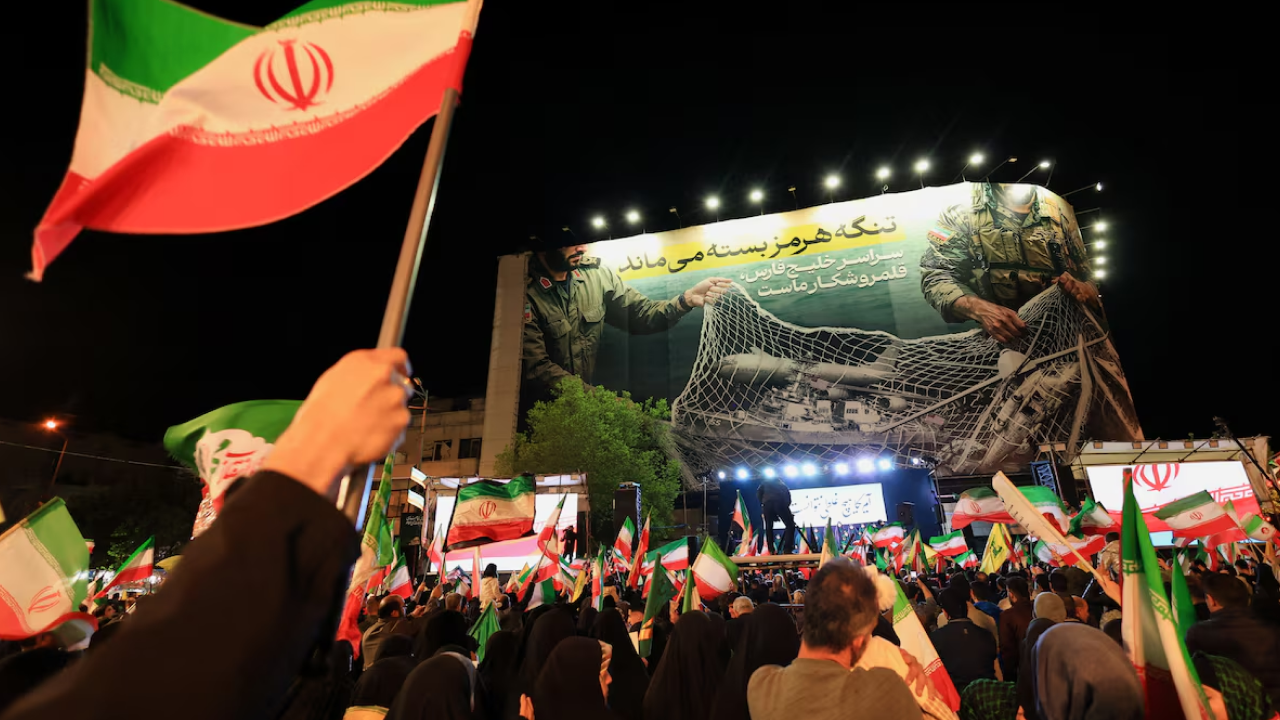
President Trump says the war is intended to neutralize what he has described as the imminent threat posed by Iran’s ballistic missiles, alleged nuclear ambitions, and regional proxy network. But Iran has shown resilience, and the economic question is increasingly tied to the military one: how long can the conflict continue before the costs become too great for the world economy to absorb?
That may be one of the most important unanswered questions of the moment. Wars can persist militarily longer than markets expect. But economic tolerance has limits. Every additional week of disruption raises the odds that temporary rerouting turns into structural reorganization, that price spikes become embedded, and that policy responses begin to distort normal economic behavior.
This is the tipping-point risk. At first, the world economy adapts. Then, slowly, adaptation becomes strain. After that, strain can become broader dysfunction.
Conclusion
One month into the war in Iran, the global economy has already been remade in visible ways. Oil is above $100. Inflation fears are rising. Air travel is chaotic. Supply chains for fertilizer, helium, and industrial inputs are tightening. Financial markets are weakening. And the possibility of stagflation has returned to serious discussion.
What makes this conflict so economically dangerous is not just the scale of any single shock. It is the way so many shocks are now arriving together. Energy, logistics, food, technology, rates, and markets are all being hit through overlapping channels. That overlap is what turns a regional war into a global economic event.
If a peace deal remains elusive, the pressure is likely to spread further. And the longer that happens, the less this will look like a temporary disruption and the more it will start to resemble a new global economic regime shaped by scarcity, volatility, and rising costs.